





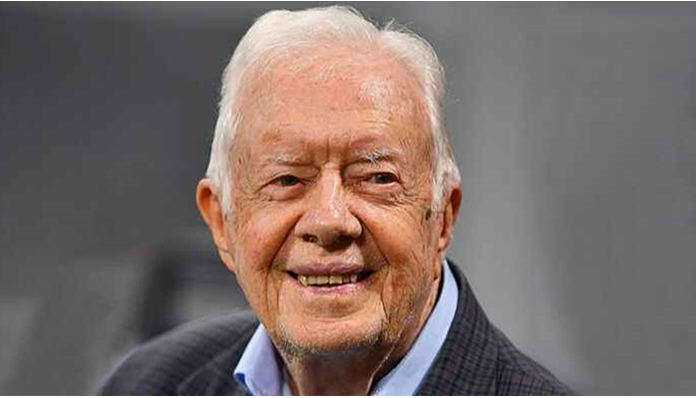
A Life of Service: Jimmy Carter’s Journey from Plains to the Presidency and Beyond
James Earl Carter Jr., born in the modest town of Plains, Georgia, embarked on a remarkable journey that led him from peanut farmer to the highest office in the land, and ultimately to a celebrated post-presidency dedicated to global peace and humanitarian efforts. His life, spanning a century, was a testament to his unwavering commitment to service, his deep-seated faith, and his relentless pursuit of justice and equality. His passing marked the end of an era, leaving behind a legacy that continues to inspire and challenge us to strive for a better world.
Carter’s early life was rooted in the rural landscape of Georgia, where he cultivated a strong work ethic and a deep connection to the land. Following his education at the US Naval Academy and a brief stint in the Navy’s nuclear submarine program, he returned to Plains to manage the family’s peanut farm. This experience instilled in him a pragmatic approach to problem-solving and a profound understanding of the challenges faced by ordinary Americans. His entry into politics began at the local level, eventually ascending to the governorship of Georgia before setting his sights on the presidency.
Carter’s presidency, though a single term, was marked by a distinctive focus on human rights and social justice. He prioritized ethical leadership and transparency, seeking to restore trust in government following the Watergate scandal. His foreign policy achievements included the historic Camp David Accords, a peace treaty brokered between Israel and Egypt, a landmark achievement that solidified his commitment to peaceful conflict resolution. He also emphasized the importance of human rights in international relations, often challenging oppressive regimes and advocating for democratic reforms.
However, Carter’s presidency also faced significant challenges, including the Iran hostage crisis, a protracted diplomatic standoff that cast a shadow over his administration. The economic downturn and energy crisis further complicated his efforts to enact his ambitious agenda. Despite these setbacks, Carter remained committed to his principles, striving to address complex issues with integrity and determination. The 1980 presidential election saw him defeated by Ronald Reagan, bringing his time in the Oval Office to a close.
Despite the electoral defeat, Carter’s commitment to service did not waver. He embarked on a post-presidency that arguably surpassed his time in office in terms of global impact. He established The Carter Center, a non-profit organization dedicated to advancing human rights, promoting democracy, and alleviating suffering around the world. Through the Center, Carter became a tireless advocate for peace and justice, mediating conflicts, monitoring elections, and combating diseases in developing nations. His work earned him the Nobel Peace Prize in 2002, a testament to his enduring commitment to building a more just and peaceful world.
Carter’s dedication to service extended beyond international affairs. He remained deeply involved in his local community, teaching Sunday school at his church in Plains well into his nineties. He also remained a vocal advocate for various social causes, including affordable housing and environmental protection. His unwavering faith and commitment to helping others served as a guiding force throughout his life. His resilience was also evident in his battle with cancer, which he faced with characteristic grace and determination.
Jimmy Carter’s life story is a compelling narrative of a man who rose from humble beginnings to achieve the highest office in the land, only to dedicate the remainder of his long life to serving humanity on a global scale. His unwavering commitment to peace, justice, and human rights, coupled with his deep faith and enduring resilience, has left an indelible mark on the world. From the peanut farms of Plains to the halls of power and beyond, his life exemplified the power of service and the enduring pursuit of a better world for all. He leaves behind a legacy that will continue to inspire generations to come.








