





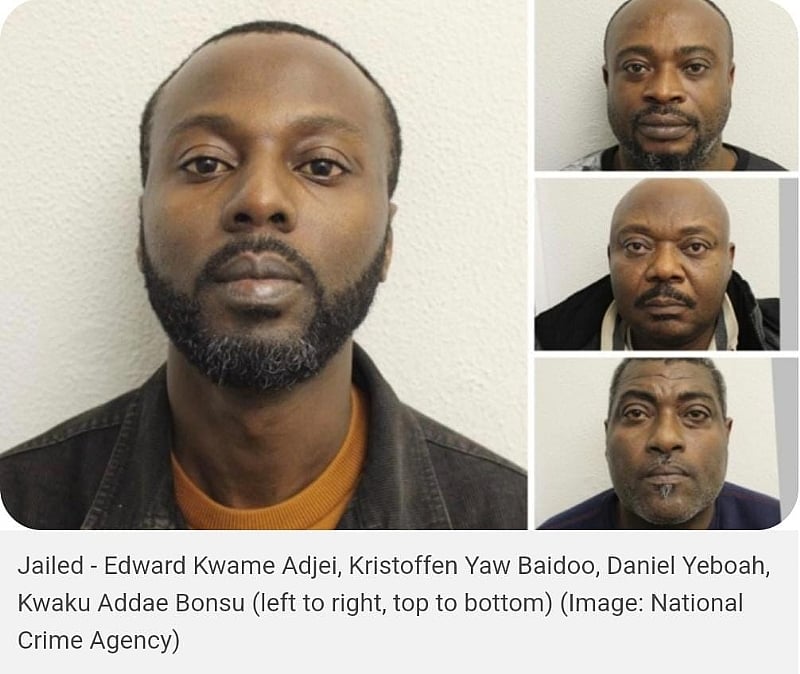
A recent significant court ruling has led to the conviction of four Ghanaians for their roles in a high-profile cannabis smuggling operation that funneled £4.3 million worth of the drug from Ghana to South Essex. The individuals involved—Edward Kwame Adjei, Kristoffen Yaw Baidoo, Daniel Yeboah, and Kwaku Addae Bonsu—were caught using an insidious concealment strategy, hiding the cannabis in sacks of Gari powder, a popular food product in West Africa. This innovative trafficking method highlighted the lengths to which these criminals would go to evade detection.
The operation was exposed following a successful investigation by the National Crime Agency (NCA), which culminated in the seizure of the drugs at Tilbury Docks in December 2019. The interception occurred after intelligence agencies suggested that the shipping container was concealing illicit goods. The extensive inquiries that followed unveiled a sophisticated network of fake identities, fraudulent bank accounts, and complex communication channels that facilitated the smuggling operation. The NCA’s findings emphasized how organized crime could easily exploit legal frameworks and the demands of international shipping.
Text messages and emails retrieved from Baidoo’s mobile phone were particularly revealing, shedding light on his pivotal role in coordinating the delivery of the illicit cargo. Moreover, Bonsu’s financial transactions raised red flags, as his bank account showed multiple payments directed to a shipping company believed to be part of the smuggling operation. It became evident that the group had meticulously orchestrated the smuggling plan, relying on various deceptive practices to maintain a façade of legitimacy while executing their illegal intentions.
In terms of legal repercussions, the sentences handed down by the court were notably harsh, reflecting the serious nature of the crime and its broader implications for public safety and health. Daniel Yeboah was sentenced to five years in prison, Edward Adjei received a four-year sentence, while Kristoffen Baidoo and Kwaku Bonsu were sentenced to ten and seven years, respectively, but both were tried in absentia, indicating they were not present in court for their adjudication. These sentences were aimed at serving as a deterrent against similar criminal activities in the future.
The case has attracted considerable attention, not just due to the amount involved but also because it underscores the challenges law enforcement faces in combatting organized crime on a global scale. The NCA has reaffirmed its commitment to addressing such issues, focusing its efforts on dismantling networks that exploit and navigate around legal systems to carry out drug trafficking and other illegal activities. This dedication indicates a broader strategy of intervention aimed at curbing organized crime within the UK and its connections abroad.
As the implications of this ruling resonate throughout communities impacted by drug trafficking, it serves to highlight the ongoing war against drug smuggling and the importance of collaboration between international law enforcement agencies. The NCA’s findings and subsequent actions reinforce the necessity for vigilance and proactive measures in identifying and disrupting illegal drug networks. Consequently, this case not only represents a victory against these specific culprits but also symbolizes the ongoing fight against organized crime threatening public health and safety.








