





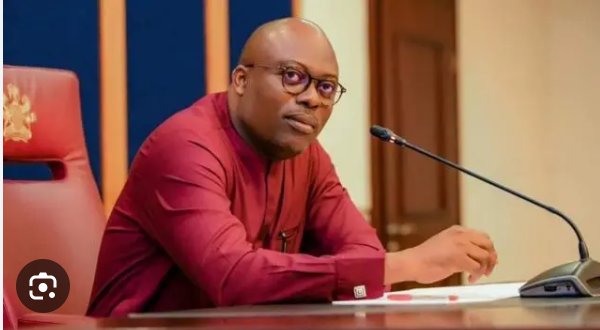
The Rivers State Government has officially lodged an appeal against a Federal High Court ruling in Abuja that prohibited the Central Bank of Nigeria (CBN) from releasing allocations from the federation account to the state. This legal action arises following the judgment which deemed the 2024 budget presented by Governor Siminalayi Fubara to a four-member Rivers House of Assembly as unconstitutional. Joseph Johnson, the state’s Commissioner for Information and Communications, announced the appeal and expressed confidence in the Appellate Court’s ability to overturn the initial ruling. He conveyed that the state government remains unfazed, indicating their belief that the trial judge’s decisions, which included the rejection of 23 council chairmen as joinders, were wrongful.
Justice Joyce Abdulmalik’s decision emphasized the constitutional impropriety of the budget and its execution without the endorsement of a duly constituted House of Assembly. The judge categorized Governor Fubara’s actions in implementing what she deemed an “unlawful budget” as a serious violation of the 1999 Constitution. Consequently, she issued an injunction to the CBN, the Accountant-General of the Federation, and two banks, restraining them from allowing Fubara to access state funds until a legitimate budget is passed by a legally recognized assembly. Abdulmalik’s order further stated that appropriations must be presented to the relevant legislative bodies to ensure lawful disbursement, asserting that Fubara’s use of an improperly established assembly to manage public funds violates fundamental constitutional principles.
The ruling was gripped with intense political implications as it stemmed from a suit filed by the Amaewhule-led faction of the Rivers State House of Assembly against Fubara and other key political and financial institutions. The plaintiffs contended that the governor failed to adhere to a prior court order mandating him to re-present the budget appropriately to their assembly, which suspended all expenditures until compliance was achieved. Amid this political backdrop, the Rivers State Government’s premises were filled with supporters and stakeholders, while tensions flared as celebrations erupted among factions aligned with former Governor Nyesom Wike, viewing the judgment as a victory for the rule of law.
Opposition factions welcomed the judgment, positing that it would enhance governance and transparency in the state. Following the ruling, the political climate became charged, with parties urging compliance with judicial processes to foster peace and harmony. Critics, however, including members of the Rivers State Elders Council, expressed concerns over perceived biases in the judiciary, citing the need for a trusting legal system. The contentious political environment prompted former Vice President Atiku Abubakar to condemn the judiciary’s actions for exacerbating political disputes, asserting the imperative for a fair and impartial legal framework to avert chaos and societal breakdown in Nigeria.
In reaction to the federal court’s ruling, various political and civil bodies voiced their dissent, challenging its legitimacy and implications for governance. Lawmakers from opposition parties labeled the judgment a “judicial rascality,” arguing it was unjust to restrict funds to the state when the status of the assembly members remains contested in courts. Meanwhile, legal experts offered mixed opinions, with some asserting the need for a more thorough examination of the court’s order and its implications for governance in Rivers State. Concerns were also raised among civil society organizations, critiquing both the governor’s actions in circumventing constitutional protocols and the judiciary’s role in potentially undermining democratic processes in Nigeria.
As the political struggle continues, the effectiveness of the judiciary and its potential compromises have come under scrutiny from various stakeholders. The complex interplay of judicial rulings, executive power, and political allegiance remains at the forefront of the Rivers State crisis, highlighting broader issues within Nigeria’s political and legal frameworks. Advocates for democratic integrity implore both state officials and judicial authorities to prioritize the rule of law and public welfare, reflecting the delicate balance necessary for sustainable governance amidst political factionalism and legal transgressions. This ongoing situation underscores the critical need for transparency, fairness, and adherence to democratic norms in maintaining the health of Nigeria’s governance structures.








