





Revitalizing Agricultural Extension for Enhanced Food Production in Nigeria
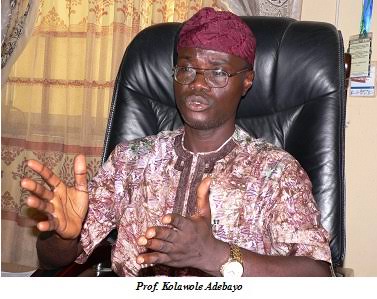
Professor Kolawole Adebayo, the Deputy Vice-Chancellor of the Federal University of Agriculture, Abeokuta, has issued a compelling call for the Nigerian government to prioritize the revitalization and strengthening of the agricultural extension system. This, he argues, is crucial for empowering Nigerian farmers to fully capitalize on the immense potential for increased food production. Speaking at the first reunion anniversary of the 1986 set of the University of Ife School of Agriculture, now the Federal College of Agriculture, Akure, Prof. Adebayo expressed deep concern over the misdirection of government support away from genuine farmers, a trend that has hampered the growth of the agricultural sector. He emphasized the need for targeted interventions that directly benefit those actively engaged in agricultural production.
Prof. Adebayo’s lecture, titled “Networking Through Alumni Association for Entrepreneurial Opportunities and Development,” highlighted the comparative advantage possessed by Nigerian farmers, an advantage he believes is often overlooked and underutilized. He lamented the prevailing situation where genuine farmers, often engrossed in their demanding work, are unable to access or benefit from government support programs. This creates a gap where resources intended for them are often diverted to individuals who are not actively involved in agriculture, thus undermining the effectiveness of these initiatives. He strongly advocated for a more direct approach to agricultural extension services, urging the government to deploy extension officers directly to farms, fostering a more hands-on and impactful engagement with farmers. This shift, he believes, would be more effective than the current reliance on bureaucratic processes that often hinder access to crucial information and support.
A key area of concern raised by Prof. Adebayo is the weakening of the agricultural extension system, a critical component for disseminating knowledge, best practices, and new technologies to farmers. He stressed the urgent need for the government to invest in strengthening this system to achieve a meaningful impact on agricultural productivity and improve the livelihoods of farmers. He criticized the tendency to resort to imported rice during periods of food shortages, arguing that this approach undercuts the potential of local farmers. He proposed that instead of relying on imports, the government should contract Nigerian farmers to produce the required rice, coupled with robust extension support. This strategy, he argued, would not only benefit the farmers directly but also strengthen the national economy.
Dr. Samson Odedina, a former Commissioner for Agriculture in Ogun State and an alumnus of the Federal College of Agriculture, Akure, echoed Prof. Adebayo’s sentiments, emphasizing the crucial role of farmer support in achieving food security and bolstering economic growth. He underscored the global consensus on the importance of supporting farmers at all levels, highlighting the direct correlation between farmer support and achieving food security and economic prosperity. He encouraged young Nigerians to explore the vast opportunities in the agricultural sector, stressing its potential for profitability and its contribution to national development. Dr. Odedina also called on the government to engage seasoned agricultural experts, leveraging their experience and knowledge to develop effective policies for the sector, rather than relying on superficial information gleaned from online sources.
The insights provided by Prof. Adebayo and Dr. Odedina shed light on the urgent need for a paradigm shift in Nigeria’s agricultural policy. Their emphasis on strengthening the agricultural extension system, targeting support to genuine farmers, and prioritizing local production over imports offers a roadmap for enhancing food security and boosting the agricultural sector. The current trend of neglecting genuine farmers while diverting resources to non-farmers is counterproductive and must be addressed. Investing in a robust and effective extension system that directly engages farmers on the ground is crucial for disseminating vital information, promoting best practices, and facilitating access to new technologies.
Furthermore, empowering young Nigerians to embrace agriculture as a viable and profitable career path is essential for the long-term sustainability of the sector. By fostering a renewed interest in agriculture among the younger generation, Nigeria can unlock the vast potential of its agricultural resources and create a more resilient and prosperous economy. The government must prioritize evidence-based policymaking, drawing on the expertise of seasoned agricultural professionals rather than relying on readily available but potentially superficial online information. This approach will ensure that policies are grounded in sound scientific principles and tailored to the specific needs and challenges of the Nigerian agricultural landscape. By heeding these recommendations, Nigeria can transform its agricultural sector into a vibrant engine of economic growth, ensuring food security and creating opportunities for generations to come.








