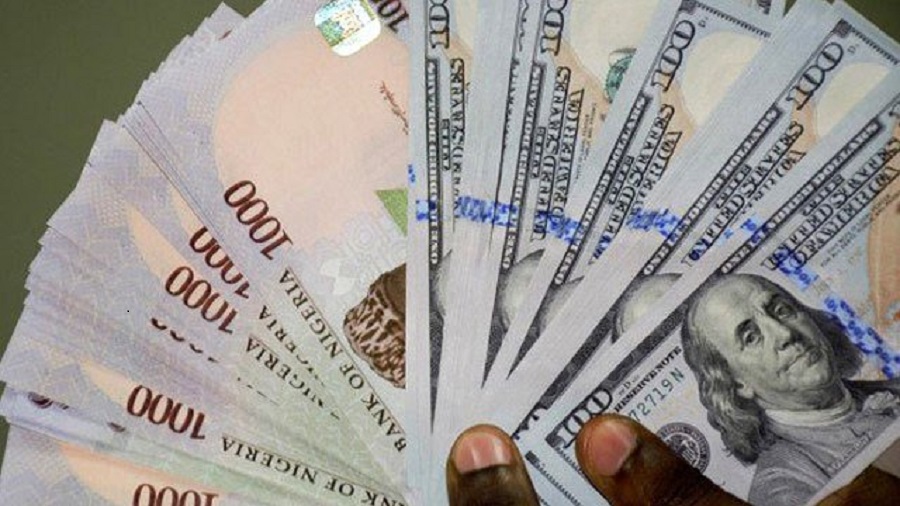
On Monday, the Nigerian naira observed a significant decline in both the official and parallel markets, reaching a new low of 1670.75 naira to one US dollar at the official rate and 1748 naira in the black market. The slump in the naira was exacerbated by a stark drop in daily foreign exchange turnover, which plummeted by 71% to $81.17 million in the official market. This situation reflects ongoing volatility in Nigeria’s currency sector, amid concerns regarding the naira’s long-term stability. Economic analysts foresee a sustained trend in dollar-naira exchange rates across various market segments, primarily fueled by the Central Bank of Nigeria’s (CBN) steadfast commitment to implementing strategic foreign exchange interventions aimed at stabilizing the currency.
At the retail level, currency traders highlighted the deteriorating state of the naira. Muazu Yakubu, a Bureau de Change operator at Lagos Airport, disclosed that the naira’s selling rate was pegged at 1,748 naira per dollar, while the buying rate was slightly lower at 1,742 naira. Similar sentiments were echoed by Mallam Faruq, an operator on Lagos Island, where exchange rates were quoted at 1,746 naira for selling and 1,740 naira for buying. These figures illustrate the growing disparity between official and black market rates, reflecting the ongoing economic pressures faced by the Nigerian currency.
In the Nigerian Autonomous Foreign Exchange Market (NAFEM), the naira suffered further depreciation, trading at 1,670.65 naira to the dollar by the end of Monday’s trading session. This represents a notable decline from the previous Friday when it was valued at 1,600 naira per dollar. Notably, the market recorded a turnover of $284.93 million, indicating some trading activity despite the dramatic shifts in exchange rates. Throughout the day, the naira experienced fluctuations between a high of 1,677 naira and a low of 1,585.67 naira against the US dollar, showcasing the uncertainty that continues to define the country’s foreign exchange landscape.
Interestingly, despite the overall decline of the naira at both the official and parallel markets, some positive shifts were observed in the NAFEM window, where the naira managed to strengthen against the dollar. Compared to the previous week, the naira appreciated by four basis points, closing the week at 1,600 naira per dollar. However, the continued depreciation in the parallel market, where it weakened by three basis points week-on-week to settle at 1,740 naira, underscores the disparities being observed within different segments of the market. This divergence raises concerns about exchange rate stability and access to foreign currency for various sectors of the economy.
In light of these developments, the Central Bank of Nigeria has proactive measures in motion to support the local currency. A notable announcement made on Monday indicated that the CBN signed an agreement with the International Finance Corporation (IFC) aimed at bolstering local currency financing for Nigerian businesses while mitigating foreign exchange risk. This partnership, as described by both institutions in their joint statement, aspires to elevate IFC’s financial engagement in Nigeria, projecting an investment target of over $1 billion in the coming years. The CBN’s strategy, in collaboration with the IFC, intends to enhance availability of local currency financing for pivotal economies including agriculture, infrastructure, and energy sectors, thereby fostering sustainable economic development.
The significance of this partnership cannot be overstated, particularly in light of Nigeria’s pressing need for local currency financing across various sectors. Many industries, including small and medium-sized enterprises, have expressed the necessity for greater access to local currency capital to facilitate growth without the burden of foreign exchange fluctuations. The CBN’s collaboration with the IFC is thus seen as a critical initiative toward augmenting access to needed financial resources, while also enabling the management of currency risks that could potentially hamper economic performance. As these events unfold, stakeholders remain watchful of how these developments may influence the naira’s trajectory in both the short and long term.