





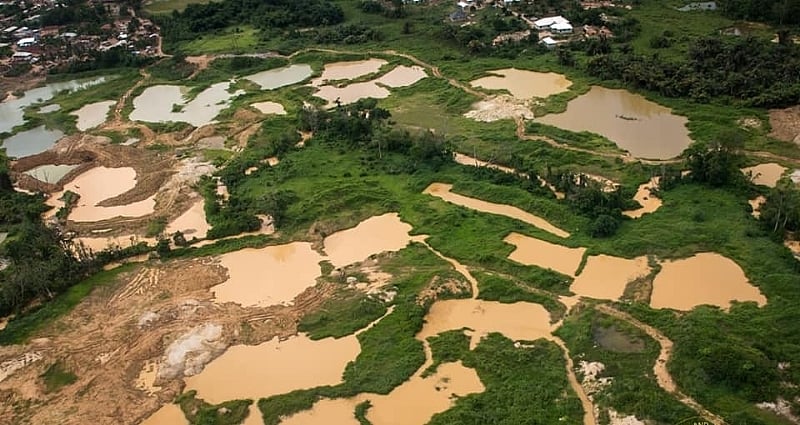
The Aboi Nkwanta-Samreboi Road in the Wassa Amenfi West Municipality has suffered significant damage, largely attributed to the dual impact of illegal mining activities and severe rainfall. These illegal mining operations are situated near the Aboi Nkwanta community, adjacent to a stream, and as a result of these practices, several parts of the road have been washed away. The situation has created dangerous conditions for those who rely on this route, particularly during the rainy season, as mine operators have left many pits open and untreated. Consequently, the road has become impassable, compelling drivers to seek alternative routes through Sureso or Wassa Dunkwa.
Local authorities are gravely concerned about the impact of these mining practices on the community. Nana Gyan Manso, the Assembly Member for the Akromantu Electoral Area, emphasized the urgency of the situation in an interview with the Ghana News Agency (GNA). He noted that in addition to the road issues, several homes have been flooded, leading to the displacement of residents. In response, he plans to inform the National Disaster Management Organisation (NADMO) to coordinate a proper response to assist those affected by the flooding and infrastructural damage.
While acknowledging the disruptions and hazards caused by the flooding, Nana Manso expressed a commitment to resolving the problems quickly. He intends to engage with higher authorities, including the Municipal Chief Executive and the Member of Parliament for Wassa Amenfi West, in order to initiate remedial measures for the damaged road. His plea for patience resonates with the residents and motorists who are enduring the daily inconveniences of navigating alternative routes in the meantime.
Residents and drivers who frequent the Aboi Nkwanta and Samreboi Lorry Station have voiced their frustration over the prevalence of illegal mining in their area. They note that despite the government’s ban on informal mining operations, such activities continue unabated, often occurring directly along key transport routes. The environmental degradation caused by these operations is a significant concern, notably concerning the contamination of water bodies and damage to local ecosystems. Community members are urging prompt action from government and relevant stakeholders to address the contempt for environmental regulations and the subsequent challenges it poses.
The situation on the Aboi Nkwanta-Samreboi road serves as a microcosm of the broader issues facing many communities affected by illegal mining in Ghana. The environmental implications, including soil erosion, pollution, and the destruction of critical road infrastructure, can have long-lasting effects on local communities. As the demand for minerals remains high, illegal miners often disregard the law, causing havoc for residents, transportation, and the local economy. These challenges highlight the need for effective governance and the enforcement of regulations aimed at controlling mining activities.
Tackling the dual challenges of illegal mining and the consequences of climate-related disasters will require a concerted effort from various stakeholders. This includes the local government, law enforcement agencies, community leaders, and environmental organizations working collaboratively to restore the damaged infrastructure and implement sustainable practices. Ensuring that communities are protected from the adverse effects of illegal mining, particularly during rainy seasons, is crucial in maintaining both safety and economic stability in the region. The prompt action of authorities and support systems like NADMO will be vital in mitigating the ongoing crisis and preventing future occurrences.








