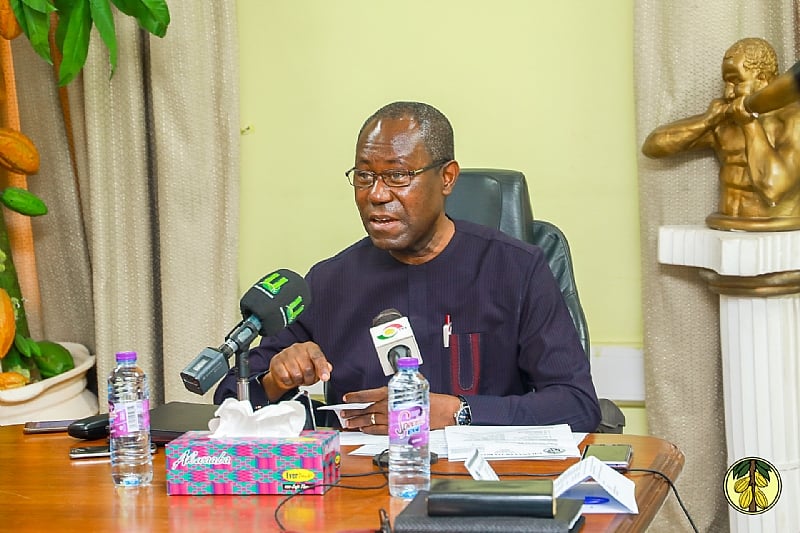
Joseph Boahene Aidoo, the Chief Executive Officer of the Ghana Cocoa Board (COCOBOD), recently highlighted a significant crisis facing the cocoa industry in Ghana. Between 2022 and 2023, the country experienced a staggering loss of 120,000 metric tons of cocoa beans due to rampant smuggling. This loss not only threatens the economic viability of the cocoa sector but also undermines Ghana’s position as one of the leading cocoa producers globally. The alarming trend of cocoa smuggling, which has been a persistent issue in the country, appears to have intensified, with various factors contributing to the problem. Aidoo’s recent statements at a press conference in Accra brought to the forefront the urgent need to address this issue comprehensively.
Aidoo articulated the troubling increase in cocoa smuggling and expressed his concerns during a press conference on October 14, emphasizing the limited success of COCOBOD and other government agencies in combating the situation. The smuggling issue presents a significant challenge, as it involves the illegal transportation of cocoa beans across borders, particularly towards countries offering better prices. This scenario has further complicated efforts to mitigate the illicit trade, which has historically plagued the cocoa industry. The lost revenue not only affects the livelihoods of cocoa farmers but also has broader implications for the Ghanaian economy, given the country’s reliance on cocoa as a major export commodity.
The CEO provided crucial insights into the circumstances driving the rise in cocoa smuggling. He explained that the international cocoa trading system has undergone significant changes, creating situations where price disparities become incentives for illicit trade activities. Aidoo noted that the current market dynamics have led to a scenario where cocoa prices in neighboring countries can be more appealing than those offered in Ghana. This has encouraged smugglers to take advantage of the situation, leading to the illicit export of cocoa beans amounting to an estimated 100,000 to 120,000 metric tons in just the past two years. Such discrepancies in pricing have reignited the smuggling trend, particularly in the last year.
In discussing the depth of the issue, Aidoo pointed to specific trends during the 2022-2023 period, indicating that the scale of smuggling activities has reached unprecedented levels. He remarked on the impact of the international trading system’s inversion, where today’s market dynamics have shifted in a manner that favors illicit trade. The situation is particularly critical for Ghana, as the cocoa sector directly influences the livelihoods of countless farmers and workers. Aidoo’s concerns underscore the importance of addressing trade issues that destabilize the market and compromise the integrity of Ghana’s cocoa supply chain.
Amid these challenges, Aidoo emphasized the need for collaborative efforts to tackle cocoa smuggling effectively. While COCOBOD and other agencies have implemented various strategies to curb smuggling, the lack of significant progress indicates that a multi-faceted approach may be necessary to resolve the underlying issues. Improved enforcement measures, enhanced international cooperation, and initiatives aimed at ensuring fair pricing for local farmers are critical components of any effective solution. Furthermore, engaging stakeholders throughout the cocoa value chain, from farmers to exporters, will be vital in fostering a more resilient market structure.
In conclusion, the smuggling of cocoa beans from Ghana represents a pressing concern that threatens the sustainability of the country’s cocoa industry. With losses reaching 120,000 metric tons between 2022 and 2023, the implications for the economy and livelihoods are profound. Addressing this complex issue will require concerted efforts from COCOBOD, government agencies, and other stakeholders to implement solutions that not only tackle smuggling but also promote fair trade practices and stabilize market dynamics. Aidoo’s call for action serves as a reminder that vigilance and adaptability are crucial in the fight against illicit trade, ensuring the integrity and future of Ghana’s cocoa sector.