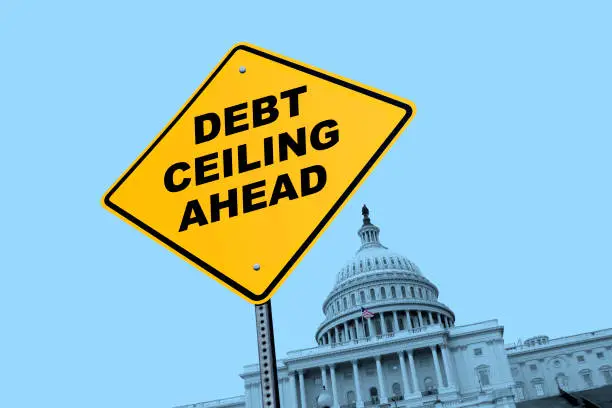
Professor Peter Quartey, Director of the Institute of Statistical, Social, and Economic Research (ISSER), has emphasized the critical need for Ghana to establish a debt ceiling to avert future instances of debt restructuring. During the launch of the State of Ghanaian Economy Report, Prof. Quartey advocated for legislation mandating the government to limit borrowing to a maximum of 60 percent of the country’s Gross Domestic Product (GDP). This measure is intended to mitigate the burden of debt servicing on future government budgets. The event underscored ISSER’s commitment to fostering informed decision-making for sustainable development and provided a forum for stakeholders to discuss the pressing economic challenges faced by Ghanaians.
During his address, Professor Quartey highlighted the necessity for the government to reevaluate the existing fiscal responsibility law, incorporating a formal debt ceiling into its framework. By doing so, the government could contain deficits and manage debt within sustainable limits, which would strengthen fiscal management. In addition to establishing limits on borrowing, he stressed the importance of expenditure rationalization, particularly in procurement processes and compensation strategies, advocating for the digitalization of the national payroll system as a means to enhance efficiency and reduce unnecessary expenditure.
Ghana’s economic woes were significantly exacerbated in 2022 when the country found itself unable to service both its external and internal debts, leading to severe indebtedness. International credit rating agencies downgraded Ghana to junk status, stripping the nation of access to international borrowing options, further complicating its fiscal situation. In response, the government initiated the Ghana Domestic Debt Exchange Programme (DDEP) on December 5, 2022, aimed at restructuring a staggering GHS137 billion of domestic debt. This development highlighted the urgent need for sustainable fiscal strategies to restore financial credibility.
The Professor also pointed out Ghana’s inadequate tax capacity, underscored by a low tax-to-GDP ratio, which was recorded at 12.3 percent in 2022 and projected to rise only marginally to 13.64 percent in 2024. He noted that this low tax revenue generation has created a self-perpetuating cycle in which insufficient tax inflows hinder the provision of essential infrastructure, leading to an overreliance on debt financing. Interest payments on this accumulating debt have become the predominant expenditure item, catalyzing recent economic instability. Therefore, a reform in revenue generation strategies is essential for economic revitalization and sustainability.
To reinforce Ghana’s economic framework, Prof. Quartey recommended a robust revenue-based system that would bolster the capabilities of local revenue-generating institutions such as the Metropolitan, Municipal, and District Assemblies (MMDAs). He emphasized that rationalizing public expenditures should extend to capturing all government expenditures within the Government Financial Management Information System (GIFMIS). By employing efficient technologies for property rate collection and decreasing dependency on central government transfers, local governments would be better positioned to foster development tailored to their communities’ unique needs and resources.
In his recommendations, the Professor underscored the necessity for local governments to invest in relevant Information Technology (IT) systems, enhancing their capacity to generate taxes and manage expenditures effectively. By adopting such measures, MMDAs could significantly improve their financial independence while promoting local development. Overall, establishing a clear framework for managing debt through stringent borrowing limits, combined with comprehensive measures to enhance tax collection and fiscal discipline, is seen as pivotal for stabilizing Ghana’s economy and paving the way towards sustainable growth and development.