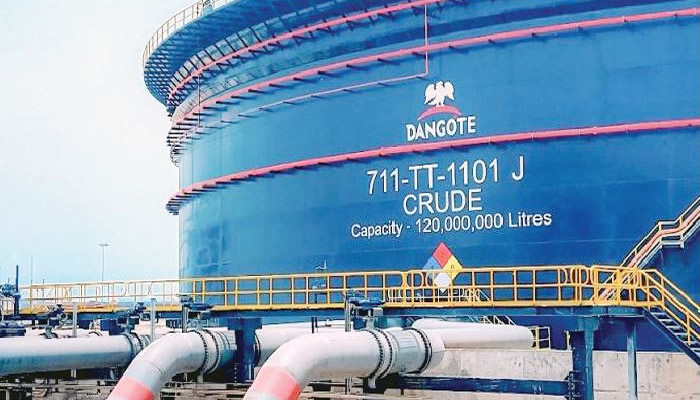
Ghana is exploring the possibility of sourcing petroleum products from Nigeria’s Dangote Petroleum Refinery, a strategic move that could significantly reduce its monthly fuel import costs and dependency on more expensive European exports. This potential avenue for fuel acquisition was highlighted by Mustapha Abdul-Hamid, the Chairman of Ghana’s National Petroleum Authority, during the OTL Africa Downstream oil conference in Lagos. Currently, Ghana spends approximately $400 million monthly importing fuel from Europe, a situation that could change once the Dangote refinery operates at full capacity. This plan is a response not only to the high costs associated with European imports but also to Nigeria’s recent deregulation of its downstream oil sector, which has initiated a massive influx of imports into Nigeria.
The Dangote refinery, which represents a $20 billion investment and is located in Lekki, Nigeria, began releasing Premium Motor Spirit, also known as petrol, into the market on September 15, 2024. The refinery has made strides in operational capacity, yet it is noteworthy that Nigerian marketers are still resorting to importing fuel in vast quantities, a trend spurred by the recent deregulation. Hamid emphasized the potential for Ghana to pivot towards acquiring fuel from Nigeria instead of engaging in expensive imports from Rotterdam, thereby making the entire process more economical and efficient. The predicted capacity for the refinery is quite promising; once it achieves around 650,000 barrels per day, excess production can be exported, facilitating Ghana’s transition away from European suppliers.
The Chairman of the National Petroleum Authority projected that if the Dangote refinery’s capacity targets are met, it would cater not only to Nigeria’s needs but also allow for exports to neighboring countries like Ghana. Importing from Nigeria, as opposed to Europe, could lead to reduced transportation costs, which could subsequently lower prices for other goods and services in Ghana. This aligns with efforts to strengthen economic ties within West Africa while leveraging local resources to bolster energy security and sustainability.
Moreover, Hamid’s address also touched upon broader economic implications beyond fuel imports. He suggested that relying more on regional sources would foster a more interconnected economy within Africa, potentially leading to the adoption of a common currency. This, he argued, would reduce the continent’s dependency on the U.S. dollar, addressing systemic economic vulnerabilities and improving trade dynamics across nations. The vision entails not just a reduction in fuel costs but a more profound transformation of the economic landscape within the region.
Ghana’s economy has seen significant growth, recording a 6.9% expansion year-on-year for the second quarter of 2024, largely driven by advancements in the extractive sector which has heightened the demand for fuel. This growth provides an opportune backdrop for the country’s exploration of new fuel supply channels, especially when coupled with the Nigeria refinery’s capabilities. The reliance on international markets has often brought challenges, and as such, the focus shifts to domestic and regional solutions that can offer stability and cost-effectiveness to the fuel supply chain.
Ultimately, the potential partnership between Ghana and Nigeria, centered around the Dangote refinery, promises to reshape energy sourcing in West Africa. It encapsulates a move towards fostering intraregional cooperation in trade, enhancing energy security, and supporting sustainable economic growth. The collaboration builds anticipation not only for tangible financial benefits through reduced fuel import costs but also for the establishment of a resilient economic framework that could withstand external shocks and promote self-sufficiency in the petroleum sector.