





The call for renaming Ghana’s colonial forts reverberated powerfully through the voices of a delegation of African Americans from the Teaching Artist Institute (TAI) and their Ghanaian counterparts from the University of Cape Coast (UCC). Their visit to the Cape Coast and Elmina castles, poignant landmarks of the transatlantic slave trade, ignited a passionate plea to President John Dramani Mahama to replace the misleading term “castle” with the starkly accurate “Slave Dungeons.” This proposed change, they argued, would be a crucial step towards acknowledging the brutal reality of these sites and honoring the memory of millions who suffered within their walls. The delegation’s visit encompassed not only a historical pilgrimage but also a commitment to cultural exchange, educational collaboration, and a shared pursuit of historical truth.
The delegation, comprised of educators, students, and parents from TAI, along with faculty from UCC’s Department of Music and Dance, viewed their journey as both a personal reconnection with ancestral roots and an opportunity to forge stronger ties between the two institutions. TAI Executive Director Kim Poole eloquently articulated the delegation’s stance, asserting that the term “castle” evokes images of royalty, opulence, and protection, a stark contrast to the horrific conditions endured by enslaved Africans within these coastal fortifications. The cramped, dark dungeons, she argued, were holding pens for human beings awaiting transport across the Atlantic – a journey from which few, if any, ever returned. The term “castle,” therefore, served to sanitize and misrepresent the true nature of these sites.
Poole’s critique of the existing nomenclature was amplified by the voices of other delegation members. Mr. Elijah Etheridge, a parent and lecturer with TAI, emphasized the profound disconnect between the seemingly benign labels “Cape Coast Castle” and “Elmina Castle” and the agonizing history they represent. He challenged the romanticized view of Western nations, urging Ghanaians and others to remember the suffering inflicted upon their ancestors and to draw strength from their resilience in facing contemporary struggles against inequality and poverty. The delegation’s message resonated with the smell of suffering that still permeates the dungeons, serving as a stark counterpoint to the sanitized narrative implied by the word “castle.”
The call for renaming received strong academic support from Dr. John Doe Dordzro, Head of UCC’s Department of Music and Dance. He framed the proposed change as a critical act of historical reckoning, arguing that “Slave Dungeons” accurately reflects the sites’ function as monuments to a harrowing chapter in human history. The term “castle,” he contended, romanticizes and obscures the brutal reality of the slave trade, while “Slave Dungeons” acts as a stark reminder of the human cost of this horrific practice. Furthermore, he asserted that such a renaming would have profound implications for healing and reconciliation within the African diaspora, fostering a more honest and inclusive understanding of the past.
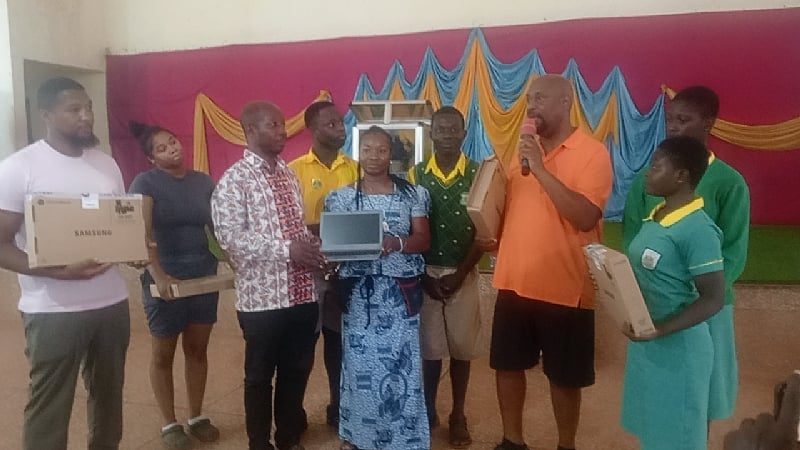
The delegation’s visit extended beyond symbolic gestures and intellectual debate. It included a concrete demonstration of solidarity with the local community. The group donated much-needed laptops to Edinaman Senior High School, a resource-strapped institution with a student body of 4,800 and a mere two functional computers. This act of generosity underscored TAI’s commitment to fostering educational opportunity and building bridges across cultures. The school’s headmaster expressed profound gratitude, welcoming further collaboration between the school and TAI.
The visit to Cape Coast and Elmina represented a powerful convergence of historical reflection, cultural exchange, and educational partnership. The call for renaming the castles as “Slave Dungeons” stands as a testament to the delegation’s commitment to historical accuracy and restorative justice. Their actions, both symbolic and practical, emphasized the need for a more honest and comprehensive narrative of the transatlantic slave trade, a narrative that acknowledges the suffering of millions while also celebrating the resilience of the human spirit. The visit exemplifies the power of cross-cultural collaboration in addressing shared historical traumas and working towards a future informed by truth and reconciliation. TAI’s educational mission, intertwined with this historical pilgrimage, aims to foster a deeper understanding of the past while inspiring action for a more just and equitable future.








