









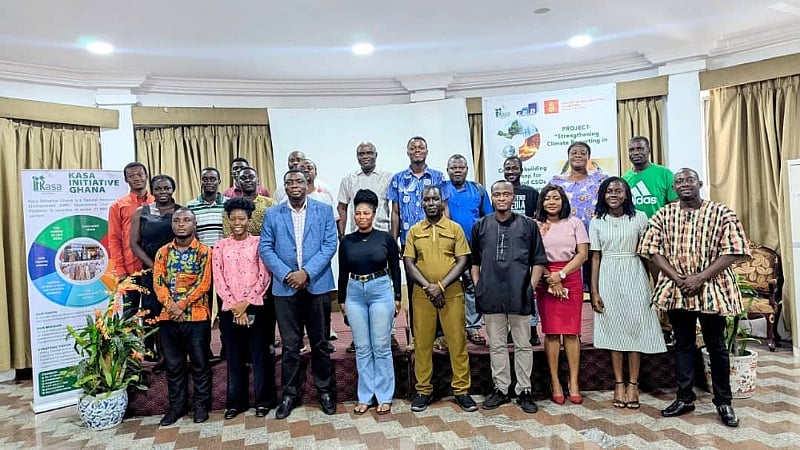
The KASA Initiative Ghana has taken significant steps to enhance climate change reporting in the country by organizing a one-day training workshop for journalists in partnership with the Centre for Democratic Development (CDD) and with support from the Danish Embassy. Held on October 25, 2024, in Accra, the workshop aimed to equip media professionals with the necessary knowledge and skills to report accurately on the impacts and implications of climate change in Ghana. The event, themed “Strengthening Climate Reporting in Ghana,” aimed to elevate the media’s capacity to cover climate-related issues effectively, acknowledging the critical role journalists play in shaping public perception and influencing policy decisions.
The opening remarks by KASA Ghana Coordinator, Mr. Jonathan Gokah, highlighted the importance of informed climate reporting. He underscored that accurate reporting is essential in fostering public awareness and shaping policy discussions surrounding climate change. Gokah emphasized that journalists have the power to influence public discourse, thereby stressing the organization’s commitment to promoting informed dialogue on climate change challenges facing Ghana. He urged participants to focus on the importance of contextual reporting to enhance the public’s understanding of climate issues that directly impact their lives.
During the workshop, Mr. Kyei Kwadwo Yamoah, the Climate Change Adaptation Manager, set a collaborative tone by discussing the journalists’ role in navigating the complexities of climate reporting. He stressed that nuanced and fact-based reporting is vital to counteract misinformation and to promote sustainable development. By engaging participants with expert presentations and interactive sessions, the workshop delved into key facets of climate change, including mitigation strategies, adaptation techniques, and the socio-environmental effects experienced by local communities across Ghana.
The training incorporated case studies to illustrate the real-life impacts of climate change in Ghana. Journalists participated in discussions that addressed urgent issues, such as the damaging effects of illegal mining (galamsey), coastal tidal waves, and severe droughts affecting northern regions. Through group exercises, attendees explored how to report on these matters effectively, learning to consider various perspectives and incorporate data-driven storytelling techniques. Mr. Yamoah also outlined best practices for climate reporting, such as utilizing scientific research, conducting stakeholder interviews, and making on-the-ground observations to enhance narrative engagement.
Participants identified several challenges faced in climate change reporting, including restricted access to information, limited resources, and editorial constraints. Nevertheless, the workshop served as a productive networking platform, encouraging collaboration and knowledge-sharing among journalists. A participant expressed enthusiasm, stating that the training was enlightening and fostered a deeper understanding of the intricacies involved in climate reporting, ultimately enhancing engagement with their respective audiences.
Concluding the workshop, organizers called for action, urging journalists to prioritize climate change coverage and to hold policymakers accountable for implementing effective climate strategies. The commitment expressed by KASA Initiative Ghana and CDD, supported by the Danish Embassy, seeks to initiate sustained efforts to improve the quality and frequency of climate reporting across the nation. By continuing to provide training and resources, the initiative aims to maintain climate change as a prominent focus within Ghana’s media landscape, contributing to a well-informed public and fostering sustainable national development.









