









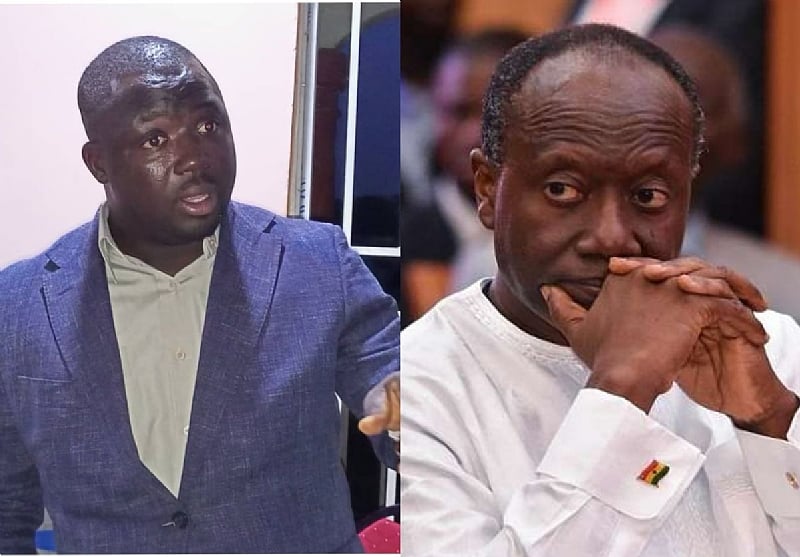
Mustapha Gbande, former Deputy General Secretary of the National Democratic Congress (NDC) and current Deputy Director of Operations at the presidency, has issued a stern warning regarding the pursuit of former Finance Minister Ken Ofori-Atta, asserting that the government’s resolve to recover allegedly stolen funds transcends even death. Gbande’s uncompromising declaration, delivered during an interview with Joy News, underscored the government’s unwavering commitment to holding Ofori-Atta accountable for his alleged actions during his tenure as Finance Minister. He emphatically stated, “If, for any reason, he passes on, his dead body will be prosecuted and jailed, and every stolen penny belonging to the people of Ghana will be retrieved.” This statement, while figurative, underscores the seriousness with which the government is pursuing this matter.
The context for Gbande’s pronouncements lies in the ongoing investigations being conducted by the Special Prosecutor, Kissi Agyebeng, into Ofori-Atta’s involvement in several high-profile cases. Agyebeng, during a press conference held in Accra, declared Ofori-Atta a fugitive, implicating him in four significant investigations, including the controversial National Cathedral project. The declaration of Ofori-Atta as a fugitive signifies the Special Prosecutor’s belief that he is actively evading the legal process.
Ofori-Atta’s absence from the country, attributed to medical treatment abroad, has further fueled the government’s determination to secure his presence for questioning. Gbande, in his Joy News interview, reiterated the government’s commitment to exploring all available avenues to ensure Ofori-Atta’s return to Ghana. He asserted that “every measure will be deployed to bring him back,” emphasizing the lengths to which the government is willing to go to ensure his appearance before the relevant authorities.
The government’s pursuit of Ofori-Atta centers around allegations of financial impropriety and mismanagement during his tenure as Finance Minister. While the specific details of these allegations remain largely undisclosed pending the completion of the investigations, the Special Prosecutor’s declaration and Gbande’s subsequent statements suggest the existence of substantial evidence warranting further scrutiny. The National Cathedral project, in particular, has been a subject of intense public scrutiny and controversy, with allegations of misappropriation of funds swirling around its development.
The gravity of the accusations leveled against Ofori-Atta, coupled with his absence from the country, has created a highly charged political atmosphere. The government’s unwavering commitment to pursuing the case, as evidenced by Gbande’s pronouncements, signals its intent to hold high-ranking officials accountable for their actions and to send a clear message about its zero-tolerance stance on corruption. The pursuit of Ofori-Atta, regardless of his location or health status, signifies the government’s determination to uphold the rule of law and ensure transparency in the management of public funds.
However, the practicalities of prosecuting a deceased individual remain questionable. Gbande’s statement about prosecuting Ofori-Atta’s “dead body” should be interpreted as a metaphor emphasizing the government’s unwavering determination to recover any misappropriated funds, even pursuing legal avenues against his estate if necessary. The statement also highlights the emotional intensity surrounding the case and the public’s desire for accountability. The government’s commitment to pursuing all available legal avenues, including potential civil actions against Ofori-Atta’s estate, underscores its commitment to recovering any misappropriated public funds.









