









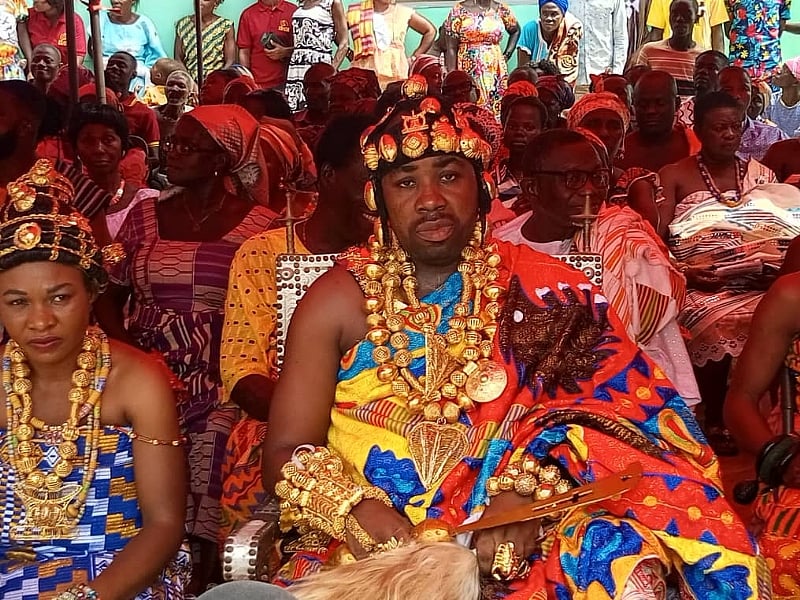
The Omanhene of Agona Nsaba, Okeseku Afari Minta III, has called on Ghanaians to cherish and preserve their cultural heritage as a vital means to foster unity and coexistence within the community. Speaking at the recent unveiling of the Nsabaman Flag—a significant symbol of pride and authority for the people of Nsabaman—he emphasized the danger of assimilating foreign cultures that may undermine local traditions. According to Minta III, Ghana’s cultural identity is a cornerstone that binds its citizens together, creating social cohesion and shared values. He articulated that the event, part of the Annual Akwambo festival, was not only a celebration but also a reminder of the deep-rooted cultural heritage that defines the people of Nsabaman.
Minta III acknowledged the blood and sacrifices of their ancestors, who fought to maintain the unifying fabric of their cultural identity. He asserted that the flag unveiled during the event serves as a physical representation of pride for the citizens of Agona Nsaba. Each community, he noted, thrives by embracing its distinctive cultural traits, which are essential for fostering a strong sense of community and purpose. In his speech, he highlighted that like every nation, spiritual body, or organization, which has its own emblem to denote identity and guide actions, the people of Nsabaman must echo their cultural values and practices, establishing a legacy that the coming generations can inherit and uphold.
The design of the Nsabaman Flag, as explained by the Omanhene, consists of blue and white colors alongside a black sword. The blue resonates with the character of the Nsabaman community and signifies their relationship with surrounding water bodies, while the white symbolizes concepts of lightning and victory. The inclusion of the black sword emphasizes the political authority of the Nsaba State. In unveiling this flag, Minta III aimed to remind the youth of their rich heritage while instilling a marvellous spirit of patriotism that encourages the preservation of their cultural values and practices as active participants of a collective legacy.
Obrempong Afari Doudu Opoku I, the Dabrehene of Agona Nsaba, highlighted the flag’s role as a spiritual bond that unites all citizens of Agona Nsaba, both at home and in diaspora. Expressing his joy at witnessing the ceremony, he spoke of the importance of the flag in articulating the cultural narratives and beliefs of the community, allowing them to share their story with the world. With appreciation for the leadership of Minta III, Opoku I conveyed that the flag symbolizes the power and authority inherent in Nsabaman culture, underpinning the importance of cultural transmission from one generation to another.
The call for fostering cultural education among youth emerged as a key theme during the event. Opoku I articulated the pressing need to impart knowledge about heritage to children, emphasizing that they must be educated about their roots to prevent the adoption of unfamiliar customs. The timing of this message during the Annual Akwambo festival is significant, as it presents an opportunity to engage the younger generation in cultural activities that reinforce their identity and values. By emphasizing the need to equip the youth with an appreciation of their culture, traditional leaders like Opoku I seek to ensure the continuity of their cultural practices.
In conclusion, both leaders advocated for unity among Ghanaians, emphasizing that a shared cultural identity is essential for progress and development within the nation. The unveiling of the Nsabaman Flag stands as an emblem of hope and a reminder that cultural preservation is fundamental to strengthening community ties. As they celebrate their cultural heritage, the leaders urge Ghanaians to remain steadfast in their commitment to uphold and transmit traditional values, aiming for a future where cultural integrity thrives, creating a harmonious society bound by shared history and destiny.









