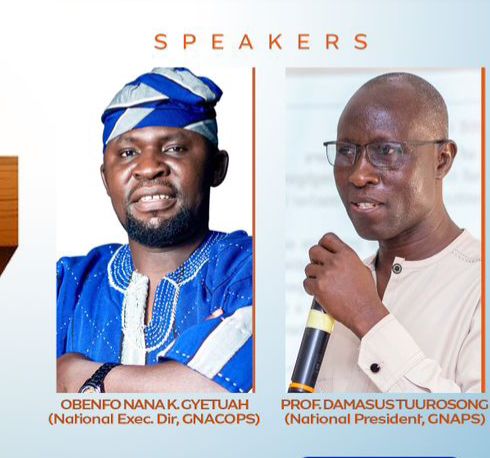
As Ghana gears up for the 2024 presidential and parliamentary elections, the Ghana National Council of Private Schools (GNACOPS) and the Ghana National Association of Private Schools (GNAPS) have made a fervent appeal for private education providers to take an active role in the electoral process. In a joint press statement, the leaders of both organizations, Obenfo Nana Kwasi Gyetuah, the National Executive Director of GNACOPS, and Prof. Damasus Tuurosong, the National President of GNAPS, highlighted the fundamental democratic right of every Ghanaian aged 18 and older to participate in voting, a right enshrined in the 1992 Constitution. The associations called upon the extensive network of private school owners and staff—numbering approximately 34,568 owners and 543,696 employees—to engage deeply in the elections by supporting candidates who recognize and value the significant impact of private education on the nation’s development.
The joint statement by GNACOPS and GNAPS took note of the numerous challenges that private education providers face, which include a perceived lack of support from the government and numerous violations of their constitutional rights. Despite these persistent setbacks and obstacles, the leadership of these organizations urged their members to display resilience and view the upcoming elections as a pivotal moment to assert their influence over the future trajectory of education and national advancement. They underscored the importance of using the electoral process as a means to elect leaders who appreciate the essential role played by private educational institutions in Ghana’s growth and socio-economic development.
In their declaration, the leaders of GNACOPS and GNAPS emphasized that actively participating in the democratic process is beneficial not only for the private education providers but also for the students, parents, and local communities who rely on their services. They called on all stakeholders involved in the sphere of education—parents, educators, and community members—to bond together and ensure their voices resonate in shaping policies that foster an environment conducive to delivering quality education throughout Ghana. This message serves as a reminder of the vital responsibilities that both education providers and citizens share in forging a better future for the nation.
The push for civic engagement among private education providers is framed as a crucial engagement in the democratic process that strengthens both individual and national identity. By uniting behind a common cause, these stakeholders can influence decisions that directly impact the quality and accessibility of education in the country. GNACOPS and GNAPS aim to inspire not just their members but all citizens to realize that by exercising their voting rights, they can effect meaningful change and ensure that elected officials commit to upholding and supporting the interests of private education.
Moreover, the statement concluded with a strong message of unity and determination, encouraging all involved to make their voices heard within the political arena. This serves as a rallying cry not merely for the elections, but for a future where private education is respected, supported, and integrated into the broader educational landscape of Ghana. The leaders urged their members to take ownership of their civic responsibilities and to see their participation in elections as a way to champion the importance of education in national discourse and policy-making.
In essence, this call to action from GNACOPS and GNAPS encapsulates a broader vision for the role of private education in Ghana. As the country approaches election season, it is crucial for private education providers to mobilize and assert their influence to ensure that candidates who recognize the significance of their contributions to society are elected to office. Ultimately, the collective engagement of private educators and the communities they serve can significantly impact the direction of educational policy and practice in Ghana, contributing to the nation’s overall progress and democratic strength.