









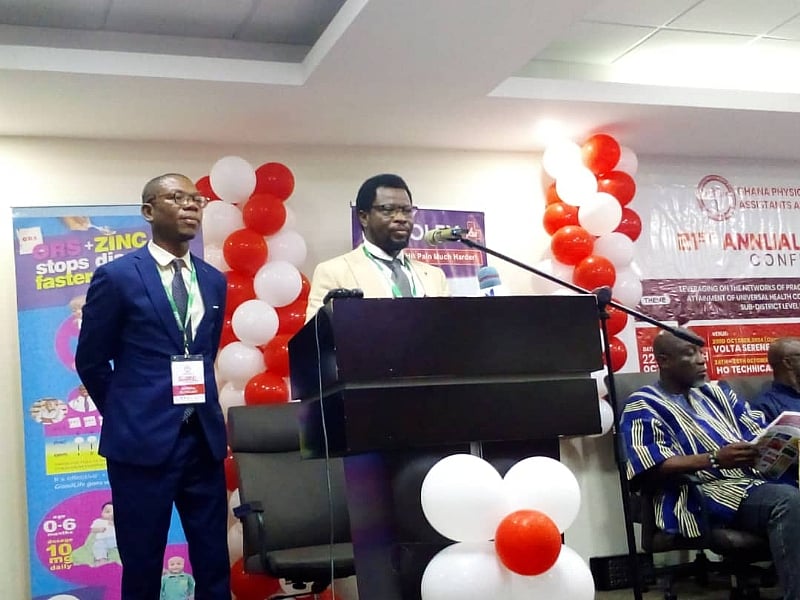
The Physician Assistants Association of Ghana (GPAA) has raised significant concerns regarding the profession’s future and the critical challenges that currently plague it. At the organization’s 21st Annual Conference in Ho, GPAA President Mr. Peter Akudugu Ayamba spotlighted the urgent need for the government to implement targeted strategies to address these issues, particularly in the context of achieving universal health coverage. The conference theme—”Leveraging Networks of Practice Implementation to Accelerate the Attainment of Universal Health Coverage: Resource Constraints at the Sub-District Level Under the Microscope”—underscores the emphasis on addressing barriers at the grassroots healthcare level. Mr. Ayamba emphasized that despite physician assistants’ integral role in primary healthcare delivery, the absence of supportive policies jeopardizes the sustainability of the profession.
A central issue highlighted by Mr. Ayamba was the alarming rate of unemployment among newly qualified physician assistants, a situation exacerbated by persistent delays in government financial clearance. Many graduates have been left without employment for up to four years, causing frustration as they are still required to renew their professional licenses yearly. This lack of prompt government action raises questions about the support offered to bridge the gap between education and employment in the healthcare sector. Additionally, Mr. Ayamba conveyed his discontent regarding the absence of structured career progression pathways. He argued that without a clearly defined route for professional development and specialization, physician assistants are stunted in their ability to grow and effectively contribute to healthcare services in Ghana.
The GPAA President further criticized the prevailing misplacement of specialized physician assistants in roles that do not acknowledge or utilize their expertise, particularly in fields like psychiatry and dermatology. These skilled professionals are often unable to gain recognition at their respective workplaces, resulting in underutilization of their specialized training. Moreover, the challenges extend to those in private practice who encounter numerous obstacles, one of which is the cumbersome process of obtaining accreditation from the National Health Insurance Scheme (NHIS). This lack of accreditation hinders their capacity to deliver quality healthcare services, further exacerbating the difficulties faced by physician assistants in the country.
In discussing the challenges, Mr. Ayamba did not shy away from addressing the government’s inaction regarding improved working conditions for physician assistants. He linked this failure to the broader economic climate and conditions imposed by international financial bodies like the International Monetary Fund (IMF), which he claims have stymied progress in announcing and implementing better terms of service. As he urged for immediate governmental intervention to resolve the backlog of financial clearance issues, he also encouraged current GPAA members to invest in their self-development. Mr. Ayamba stressed the importance of enhancing personal skills and knowledge, as physician assistants need to be adaptive and proactive within a challenging healthcare landscape.
Dr. Senanu Kwesi Dzokoto, the Volta Regional Deputy Health Director, lent his support to the call for attention to the issues facing physician assistants, reaffirming their crucial role in the healthcare delivery system. This was echoed by Mr. Augustine Awity, the Volta Regional Coordinating Director, who urged the Ministries of Health and Finance to respond swiftly to the GPAA’s outlined grievances. The conference also revealed systemic challenges, including the troubling trend of some universities, notably Kwame Nkrumah University of Science and Technology (KNUST), University of Cape Coast (UCC), and the University for Development Studies (UDS), de-accrediting physician assistant programs. This crises of de-accreditation threatens the educational foundation required to produce competent healthcare professionals and is seen as a significant blow to the future of healthcare delivery in Ghana.
Mr. Ammed Yakubu, President of the Physician Assistant Students Association of Ghana (PASAG), raised alarms over the potential fallout from these de-accreditation moves, particularly in private universities, as they may sway students away from pursuing a career as a physician assistant. He expressed concern that this could ultimately undermine the healthcare system’s effectiveness. Additionally, he alleged that influential individuals within the health sector are negatively steering students toward other courses instead of encouraging them to follow the physician assistant pathway. In response to the GPAA’s plight, Dr. Peter Obiri Yeboah, Director of Human Resources at Ghana Health Service, affirmed that the grievances were being taken seriously, and he encouraged ongoing dialogue to address concerns raised by the association.
The 2024 Annual General Conference, running from October 22 to October 25, aims to heighten stakeholder awareness about the weaknesses in sub-district healthcare services and the pressing need for improvement in human capital development. The discussions proposed during this conference will focus on promoting strategies to bolster healthcare delivery and further the goal of universal health coverage. It remains essential that the government and relevant authorities recognize and act upon the challenges outlined by GPAA members to ensure a robust healthcare system, the advancement of healthcare professionals, and ultimately, the well-being of the Ghanaian populace.









