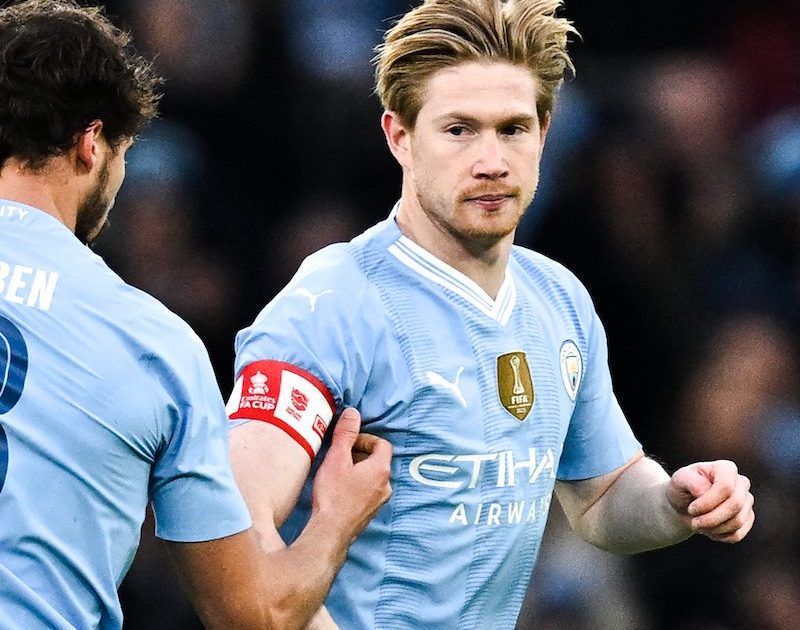
Kevin De Bruyne’s future at Manchester City hangs in the balance as his current contract approaches its expiration at the end of the season. The 33-year-old Belgian midfielder, a pivotal figure in City’s recent triumphs, has been hampered by recurring injuries over the past two seasons, significantly limiting his playing time and raising concerns about his long-term viability. This uncertainty has prompted manager Pep Guardiola to acknowledge the club’s need to carefully consider De Bruyne’s future, weighing his undeniable talent against his recent injury struggles. With the January transfer window open, De Bruyne is free to negotiate with foreign clubs, adding another layer of complexity to the situation. While Guardiola has refrained from directly addressing contract negotiations, his comments suggest a degree of ambiguity surrounding De Bruyne’s role at the club moving forward.
De Bruyne’s contributions to Manchester City have been nothing short of transformative. Since joining the club in 2015, he has played a crucial role in securing six Premier League titles and a coveted Champions League trophy. His creativity, passing precision, and goal-scoring ability have made him a cornerstone of City’s attacking prowess, earning him widespread acclaim as one of the best midfielders in the world. However, the past two seasons have witnessed a stark contrast to his earlier dominance, with persistent injuries disrupting his rhythm and preventing him from consistently showcasing his exceptional talent. This recurring pattern of setbacks has inevitably raised questions about his ability to maintain peak performance at the highest level, particularly given his advancing age.
Guardiola’s remarks underscore the delicate balancing act facing Manchester City. While acknowledging De Bruyne’s importance and the potential for him to regain his form, Guardiola also emphasizes the club’s responsibility to assess the situation realistically. The decision to extend De Bruyne’s contract rests not only on his individual performance but also on the broader context of the team’s needs and long-term ambitions. The club must weigh the potential benefits of retaining a proven match-winner against the risks associated with a player whose fitness has become increasingly unpredictable. This delicate equation requires careful consideration of various factors, including De Bruyne’s age, injury history, and potential transfer alternatives.
The timing of De Bruyne’s contract situation coincides with a period of relative instability for Manchester City. Their Premier League title defense has faltered significantly, with a string of disappointing results leaving them trailing far behind the league leaders. This unexpected downturn has amplified the scrutiny on the squad’s composition and the need for reinforcements. While Guardiola has acknowledged the possibility of making signings during the January transfer window, he has also emphasized the club’s cautious approach. He insists that any new additions must align with the club’s long-term vision and contribute to a sustainable strategy for success. This measured approach suggests a reluctance to engage in panic buying, instead prioritizing strategic acquisitions that address the team’s specific needs.
The confluence of De Bruyne’s uncertain future and City’s current struggles creates a challenging scenario for Guardiola and the club’s management. They must navigate the complexities of contract negotiations with a key player while simultaneously addressing the team’s immediate performance concerns. The January transfer window presents an opportunity to bolster the squad, but Guardiola’s cautious stance underscores the importance of making informed decisions that align with the club’s long-term objectives. The balancing act of short-term fixes and long-term planning requires careful consideration, as hasty moves could have unintended consequences down the line.
Manchester City’s next steps will be watched closely by fans and pundits alike. The decision regarding De Bruyne’s contract will have significant implications for the team’s future, shaping their midfield composition and influencing their overall attacking dynamics. The club’s approach to the January transfer window will also be a key indicator of their strategic priorities, revealing their willingness to invest in short-term solutions or prioritize long-term stability. These decisions will play a crucial role in determining whether Manchester City can regain their dominant form and reclaim their position at the pinnacle of English football. The coming weeks and months will undoubtedly be a crucial period for the club, as they navigate the challenges and uncertainties that lie ahead.