





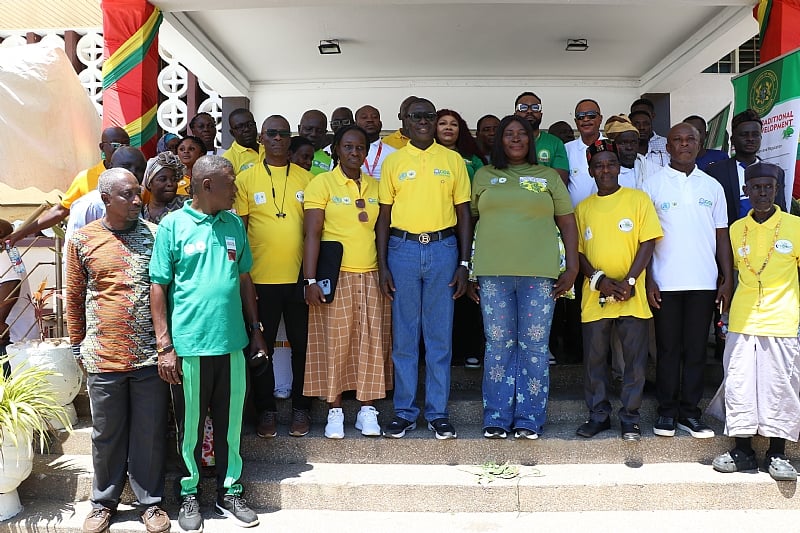
Traditional medicine has gained substantial attention and investment from foreign entities, significantly enhancing healthcare delivery and contributing to Ghana’s productivity and economic growth. Currently, Ghana boasts 60 government hospitals equipped to provide herbal medicine services via trained medical herbalists. These practitioners have received training from reputable institutions such as the Kwame Nkrumah University of Science and Technology, Tetteh Quarshie Memorial Hospital, and the Centre for Plant Medicine Research. During the 22nd African Traditional Medicine Day and the 25th Traditional Medicine Week held in Accra, Ghana’s Minister of Health, Dr. Bernard Oko Boye, addressed the growing significance of traditional medicine in the nation, emphasizing its potential in both health care and economic sectors.
The theme of the event, “Support the Provision of Quality and Safe Traditional Medicine through Appropriate Regulatory Mechanisms,” focused on the vital need for robust regulatory frameworks to ensure the quality, efficacy, and safety of traditional medicinal products. Dr. Oko Boye highlighted the necessity of establishing these regulatory bodies as a means of fostering trust and accountability in traditional medicinal practices. By emphasizing regulation, the health care sector aims to enhance consumer confidence in traditional medicine, further integrating it within formal healthcare systems while ensuring that practitioners adhere to the highest standards of practice.
In addition, Dr. Oko Boye acknowledged the economic impact of traditional medicine within Ghana’s landscape, particularly its capacity to generate employment opportunities. He emphasized that various regulatory institutions, research bodies, and production companies linked to traditional medicine provide many job openings for Ghanaians, thus contributing to national development. Notably, the expansion of this sector has positioned Ghana as a prominent player in the realm of traditional medicine, allowing it to potentially serve as a model for other nations.
The health minister also revealed that traditional medicine services are now incorporated within the National Health Insurance Scheme (NHIS). This development will ensure that herbal medicine practitioners can offer their services to insured patients, thereby making traditional medicine more accessible. Furthermore, the Ministry of Health has reportedly completed the process of including a list of recommended herbal medicines in the National Essential Medicine List, ensuring that these products will be covered by the NHIS. This move underscores the increasing recognition of traditional medicine within Ghana’s formal health care infrastructure.
Dr. Anastasia Michaelina Yirenkyi, Director of the Traditional and Alternative Medicine Directorate, articulated the fundamental role of health in each individual’s life, declaring that good health is a person’s greatest wealth. She emphasized the intrinsic value of health, suggesting that financial resources are meaningless if one is unhealthy. Similarly, Professor Isaac Kingsley Amponsah, a distinguished supporter of traditional medicine, echoed these sentiments, advocating for the importance of health as a foundational aspect of human existence. He also underscored the significant role traditional medicine plays in maintaining the health and well-being of Ghanaians while calling for ongoing research and development within the field to address contemporary health challenges.
The Traditional and Alternative Medicine Directorate is further tasked with formulating policies, monitoring activities, and coordinating the integration of traditional medicine into Ghana’s overall healthcare system. Their efforts are crucial for creating a cohesive framework that encompasses both modern and traditional medical practices, ultimately aiming to improve healthcare delivery and patient outcomes. Through collaborative efforts between governmental entities, educational institutions, and traditional medicine practitioners, Ghana aims to foster a healthcare environment that not only respects traditional practices but also ensures a high standard of quality and safety for all medicinal products, driving the nation towards holistic health and prosperity.








