





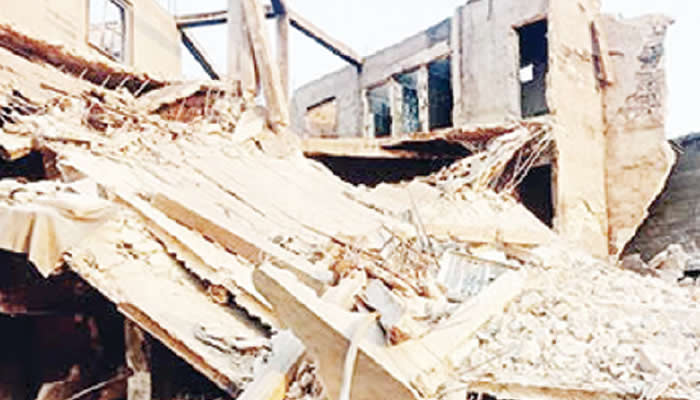
In a tragic incident in the Jegede community of Ibadan, Oyo State, a landlord named Pa Abdullamid Alabi experienced an unfathomable loss when his house collapsed during a severe thunderstorm on a Thursday night. While Alabi managed to escape with his life, the collapse resulted in the deaths of his wife, four grandchildren, and nine psychiatric patients who had been living with the family. The calamity struck after approximately 30 minutes of rainfall, causing the storm’s forceful winds to shatter the bungalow’s windows and ultimately lead to the building’s devastation. Alabi recounted his harrowing experience, revealing he had no premonition of danger even moments before the disaster unfolded. On that fateful night, most of his family members were asleep, making the tragedy even more heart-wrenching.
As he recovered in Mercyland Hospital, Alabi shared the terrifying moment of the crumbling house. It was approximately 12:10 AM, and he had stepped outside to use the restroom when the structure fell apart. He described his ordeal, recalling that he had lost consciousness and later found himself in the hospital bed, attributing his survival to divine intervention. His role as a native psychiatric doctor compounded his grief, as he not only mourned the loss of his loved ones but also of the nine patients he had taken in for psychiatric rehabilitation, all of whom were on the path to recovery prior to the catastrophe. Alabi’s deep sorrow was palpable, particularly as he mentioned his first wife’s death; she was around 70 years old, and he himself is over 80, leaving him in an incredibly vulnerable situation.
The aftermath of the collapse left Alabi homeless and in desperate need of support. During his emotional recounting, he expressed his appreciation for the rescuers who worked tirelessly to locate and pull survivors from the rubble, emphasizing the difficulties faced during the chaotic and tragic night. The heartbreaking loss extended beyond family to include loyal patients who had come to trust and rely on Alabi’s care. His tragic narrative exemplifies the human toll that natural disasters can exact, particularly when safety seems assured.
Jelilatu Olapade, Alabi’s sister, reaffirmed the unexpected nature of the disaster, stating that the building had shown no signs of structural defects leading up to the incident. Her observations highlighted the cruel irony that the children, who were fast asleep on the ground floor, were unable to escape as the wreckage fell around them. This added a layer of tragedy to the event, illustrating how vulnerable those in the lower levels were to the devastation, and reinforcing the grief shared amongst the survivors. Olapade and other family members survived only because they were on the upper floors at the time of the collapse.
As the ordeal unfolded, individuals from the community rushed to offer their help, emphasizing the importance of communal support in such dire situations. One of the younger survivors was able to evacuate her newborn and another child just in time, demonstrating how critical timing is in emergency situations. Such acts of bravery amidst trauma showcase the resilience of the human spirit, even when faced with overwhelming grief and loss.
In summarizing this disaster, it is clear that the collapse of Alabi’s home was not just a structural failure; it represents a heartbreaking intersection of community, tragedy, and resilience. While the loss of life is irreplaceable, the mutual support from family, friends, and neighbors highlights an enduring hope amidst despair. As Alabi navigates the aftermath, his story serves as a reminder of the fragility of life and the need for empathy and assistance in times of great need. The call for help from Alabi echoes the sentiments of many who have faced similar losses, emphasizing the importance of facing life’s challenges together.








