





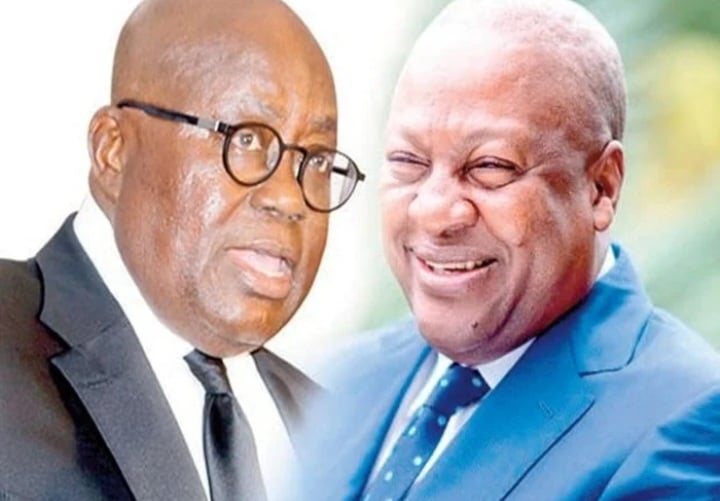
In a recent address at the Good Governance Forum, former President John Dramani Mahama, the flagbearer of the National Democratic Congress (NDC), firmly countered remarks from President Akufo-Addo questioning his qualifications to lead Ghana. Mahama expressed a strong sense of self-awareness in his capabilities as a leader, emphasizing his readiness to tackle the pressing challenges the country faces. He notably referred to his experience, suggesting that the past eight years, which he depicted as a “horror movie,” have only solidified his resolve to guide Ghana back toward stability and ethical governance. Mahama distinguished his vision of leadership as one that is proactive and capable of implementing meaningful reforms rather than merely serving as a “clearing agent” for the administration’s failings.
Mahama provided stark statistics to illustrate the current socio-economic plight of Ghanaians. Citing data from the World Bank and Ghana Statistical Service, he reported that approximately 870,000 citizens have fallen below the poverty line, with an additional 1.7 million facing multidimensional poverty. He attributed the general economic hardship to what he termed the government’s “sociable greed” and its “catastrophic failure” to govern effectively. In his analysis, Mahama pinpointed significant issues such as corruption, human rights violations, and environmental degradation as symptomatic of the current administration’s mismanagement.
In critiquing President Akufo-Addo’s pledge to safeguard public resources, Mahama asserted that the government has not only depleted the national coffers but has engaged in outright theft of public funds. He highlighted the alarming increase in Ghana’s national debt, which ballooned from GHS 120 billion in 2016 to a staggering GHS 767 billion in 2024, as indicative of severe fiscal mismanagement. According to Mahama, this escalating debt underscores a pervasive lack of accountability and integrity within the ruling party’s administration. He related how such financial irresponsibility directly correlates with increasing economic struggles faced by ordinary Ghanaians.
The former President elaborated on specific instances of corruption that, in his view, illustrate the government’s failures. These include the notorious Agyapa Royalties deal, questionable expenditures related to COVID-19, and the unresolved murder of investigative journalist Ahmed Hussein-Suale. Mahama argued these examples reflect a broader inability of the current government to combat corruption effectively. He posited that this unchecked corruption has exacerbated the economic hardships, thus advocating for Ghanaians to reject the ruling New Patriotic Party (NPP) in the forthcoming December 2024 elections.
To address governance issues and promote accountability, Mahama put forth a vision to establish a Government Advisory Council. This council would be composed of diverse representatives from civil society, religious organizations, and labor unions. Its primary function would involve oversight duties, including the publication of annual reports that assess the state of human rights and governance in Ghana. By promoting transparency in governance, Mahama aims to create a system that holds the government accountable to its citizens.
Concluding his address, Mahama reiterated his readiness to lead Ghana towards a new era of integrity, accountability, and economic recovery. He called on Ghanaians to support a collective endeavor to initiate a fresh start for the nation. By positioning himself as a leader committed to addressing the systemic problems faced by the country, Mahama seeks to mobilize public support and inspire confidence in his vision for a better Ghana, emphasizing the need for change in the political landscape as the nation approaches the upcoming elections.








