





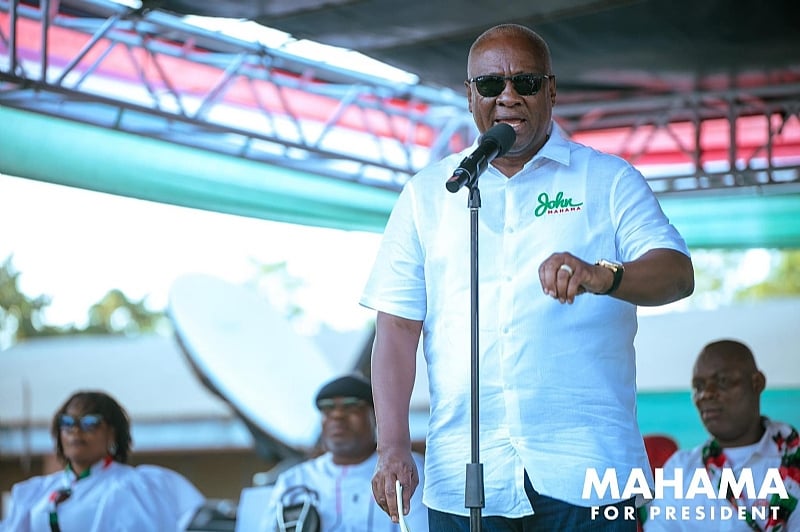
In a recent social media statement, former President John Dramani Mahama has asserted that he stands as the only leader capable of recovering the alleged stolen funds attributed to the ruling New Patriotic Party (NPP). Mahama’s criticism is particularly directed at Vice President Dr. Mahamudu Bawumia, whom he claims is complicit in the ongoing economic turmoil due to the government’s mismanagement. He emphasizes that Bawumia, as part of the administration led by President Nana Addo Dankwa Akufo-Addo, lacks the credibility and authority to address the wrongdoing purportedly carried out by his own party.
Mahama’s remarks underline a broader political narrative in Ghana, wherein accusations of corruption and misappropriation of public funds have become pivotal issues. He contends that the NPP has engaged in significant financial malversation, which has had detrimental effects on the nation’s economy and the well-being of its citizens. According to Mahama, it is the responsibility of the opposition, particularly the National Democratic Congress (NDC), to ensure that those who have exploited their positions for personal gain are held accountable for their actions.
The former president expresses a sense of urgency, painting a picture of an impending change in leadership that would bring an end to the alleged fiscal irresponsibility and corruption. His call for accountability is not merely political rhetoric but reflects a growing public sentiment that demands transparency and integrity in governance. By positioning the NDC as the party capable of restoring accountability and trust, Mahama seeks to galvanize support ahead of future elections and rally citizens towards a common cause of justice and reform.
In his discourse, Mahama frames his political platform around integrity and the promise of recovery—both of finances and of public trust in government institutions. His assertions resonate with many Ghanaians who have become increasingly frustrated with the status quo, particularly in light of economic struggles exacerbated by what they perceive as rampant corruption. His belief in his capability to address these issues stems from his experience as a former leader, during which time he claims he demonstrated effective governance and accountability.
Furthermore, Mahama’s strategy involves direct appeal to the electorate’s sense of justice. By declaring that the NDC will “hold them accountable,” he signals that a vote for his party is a vote for action against corruption. The notion of “change” is a common motif in political discourse, but Mahama’s framing aligns it specifically with the recovery of resources that belong to the people, thereby appealing to a collective desire for rectification and improvement in the nation’s governance.
As Ghana navigates its complex political landscape, Mahama’s statements could be pivotal in shaping public perceptions of both the NDC and the NPP. His commitment to accountability and the retrieval of stolen funds positions him as a figure of opposition who understands the sentiments of a populace weary of financial impropriety. Whether Mahama can successfully translate this rhetoric into tangible political support remains to be seen, but his declaration certainly sets the stage for a contentious political battle ahead.








