





Paragraph 1: Impeachment Showdown and Public Outcry
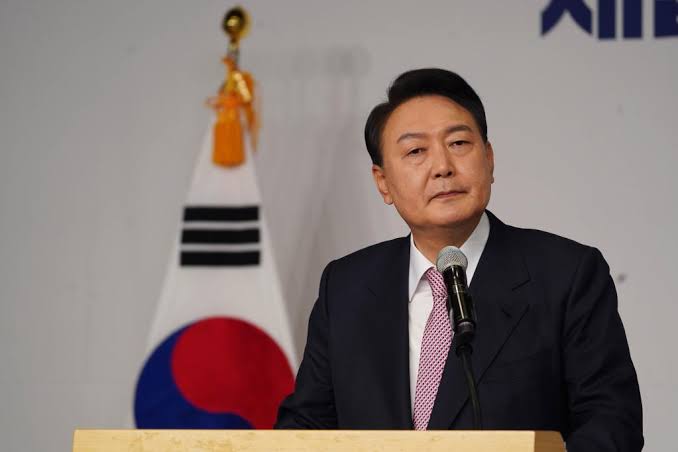
South Korean President Yoon Suk Yeol faces a critical impeachment vote in parliament for his controversial attempt to impose martial law. This second impeachment attempt follows a failed first attempt just a week earlier. Public anger over Yoon’s actions is palpable, with protests erupting outside the National Assembly. Citizens like 24-year-old Yoo Hee-jin express their outrage, vowing to continue protesting until Yoon is removed from office. The atmosphere is tense as the nation awaits the outcome of the vote, which hinges on a small number of swing votes from Yoon’s own party.
Paragraph 2: Political Maneuvering and Public Demonstrations
The impeachment vote requires a two-thirds majority, putting pressure on opposition parties to persuade a handful of conservative lawmakers to join their cause. While seven members of Yoon’s People Power Party have pledged support for impeachment, the final outcome remains uncertain. The main opposition Democratic Party frames the vote as a crucial defense of democracy and the rule of law against what they call Yoon’s "madness." Meanwhile, public demonstrations both for and against impeachment underscore the deep divisions within South Korean society. Supporters of impeachment brave freezing temperatures outside parliament, fueled by free food, hand warmers, and even the support of K-pop star Yuri. Simultaneously, pro-Yoon rallies take place elsewhere in Seoul, highlighting the polarized political landscape.
Paragraph 3: Constitutional Procedures and Potential Outcomes
Should the impeachment motion pass, Yoon would be temporarily suspended from his duties while the Constitutional Court deliberates on his fate. Prime Minister Han Duck-soo would assume the role of acting president during this period. The court has 180 days to reach a final decision. If the court upholds the impeachment, Yoon would become the second South Korean president to be removed from office through this process. However, there is a precedent for the court to overturn parliamentary impeachment, as seen in the case of former President Roh Moo-hyun in 2004. The current composition of the court, with only six judges, necessitates a unanimous decision. Even if the impeachment fails, legal experts argue that Yoon could still face criminal charges for his actions related to the martial law declaration.
Paragraph 4: Yoon’s Defiance and Widening Investigations
President Yoon remains defiant in the face of mounting criticism and ongoing investigations. He has doubled down on unsubstantiated accusations that the opposition is colluding with communist adversaries. Meanwhile, the legal net is tightening around his inner circle. Prosecutors have arrested a high-ranking military commander, and arrest warrants have been issued for the national police chief and the head of Seoul’s police force, citing concerns about potential evidence tampering. These developments further erode public trust in Yoon’s leadership and contribute to the plummeting approval ratings.
Paragraph 5: Public Opinion and Political Fallout
Yoon’s approval rating has plummeted to a dismal 11 percent, reflecting widespread public disapproval of his actions and leadership. Recent polls indicate a significant majority of South Koreans support impeachment, further isolating Yoon politically. The martial law declaration and subsequent investigations have not only damaged Yoon’s standing but have also raised serious questions about the stability of his administration. The political fallout from this crisis will likely have long-lasting implications for South Korean politics.
Paragraph 6: Implications for South Korean Democracy
The impeachment crisis surrounding President Yoon Suk Yeol represents a critical juncture for South Korean democracy. The outcome of the parliamentary vote and the subsequent Constitutional Court decision will have profound implications for the country’s political future. The ongoing investigations and public protests underscore deep societal divisions and a growing distrust of political leadership. Regardless of the final outcome, this episode will undoubtedly leave a lasting mark on South Korean politics and raise questions about the balance of power between the executive, legislative, and judicial branches of government. The events unfolding in South Korea serve as a reminder of the fragility of democratic institutions and the importance of upholding the rule of law.








