





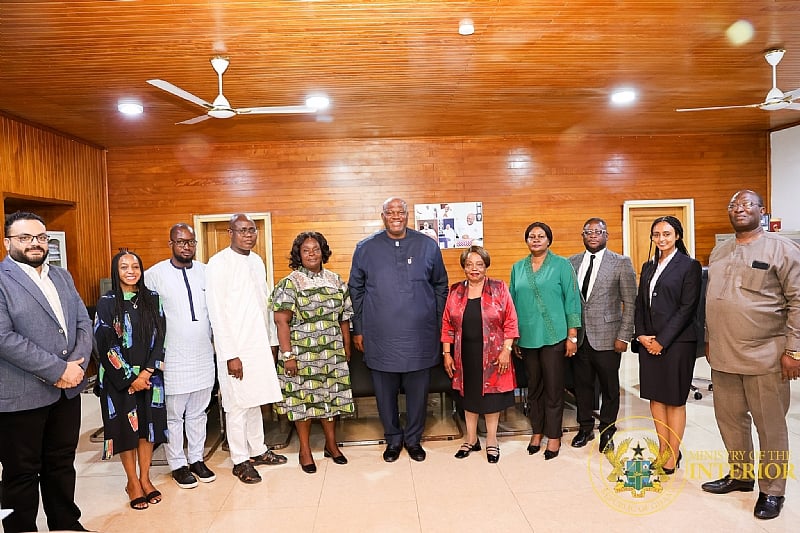
A delegation from the African Union Commission (AUC) recently visited Ghana’s Ministry of the Interior as part of its assessment of the country’s readiness for the upcoming General Elections scheduled for December 7, 2024. During this visit, the Minister for the Interior, Mr. Henry Quartey, expressed his warm welcome to the delegation and underscored the crucial role of international partnerships in fostering democracy and stability across Africa. The meeting marks an important step in preparing Ghana for what is anticipated to be a significant electoral process.
Mr. Quartey reaffirmed the government’s unwavering commitment to ensuring that the upcoming elections are free, fair, transparent, and peaceful. He emphasized that such electoral integrity is vital for the democratic health of the nation and for maintaining public confidence in the electoral system. In his address, Quartey also expressed appreciation for the AUC’s continuing support and expertise, which he believes are instrumental in strengthening electoral processes not only in Ghana but throughout the continent. By working together, Ghana aims to uphold the ideals of democratic governance and electoral fairness that are essential for the country’s development.
Lady Justice (Rtd.) Effie Owuor, who chairs the Panel of the Wise, articulated the delegation’s purpose for visiting Ghana, focusing on the evaluation of electoral preparedness as a crucial aspect of the upcoming elections. She recognized the progress Ghana has made in its election preparations, indicating a level of confidence in the nation’s capabilities to conduct a credible electoral process. This assessment aligns with the AUC’s broader objectives of ensuring that member states are equipped and ready to hold elections that are credible and accepted by the populace.
The delegation’s engagement with key stakeholders is designed to gather comprehensive insights into various facets of the electoral landscape in Ghana. This includes discussions with electoral commission officials, political parties, civil society organizations, and security agencies to identify any potential challenges that may affect the election process. By engaging a broad range of stakeholders, the AUC seeks to foster an inclusive approach that reflects the collective will and expectations of the Ghanaian citizenry.
Furthermore, the collaborative efforts between the AUC and the Ghanaian government highlight the importance of regional support and oversight in the electoral process. By facilitating a dialogue and providing a platform for sharing best practices, the AUC aims to enhance the capabilities of Ghana’s electoral system while reinforcing the relevance of democratic principles. Such partnerships also contribute to building confidence among citizens in the electoral process, thereby helping to mitigate any risks associated with electoral violence or dissatisfaction.
In conclusion, the visit of the AUC delegation to Ghana is a pivotal moment as the nation gears up for its forthcoming General Elections. The commitment shown by both the Ghanaian government and the African Union signifies a collective effort to uphold electoral integrity and ensure that the democratic rights of the Ghanaian people are respected. As preparations progress, the hope remains that these foundational actions will lead to a peaceful and successful election that reflects the true will of the people.








