





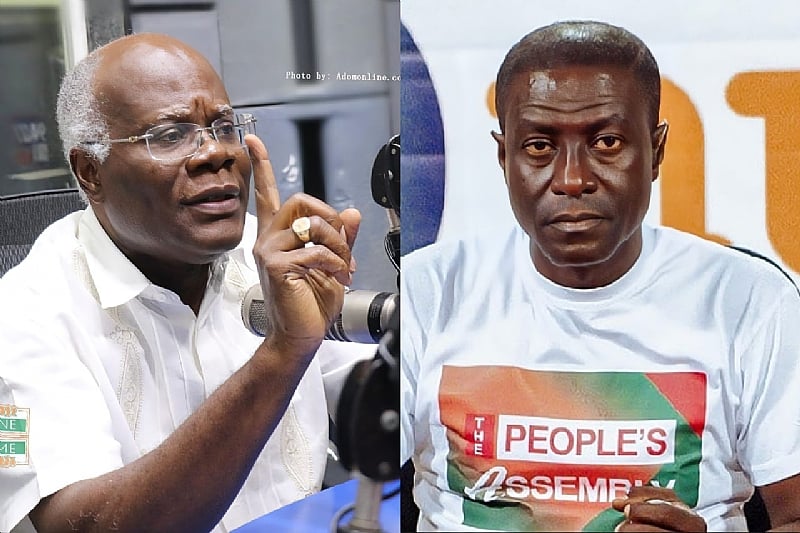
The Ghanaian political landscape has been stirred by a recent controversy involving Hon. Kobina Tahir Hammond, the Member of Parliament for Adansi Asokwa and Minister for Trade and Industry, and Captain Smart, a broadcaster of Onua FM. The heart of the matter lies in a video circulating on social media, allegedly depicting Hammond making tribalistic remarks. The video, as presented by Captain Smart, supposedly shows Hammond uttering the phrase, “Ayigbe man comot; Ashanti man for Ashanti Region,” a statement that carries significant ethnocentric implications in the Ghanaian context. Hammond vehemently denies making such a statement, characterizing the video as a deliberate attempt to tarnish his reputation and cause him public embarrassment. He has, through his legal representatives, demanded a public retraction and apology from Captain Smart.
Hammond’s legal team asserts that the video in question presents a distorted and manipulated portrayal of the events that transpired. They argue that the video captures Hammond in a state of agitation, surrounded by a crowd outside his residence. Furthermore, they contend that Captain Smart and his co-host provided commentary that attributed the inflammatory and tribalistic statements to Hammond, despite the alleged lack of any such utterances from Hammond himself. The lawyers maintain that this commentary was intentionally crafted to create a false narrative and paint Hammond in a negative light, thereby damaging his public image and causing him considerable distress.
The controversy surrounding this video has amplified existing tensions and underscored the delicate nature of ethnic relations in Ghana. The phrase attributed to Hammond, “Ayigbe man comot; Ashanti man for Ashanti Region,” translates to a call for individuals from the Volta Region, often referred to as “Ayigbe,” to leave the Ashanti Region. This sentiment, if genuinely expressed, would resonate deeply within the complex tapestry of Ghanaian identity politics and could potentially exacerbate existing ethnic divisions. The Ashanti and Ewe communities, while historically coexisting peacefully, have occasionally experienced periods of tension, making such pronouncements particularly sensitive.
This incident is not the first time Hon. Hammond has found himself at the center of a media-fueled controversy. Recently, another video circulated online purportedly showing Hammond refusing to engage with the press after his electoral defeat in the 2024 general elections. This video, however, was subsequently debunked by the Ghana Fact-Checking Coalition, which deemed it misleading. This pattern of disputed video content involving Hammond raises questions about the veracity of online information and the potential for manipulation in the digital age. It also highlights the crucial role of fact-checking organizations in ensuring the accuracy of information disseminated to the public.
The demand for a retraction and apology from Captain Smart underscores the seriousness with which Hammond and his legal team view these allegations. They maintain that the video has caused significant damage to Hammond’s reputation and has subjected him to undue public scrutiny and condemnation. The threat of legal action further emphasizes their commitment to pursuing this matter and seeking redress for the alleged defamation. The outcome of this situation will likely depend on the response from Captain Smart and the evidence presented by both parties involved.
This controversy serves as a stark reminder of the power of social media in both shaping public perception and fueling political discourse. The rapid dissemination of information, coupled with the potential for manipulation and misrepresentation, presents a significant challenge in the contemporary media landscape. This incident involving Hon. Kobina Tahir Hammond and Captain Smart serves as a case study in the complexities of navigating this new media reality, emphasizing the importance of critical thinking, responsible reporting, and the pursuit of factual accuracy in an increasingly polarized and interconnected world. The potential legal ramifications of this case will undoubtedly be closely watched by both the media and the public, as it could set a precedent for future disputes involving online content and alleged defamation.








