





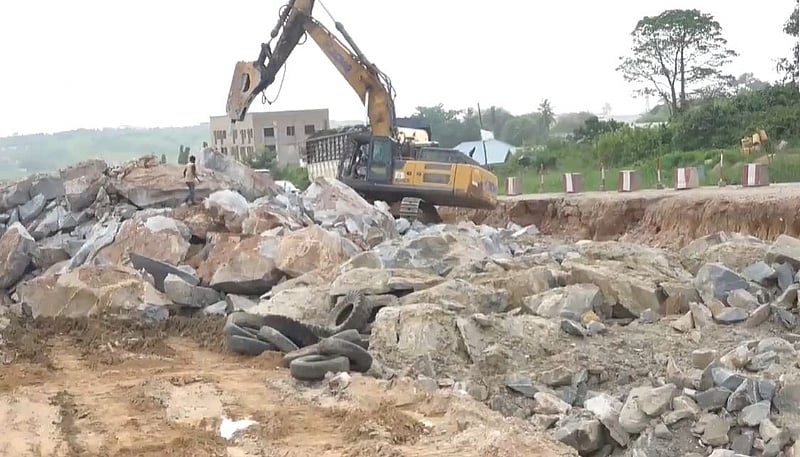
The recent rock blasting conducted by Nag Fairmount Constructions Limited as part of the Kasoa-Winneba road expansion project has caused significant distress in the community of Dabenyin, located in the Gomoa East District of the Central Region. This construction activity led to various damages to nearby residential buildings, exacerbated by the projection of rock particles from the blasting site. Notably, the damage included a fully constructed 16-bedroom apartment and a smaller two-bedroom apartment that was still under construction. Thankfully, unlike a previous incident in Buduburam where lives were lost, this latest blasting event, which occurred on a Monday, resulted in no fatalities, though it has left many residents feeling anxious and disheartened about the impact on their homes.
Residents are increasingly frustrated with the apparent indifference displayed by local authorities and the construction company regarding the fallout from the blasting activities. Numerous homeowners, despite taking it upon themselves to carry out repairs, feel a growing concern that Nag Fairmount Constructions Limited has yet to take responsibility for the damages incurred by their actions. Kwadwo Amoah, one of the affected individuals, shared his experiences regarding the severe roof leaks and damages in his home. He explained that he had resorted to borrowing money to address the roofing issues following the incident, demonstrating the financial burden that the blasting has placed upon him and his family. His calls for company intervention have met with silence, leaving him seeking comprehensive reparative action rather than temporary fixes.
Similarly, other affected residents like Albert Appiah have expressed their frustration, noting that their requests for services to rectify damage have gone unacknowledged. The psychological strain connected to the feeling of responsibility for repairs compounded by the lack of engagement from the construction company has heightened community tension. Issah Rahman’s story further illustrates the personal toll of the blasting; a stone that penetrated his household was directly traced to the blasting, emphasizing the loose connection between the construction activity and the immediate effects on residents’ safety and wellbeing.
The response from local authorities, particularly the Gomoa East Metropolitan Directorate of the National Disaster Management Organization (NADMO), has been somewhat shrouded in ambiguity. Robert Nana Hackman, the NADMO director, has stated that the agency has completed its assessment of damage and that compensations for the affected homeowners will be addressed soon. However, many in the community remain skeptical, given the urgency of their needs and the time it takes for such compensatory processes to unfold. While Hackman assured that medical bills from a related earlier incident in Buduburam have been accounted for, the waiting game for property owners seeking restitution continues, creating an environment rife with uncertainty.
The contrast between the support rendered to Buduburam blast victims and the current response regarding Dabenyin is palpable, and residents are beginning to voice their discontent with the disparity. The emotional and financial ramifications of the recent blasting incident resonate deeply within the involved families, many of whom feel disregarded amid the chaos that construction entails. As they strive to reclaim their sense of security and stability, the ongoing lack of communication from the construction company and local officials only exacerbates their fears about the future.
In summary, the psychological and physical impacts of the Nag Fairmount Constructions Limited blasting incident at Dabenyin underscore the responsibilities that come with construction projects affecting residential areas. Residents have been left in a lurch, grappling with property damage, financial burdens, and what they perceive as negligence from both the construction firm and local authorities. As the NADMO gathers data and promises assistance, calls for immediate action and accountability from the construction stakeholders continue to flood in. With many residents looking for meaningful resolution rather than temporary fixes, the community’s hope lies in proactive engagement and timely reparative measures to restore their homes and peace of mind.








