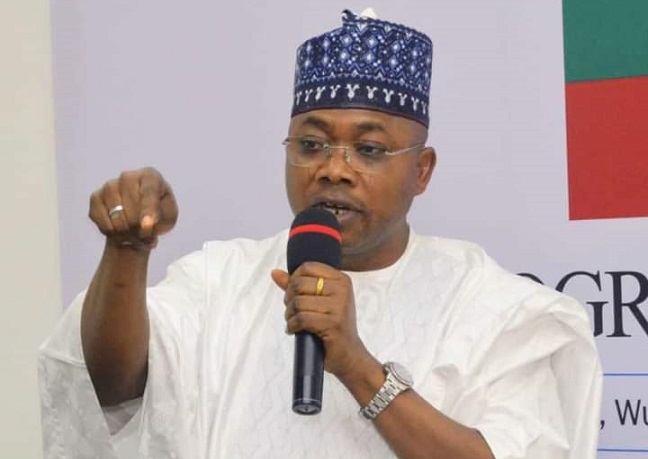
Kogi State Governor Usman Ododo has formally requested the payment of 13 percent derivation from the federal government, arguing that the state should receive this benefit as it has discovered crude oil in commercial quantities in the Olamaboro Local Government Area. Despite this discovery, Kogi has not enjoyed the same financial benefits that other oil-producing states in Nigeria receive. During a recent visit to the Minister of Petroleum Resources, Heineken Lokpobiri, in Abuja, Ododo emphasized the need for equitable treatment in the allocation of resources from the federation account, lamenting that Kogi’s oil production status has yet to translate into financial benefits for the state.
Ododo highlighted the importance of security for oil exploration and production, stating that the ongoing issues of insecurity have hindered the state’s ability to fully exploit its oil resources. The governor expressed hope that as peace returns to the region, investment could increase, enabling Kogi to join other South-South states benefiting from the lucrative oil sector. He underscored the financial disparity faced by the state, making it clear that, despite Kogi’s status as an oil-producing state, it has only received a nominal payment of 7.8 million Naira in derivation funds, indicating a dire need for a more structured support system to fully harness the state’s resources.
The legal framework for the allocation of the 13 percent derivation fund is enshrined in the Nigerian Constitution. This fund aims to assist oil-producing states in managing environmental impacts from oil extraction and in providing essential services such as healthcare and clean water to affected communities. Recent financial distributions have shown significant payouts to oil-producing states, amounting to N341.59 billion shared among nine states in just the first half of 2024. This outlines an urgent need for Kogi’s inclusion in this financial framework to ensure the local populace reaps the benefits of the state’s oil resources.
Governor Ododo also appealed for support from the Ministry of Petroleum to facilitate Kogi’s entry into the northern oil exploration sector, emphasizing the state’s potential as a strategic hub for oil and gas investments due to its geographical position along an important pipeline. Furthermore, the governor announced that Kogi State had become the first in Nigeria to commence the payment of the new minimum wage, indicating his administration’s commitment to improving the welfare of civil servants. This progressive step is expected to uplift the standard of living within the state and potentially enhance local economic activities.
In response, Minister Heineken Lokpobiri acknowledged Kogi’s situation, emphasizing that the Federal Government recognizes the importance of increasing crude oil production for the nation. He stated that a partnership with Kogi could be vital for both parties, as it aligns with the government’s efforts to expand oil and gas output. The minister expressed confidence that further exploration in Kogi could yield significant discoveries, allowing the state to become active contributors to national oil production and the associated derivation benefits.
Lokpobiri articulated the government’s broader ambition to increase national oil production from 2.5 million barrels per day to 5 million, actively pursuing new investments and partnerships to achieve this goal. He underscored that boosting production does not merely benefit localities but has a ripple effect on the federal revenue, which is distributed among all tiers of government. With the commitment to ramp up oil production and explore new avenues for investment, the Federal Government aims for a holistic improvement in Nigeria’s economic landscape, which includes ensuring that all oil-producing states, including Kogi, can benefit from the nation’s considerable oil resources.