





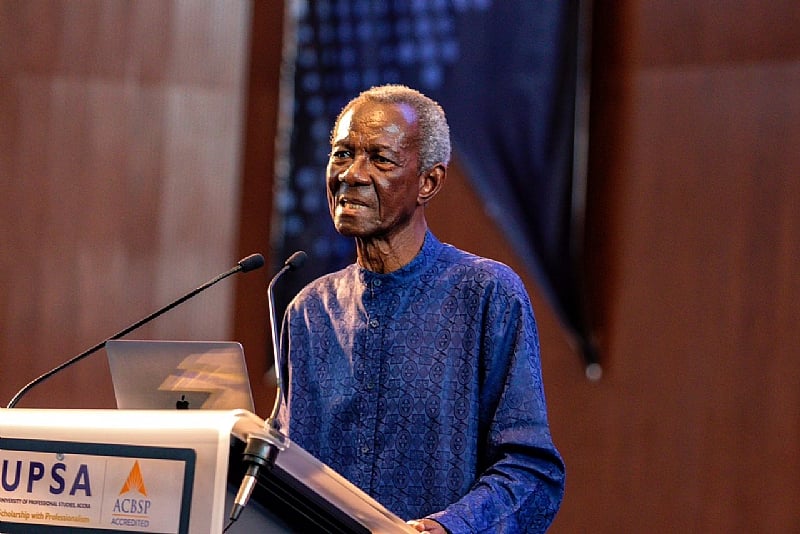
Kwame Pianim, a prominent Ghanaian economist and a key figure within the New Patriotic Party (NPP), has publicly praised President John Dramani Mahama, lauding him as a “listening president” possessing the unique capacity to steer Ghana back onto a trajectory of progress. Pianim’s endorsement carries considerable weight due to his standing within the NPP, a party traditionally opposed to Mahama’s political affiliation. This unexpected commendation highlights Pianim’s belief in Mahama’s leadership qualities and potential to unify the nation, transcending partisan divides for the collective good of Ghana. His statement underscores a conviction that Mahama’s presidency represents a pivotal moment for the country, an opportunity to reset and rebuild, leaving a lasting positive impact.
Pianim’s conviction in Mahama’s abilities goes beyond mere political rhetoric. He posits that out of Ghana’s entire population, exceeding 35 million, Mahama is uniquely positioned to effectively guide the nation toward a brighter future. This assertion, made during a courtesy call on the President by the Ghana National Association of Teachers (GNAT) at Jubilee House, further emphasizes the significance of the moment. Pianim’s presence at this meeting, alongside representatives of a vital sector like education, underscores the breadth of support he perceives for Mahama’s leadership and the importance of collaborative efforts in addressing national challenges. His call for national unity behind the President emphasizes the need to prioritize national progress over political differences.
Central to Pianim’s argument is his belief in Mahama’s ability to rise above political pressures and act in the best interests of Ghana. He urges Mahama to focus on delivering tangible results and establishing a legacy of positive change, rather than succumbing to the demands of partisan politics or the pursuit of votes. This appeal for principled leadership suggests a desire for Mahama to prioritize long-term national development over short-term political gains. Pianim’s faith in Mahama’s ability to prioritize national interests over political expediency is a significant aspect of his endorsement.
Furthermore, Pianim draws a stark contrast between President Mahama and the previous administration, particularly concerning their commitment to the teaching profession. He recalls a previous unfulfilled promise of 10,000 houses for teachers, highlighting what he perceives as a lack of follow-through by the former government. In contrast, Pianim expresses unwavering confidence in Mahama’s commitment to delivering on his promises to teachers. This comparison serves to bolster his argument for Mahama’s trustworthiness and dedication to improving the lives of educators, a profession Pianim clearly holds in high regard.
Pianim’s emphasis on the importance of teachers is revealing. He argues that everyone owes their success, in some measure, to the influence of a teacher. This underscores his belief in the foundational role education plays in individual and societal development. Consequently, he advocates for better treatment and fairer remuneration for teachers, drawing parallels to Canada where teaching is a highly valued profession. His concern for teachers’ welfare aligns with his broader argument for prioritizing essential services and investing in human capital as a key driver of national progress.
In summary, Pianim’s endorsement of President Mahama is a remarkable testament to his belief in the President’s leadership potential. He presents Mahama as a “listening president” capable of unifying the nation, prioritizing progress over politics, and delivering on promises to key sectors like education. His comparison with the previous administration, coupled with his emphasis on the importance of teachers, further strengthens his argument for supporting Mahama’s leadership. Pianim’s public declaration, coming from a leading member of an opposing party, underscores the significance of his conviction and adds weight to his call for national unity behind President Mahama. This endorsement can be interpreted as a call for a collaborative approach to governance, transcending partisan lines for the betterment of Ghana.








