









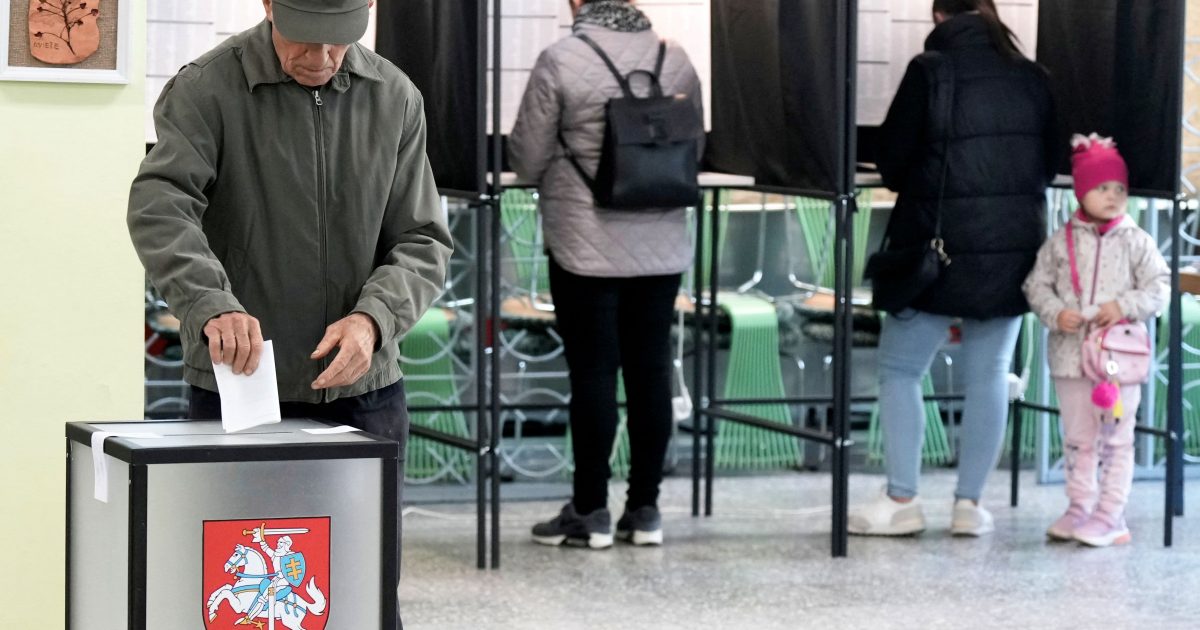
Lithuania is poised for a significant political shift as it heads to the second round of its general elections, where the ruling conservative party is likely to be replaced by a coalition led by the Social Democratic Party (SDP). This transition comes amid heightened security concerns regarding neighboring Russia, especially in light of the ongoing conflict in Ukraine. The SDP emerged victorious in the first round of voting, securing 20 seats in the 141-seat parliament, while an additional 35 candidates advanced to the runoffs, positioning them favorably to form a new government. The movement towards a center-left coalition suggests a potential change in domestic policy while maintaining the country’s robust support for Ukraine within the framework of NATO and the European Union.
Political stability remains crucial for Lithuania as it closely monitors Russian activities. With a population of approximately 2.8 million, there is a palpable apprehension regarding the possibility of becoming a target should Russia expand its military ambitions. Notably, all major political parties in the elections share a consensus on foreign policy: reinforcing support for Ukraine and committing to either maintain or boost defense spending. This alignment underscores a collective understanding of Lithuania’s geopolitical context, as highlighted by political analyst Rima Urbonaite, who notes that domestic policy matters are the primary focus of electoral disputes, leaving foreign policy largely uncontested.
Lithuania’s commitment to defense and international aid is significant. According to the Kiel Institute, Lithuania ranks among the top three countries globally in terms of aid to Ukraine relative to the size of its economy, allocating an impressive 1.64 percent. Additionally, the country has been proactive in its military spending, dedicating 3.2 percent of its GDP to defense—substantially surpassing the NATO benchmark of two percent. This inclination towards bolstering defense capabilities reveals a strong national resolve to secure its sovereignty amidst regional threats, further solidified by bipartisan agreement on the country’s foreign policy trajectory.
The Social Democrats, who previously governed from 2012 to 2016, are eyeing a coalition with the Democratic Union “In the Name of Lithuania” and the Lithuanian Popular Peasants’ Union. Collectively, this coalition aims to capture a total of 80 seats in parliament. The leader of the Social Democrats, Vilija Blinkeviciute, is anticipated to leave her current position in the European Parliament to spearhead the formation of the new government. The SDP has articulated ambitious plans, including pledges to increase pensions, implement more progressive taxation, tax luxury goods, and enhance social services, aligning their platform with the needs and aspirations of the electorate.
As the current ruling Conservative Party prepares for a close second place, the possibility of forming a majority appears limited. Complicating the coalition-building efforts is the emergence of a populist party, Nemunas Dawn, led by former lawmaker Remigijus Zemaitaitis. Finishing third in the first round with 15 seats, this party’s presence in parliament could hold significant sway in any coalition negotiations. While the Social Democrats have explicitly ruled out collaboration with Nemunas Dawn, analysts suggest that the absence of this populist party could pose challenges to the stability and sustainability of a new government.
The Lithuanian elections thus epitomize a crossroads moment for the nation, balancing the imperative of addressing internal socio-economic concerns while navigating the precarious external security landscape. As citizens cast their votes, the outcome will not only reflect domestic preferences but also signal Lithuania’s continued commitment to international alliances and its proactive stance against regional threats. Ultimately, the formation of a new government will determine the trajectory of Lithuania’s policies, both at home and in its engagement on the global stage, especially in relation to support for Ukraine and defense readiness against potential aggressors in Eastern Europe.









