









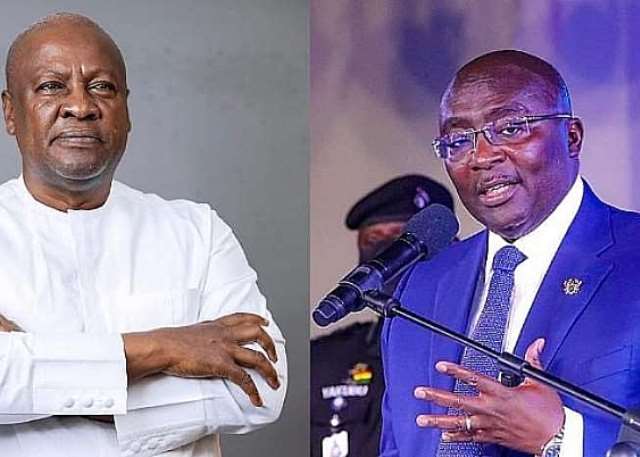
Former President John Dramani Mahama recently delivered a strong statement at the Good Governance Forum, warning Ghanaians about the implications of voting for Vice President Dr. Mahamudu Bawumia in the upcoming elections. Mahama characterized Bawumia’s candidacy as more than just a personal choice; he framed it as a de facto endorsement of the current Akufo-Addo government. This administration, he argued, has overseen a plethora of economic and social challenges that have plagued the nation, leading to diminished living standards for many citizens. By endorsing Bawumia, Mahama contended, voters would essentially be endorsing a continuation of the mismanagement that has characterized the Akufo-Addo-Bawumia era, which he termed a “failed regime.”
In his remarks, Mahama presented data revealing a troubling economic landscape, highlighting that around 870,000 Ghanaians have fallen below the poverty line, with an additional 1.7 million classified as multidimensionally poor. He described the situation as dire, likening the current state of affairs to a “horror movie.” Mahama’s strong rhetoric was employed to showcase the detrimental impact of the ruling party’s policies on Ghana’s economy, its institutions, and overall governance. His call to action was clear: Ghanaians must oppose Bawumia to reject the continuation of a system that he claims fosters corruption and undermines democratic freedoms. Mahama asserted that supporting Bawumia would only serve to perpetuate existing policies that have left the public suffering and the nation in decline.
A significant part of Mahama’s critique focused on the national debt crisis, which he pointed out has escalated dramatically from GHS 120 billion in 2016 to GHS 767 billion in 2024 under the current administration. This substantial increase in debt reflects, according to Mahama, a lack of fiscal responsibility and sound economic governance by the Akufo-Addo-Bawumia leadership. He also emphasized specific instances of alleged corruption and mismanagement, such as the Agyapa Royalties deal and questionable expenditures during the COVID-19 pandemic. Mahama framed these issues not just as isolated incidents but indicative of a broader pattern of financial irresponsibility that has characterized the current government.
Moreover, Mahama raised alarms about the erosion of democratic institutions and values in Ghana, claiming that the judiciary, security services, and press freedoms have increasingly been undermined over the past eight years. He warned that the gains made in upholding democratic norms have been compromised, expressing concern that a presidency under Bawumia would further exacerbate this decline. In his view, a shift towards authoritarianism is evident, and the stakes of the upcoming election are high, as it could determine the future of democracy in Ghana.
As Mahama positioned himself as the candidate for change, he stressed the importance of integrity, accountability, and economic stability for the nation’s future. He made a passionate plea for Ghanaians to envision a “fresh start” that would break away from what he termed the misrule of Akufo-Addo and his allies. By framing his bid as a chance for renewal, Mahama sought to galvanize public sentiment around the need for reform and a departure from the status quo, which he argues has only brought hardship and despair to the populace.
Concluding his address, Mahama reiterated his call for Ghanaians to decisively reject a “third term by proxy” through their support for Bawumia. He implored citizens to recognize the implications of their voting choices and to embrace an opportunity for transformational leadership that aligns with the values of good governance. By emphasizing the need for change, Mahama aimed to inspire hope and action among voters, encouraging them to see the upcoming election as a crucial moment for reclaiming Ghana’s democratic and economic future.









