





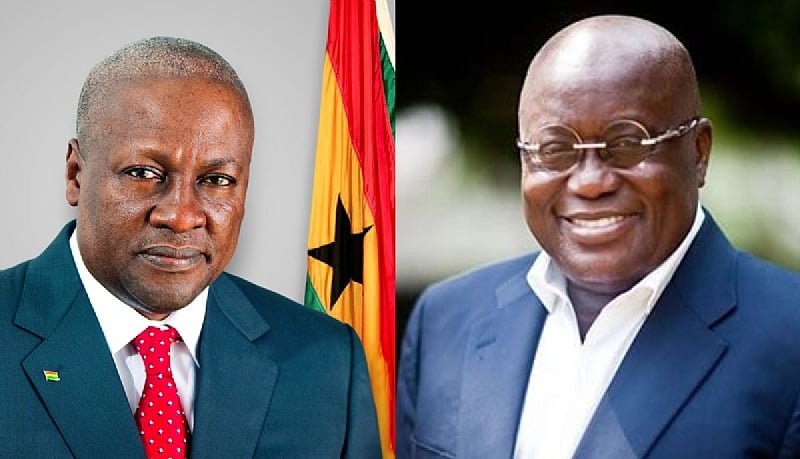
Former President John Dramani Mahama has expressed strong criticism of President Nana Akufo-Addo’s banking sector cleanup effort, asserting that the policy has inflicted significant hardship on Ghanaians, leading many into debt and poverty. Mahama, who is the National Democratic Congress (NDC) flagbearer for the upcoming 2024 elections, contends that the banking reforms initiated in 2017, ostensibly aimed at stabilizing Ghana’s financial landscape, were poorly executed and disregarded the welfare of citizens. In a response to a video circulating on social media, Mahama took to his official Facebook page to label the cleanup as a “reckless decision taken by an insensitive government,” thus framing the initiative as detrimental to the very fabric of the society it was supposed to protect.
The fallout from the banking sector reforms has been profound, according to Mahama, who describes the aftermath as one that has “destroyed countless lives” and left many families grappling with debt, poverty, and devastation. By highlighting the human cost of these reforms, Mahama paints a stark picture of the failures of the Akufo-Addo administration in effectively managing the banking crisis. He argues that the implications of these policies extend beyond immediate financial instability, affecting the overall livelihood and well-being of Ghanaians. His comments underscore a growing sentiment among opposition groups who believe that the ruling government has mismanaged critical sectors of the economy, ultimately jeopardizing the future of many citizens.
In a bid to restore what he perceives as justice in the banking sector, Mahama has vowed to reinstate the licenses of banks and financial institutions that he believes were unjustly affected during the cleanup process if he is elected. This promise highlights his commitment to tackling the consequences of the previous government’s actions and providing relief to those adversely impacted by the cleanup. Furthermore, Mahama has emphasized the importance of promoting local ownership in vital sectors, including banking, telecommunications, and agriculture, aiming to empower Ghanaians and ensure that these industries are not monopolized by foreign interests.
During his acceptance speech as the NDC flagbearer, Mahama reiterated his vision for “restoring indigenous Ghanaian investments” in the finance and banking sector, signaling a strategic pivot towards enhancing local participation in the economy. By showcasing local ownership and investment as central to his platform, Mahama positions himself as a leader who prioritizes the needs of Ghanaians over the interests of external partners. This emphasis on local empowerment could resonate with a populace weary of external control and eager for self-determination in managing the nation’s resources and economic opportunities.
The criticisms voiced by Mahama raise significant questions about the efficacy and long-term impact of the Akufo-Addo administration’s banking reforms. Many Ghanaians, particularly those directly affected by the cleanup, may find themselves aligning with Mahama’s narrative of hardship and loss. This alignment could serve as a rallying point for the NDC as they campaign for the upcoming elections, enabling them to leverage public dissatisfaction with the current government’s handling of the banking crisis.
As the 2024 elections approach, the discourse surrounding the banking sector and its impact on Ghanaian society is likely to intensify, with Mahama’s critique serving as a focal point for broader discussions on economic policy, governance, and accountability. The outcome of this electoral race may very well hinge on the electorate’s assessment of the prevailing economic conditions and the effectiveness of past government interventions, thus framing the narrative for political engagement and policy advocacy in the months to come.








