









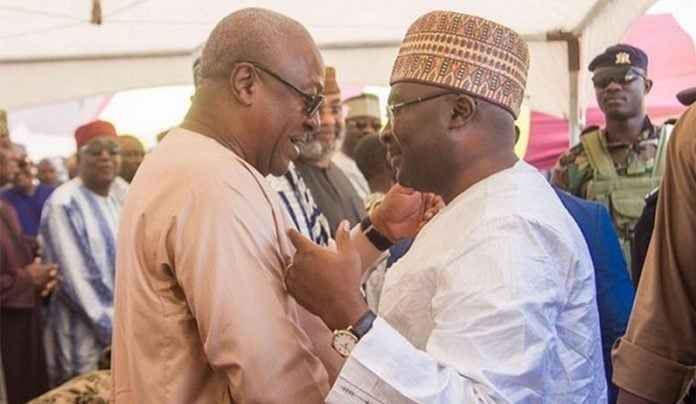
In a recent social media post, John Dramani Mahama, the Flagbearer of the National Democratic Congress (NDC), has put forth a series of pressing questions directed at Dr. Mahamudu Bawumia, the flagbearer of the New Patriotic Party (NPP). Mahama’s inquiries focus on the declining value of the Ghanaian cedi, which plummeted from GHS4 to $1 in 2016 to an alarming GHS17 to $1 today. This currency devaluation raises concerns about the country’s economic management and has significant implications for the purchasing power and living standards of Ghanaians. Mahama’s intention is clear: to hold Bawumia accountable for the current state of the economy and to urge the electorate to critically evaluate the ruling government’s performance in the lead-up to the December 7 elections.
Furthermore, Mahama highlights the staggering increase in Ghana’s public debt, which soared from GHS120 billion in 2016 to an estimated GHS763 billion in 2024. This dramatic escalation in debt raises alarms regarding fiscal responsibility and governance under the NPP administration. Mahama is challenging Bawumia to provide explanations for these economic challenges, questioning the effectiveness of the current government’s policies and strategies. By emphasizing the growing financial burden facing the country, Mahama seeks to demonstrate the urgency of his campaign message—calling for a change in leadership to address these pressing issues.
In addition to the questions about currency depreciation and public debt, Mahama also notes Bawumia’s apparent retreat from engaging in discussions about economic management. This avoidance has raised eyebrows among citizens who expect transparency and accountability from their leaders, particularly in times of economic hardship. Mahama’s position underscores the expectation that a candidate aspiring to lead the nation should be willing and able to articulate comprehensive strategies to mitigate the economic challenges facing the country. By framing these inquiries as essential for the electorate’s understanding, Mahama aims to paint Bawumia as evasive and unprepared to assume the responsibilities of leadership.
As Mahama rallies Ghanaians to reject Bawumia in the upcoming elections, he leverages these economic critiques as central to his campaign narrative. He emphasizes that the NPP’s governance has been detrimental to the country’s financial health and the well-being of its citizens. By contrasting his vision for a “reset” of Ghana—a plan that encompasses economic recovery and the establishment of a prosperous nation—Mahama positions himself as a leader who will prioritize the needs of the populace. His campaign rhetoric promises a shift away from the perceived failures of the current administration towards a more inclusive and effective governance model.
Mahama’s call to action also reflects a broader political strategy aimed at galvanizing support among various demographics concerned about the economy. By directly addressing issues that resonate with citizens, such as currency depreciation and rising public debt, Mahama seeks to create a sense of urgency around his campaign. He aims to unify discontented voters, particularly those feeling the impact of the deteriorating economic situation, and to mobilize them towards a common goal—electing a government that is responsive and accountable.
Ultimately, Mahama’s inquiries into the economic performance of the NPP and his campaign promises signal a pivotal moment in Ghanaian politics as the December 7 elections approach. By spotlighting critical economic issues and questioning the ruling party’s competence, Mahama is not only setting the stage for political discourse but is also emphasizing the importance of informed decision-making among voters. The outcome of these elections may very well hinge on the electorate’s response to Mahama’s challenges and their assessment of the NPP’s legacy, shaping the future trajectory of Ghana’s political and economic landscape.









