





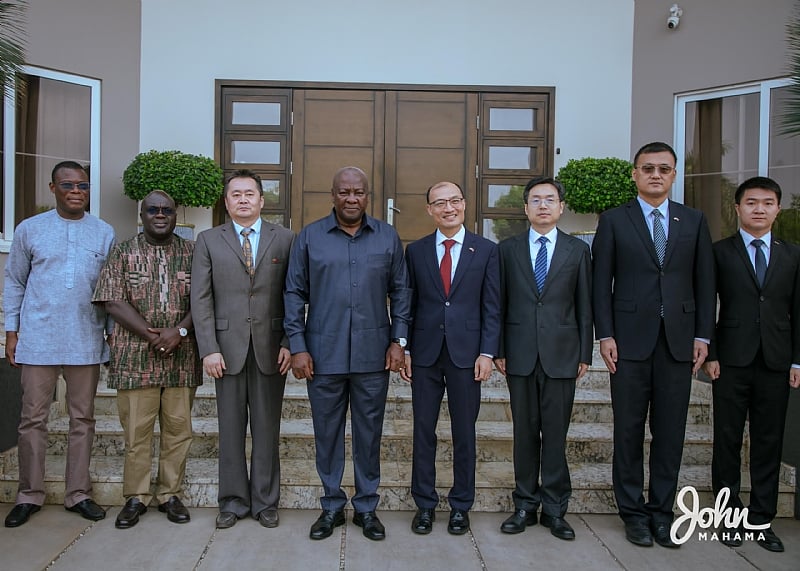
The reaffirmation of the One China policy by Ghana’s President-elect John Mahama signifies the continuation of a long-standing diplomatic relationship between the two nations. This commitment was conveyed during a courtesy call by the Chinese Ambassador to Ghana, Mr. Tong Defa, who formally congratulated Mr. Mahama on his electoral victory. The One China principle, a cornerstone of China’s foreign policy, asserts the indivisibility of China and Taiwan under a single sovereign state, the People’s Republic of China. Mr. Mahama’s assurance to uphold this policy demonstrates Ghana’s respect for China’s sovereignty and its commitment to fostering a strong bilateral relationship. This pledge of continuity in foreign relations signals a stable and predictable diplomatic approach by the incoming Ghanaian administration.
President-elect Mahama emphasized the historical significance of the Ghana-China relationship, recalling Ghana’s pioneering role as the first sub-Saharan African nation to establish diplomatic ties with China. This historical connection, initiated during the presidency of Osagyefo Dr. Kwame Nkrumah, underscores the enduring nature of the bilateral partnership. Though the relationship faced challenges during periods of political instability in Ghana, the past few decades have witnessed a resurgence of cooperation. Mr. Mahama’s personal interactions with President Xi Jinping, dating back to their respective vice-presidential tenures, further cement the strong ties between the two leaders and their nations. These interactions, including invitations to China and meetings at the Forum on China-Africa Cooperation (FOCAC), exemplify the personal diplomacy that underpins the bilateral relationship.
The current economic climate in Ghana presents both challenges and opportunities for the relationship with China. Mr. Mahama acknowledged the impact of Ghana’s debt default on its credit rating and outlined his administration’s priorities: economic revival, currency stabilization, and inflation reduction. He underscored the importance of collaboration with international partners, particularly China, in navigating these economic challenges. The focus on economic recovery suggests a pragmatic approach by the incoming administration, seeking to leverage international partnerships to address domestic economic issues.
Looking ahead, President-elect Mahama expressed his intention to dispatch a delegation to China following the transition period. This delegation will engage in discussions regarding technical cooperation, exploring avenues for Ghana to benefit from FOCAC disbursements and the Belt and Road Initiative. These initiatives represent key platforms for China-Africa cooperation, offering opportunities for infrastructure development, trade, and investment. Ghana’s active participation in these initiatives signifies its commitment to leveraging Chinese partnerships for national development. The proactive approach of sending a delegation signals a desire for concrete action and tangible outcomes from the renewed engagement with China.
The Chinese Ambassador, Mr. Tong Defa, reciprocated the positive sentiment, congratulating Mr. Mahama and expressing China’s eagerness to strengthen the bilateral relationship. This mutual desire for enhanced cooperation sets the stage for a productive partnership in the coming years. The exchange of congratulations underscores the mutual respect and shared interests that underpin the relationship. The ambassador’s statement further reinforces China’s commitment to engaging with Ghana as a key partner in Africa.
In summary, the meeting between President-elect Mahama and the Chinese Ambassador signifies a continuation of the historically strong ties between Ghana and China. The reaffirmation of the One China policy, coupled with the commitment to enhanced cooperation in areas such as FOCAC and the Belt and Road Initiative, points towards a robust and mutually beneficial partnership in the years to come. This partnership will likely focus on addressing Ghana’s economic challenges while simultaneously furthering China’s strategic interests in Africa. The proactive approach adopted by both sides, including the planned delegation to China, suggests a shared desire for tangible outcomes and a commitment to strengthening the bilateral relationship in a concrete and meaningful way.








