





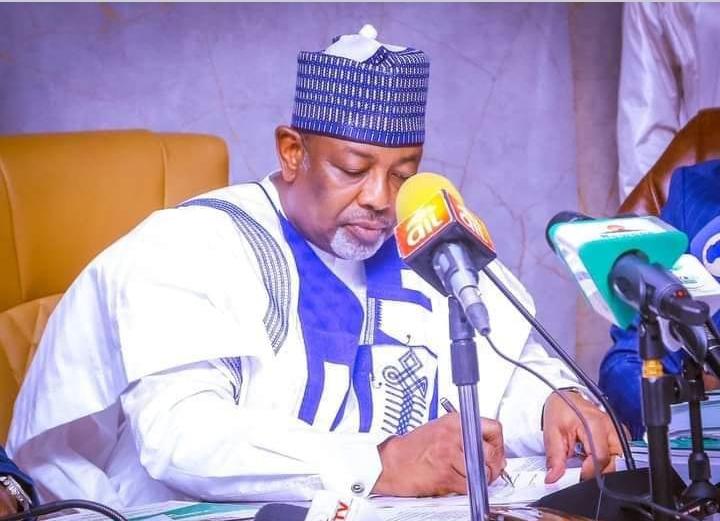
The Minister of Agriculture and Food Security, Sen. Abubakar Kyari, has emphasized the need to establish agricultural insurance and weather advisory desks at the community level as vital measures to enhance resilience and adaptation among smallholder farmers facing the effects of climate change. The call was made during a recent Agricultural Insurance and Climate Advisory Round Table Meeting held in Abuja, where Kyari, represented by Dr. Deola Lordbanjo, the Director of the Federal Department of Agricultural Extension Services, outlined the objectives of these initiatives. By providing timely and localized weather advisory services, the ministry aims to mitigate climate-related adversities affecting agricultural productivity, thereby fostering a more sustainable agricultural investment environment.
Kyari articulated the significance of agricultural insurance, underscoring its role in safeguarding farmers’ investments, increasing productivity, and ultimately improving their livelihoods. He pointed out the increasing frequency and severity of climate-induced disasters, such as floods and droughts, which pose significant dangers to smallholder farmers who often face substantial setbacks from such events. The ministry’s commitment extends towards promoting practices that align with the Sustainable Development Goals, particularly those aiming for zero hunger and the enhancement of sustainable agricultural methodologies.
In his remarks, Kyari stressed that transitioning away from subsistence farming requires protecting agricultural investments and adopting a market-oriented approach. This approach would allow smallholder farmers to engage more robustly in agricultural production, contributing to broader food security objectives for Nigeria. The ministry’s vision is not only to reinforce the agricultural sector but also to align it with the global aim for sustainable agricultural practices. Kyari’s advocacy calls for a fundamental shift in how smallholder farmers are supported, emphasizing the necessity for comprehensive safety nets against climate risks.
The minister also acknowledged the pivotal role of organizations such as USAID in fostering social stability through their initiatives, particularly those that enable a more market-driven economy. He expressed gratitude for USAID’s efforts in bolstering Nigeria’s capabilities as a responsible regional trade partner. This partnership is salient for integrating international support systems that foster local agricultural resilience and capacity building among farmers.
Jean-Pierre Rousseau, the Director of Winrock International, echoed the importance of agricultural insurance and weather advisory services, noting their transformative potential for Nigeria’s agricultural landscape. Highlighting the strengths of USAID’s Feed the Future Programme, Rousseau reiterated the program’s ongoing commitment to advancing Nigeria’s agricultural sector. His endorsement reinforces the collaborative spirit among various stakeholders dedicated to enhancing agricultural productivity and resilience against climate variations.
The meeting was attended by a diverse group of participants from the Agricultural Extension Services Sub-Sector, including representatives from USAID’s Feed the Future Programme, Partnership Initiatives in the Niger Delta, and various Agricultural Development Programmes. Their collective effort indicates a recognition of the shared challenges and opportunities within Nigeria’s agricultural domain, highlighting the importance of stakeholder collaboration in promoting sustainable agricultural development. Through these initiatives, the Nigerian government aims to protect the interests of smallholder farmers while addressing the pressing challenges posed by climate change and market fluctuations, ultimately contributing to national food security and economic stability.








