





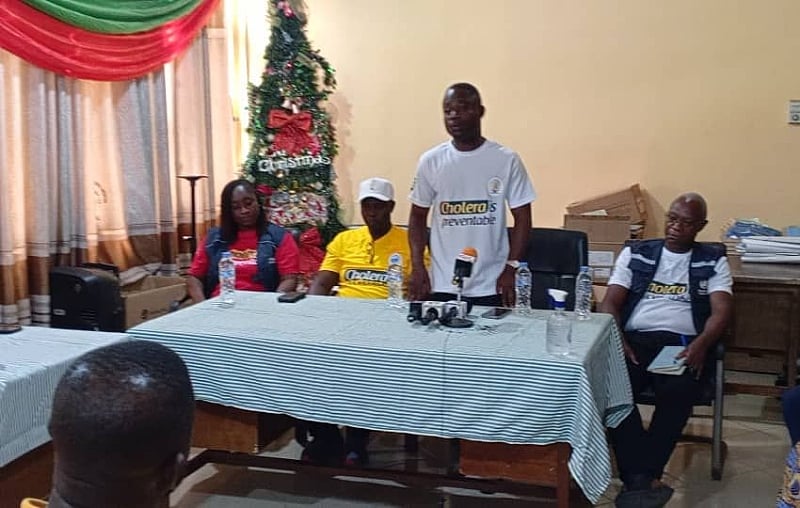
The Agona Swedru Municipal Government Hospital recently faced a surge in cholera cases, prompting a visit by Ghana’s Minister for Health, Hon. Kwabena Mintah Akandoh. His visit aimed to assess the severity of the outbreak and evaluate the strain on the hospital’s resources. The Minister engaged with healthcare professionals at the facility, discussing strategies to contain the spread of the disease and mitigate its impact on the community. He reaffirmed the commitment of the NDC Government, led by President John Dramani Mahama, to prioritize the eradication of environment-related diseases, with a particular focus on cholera. This commitment underscored the government’s recognition of the link between environmental conditions and public health, highlighting the need for comprehensive interventions to address the root causes of such outbreaks.
Hon. Akandoh addressed the hospital staff, including doctors, nurses, administrators, and paramedics, emphasizing the Ministry of Health’s unwavering support for healthcare workers. He acknowledged the crucial role played by these frontline personnel in combating the cholera outbreak and providing essential care to affected individuals. The Minister announced the Ministry’s plan to launch a vaccination campaign in Agona West and other high-risk areas within the Central Region and beyond. This proactive approach aimed to bolster community immunity against cholera and prevent further escalation of the outbreak. Furthermore, he pledged continued support and encouragement to health workers, recognizing their dedication and the challenges they face in managing the crisis.
While expressing his appreciation for the dedication of healthcare professionals, Hon. Akandoh also addressed concerns regarding professional conduct, particularly amongst nursing staff. He issued a stern warning against any unprofessional behavior, especially during emergencies and patient referrals. The Minister emphasized the importance of upholding ethical standards and prioritizing patient well-being above all else. He cautioned against any illicit activities that could compromise the quality of care provided to patients, stressing the need for accountability and professionalism within the healthcare system.
The visit also included the participation of Dr. Frank Lule, the Country Director of the World Health Organization (WHO). Dr. Lule expressed the WHO’s commitment to supporting Ghana’s efforts in combating cholera and addressing other environmental health challenges. This international collaboration underscored the global nature of public health concerns and the importance of shared resources and expertise in tackling such outbreaks effectively. The WHO’s support signifies a crucial partnership in strengthening Ghana’s healthcare system and enhancing its capacity to respond to public health emergencies.
Dr. Julius Abuku, the Medical Superintendent of the Agona Swedru Municipal Government Hospital, provided an overview of the hospital’s current status and its challenges. He appealed for improvements in critical areas, including equipment upgrades, improved accommodation facilities for staff, and the recruitment of additional doctors. These enhancements, he argued, were crucial to bolstering the hospital’s capacity to provide effective and timely care to the community. Dr. Abuku highlighted the hospital’s historical significance, tracing its origins back to a Health Post established in 1950. Over time, the facility expanded to its current 172-bed capacity. However, he stressed the urgent need for further expansion to adequately serve the growing population and meet the increasing demand for healthcare services.
The delegation accompanying Hon. Kwabena Mintah Akandoh comprised key figures in Ghana’s healthcare sector, including Professor Kaba Akoriyea, Director General of the Ghana Health Service, and Dr. Agnes Achiamaa, Acting Central Regional Director of the Ghana Health Service. Their presence underscored the collaborative approach adopted by the Ministry of Health in addressing the cholera outbreak. The collective expertise and leadership of these officials were instrumental in assessing the situation, formulating effective strategies, and ensuring a coordinated response to the public health crisis. The visit, therefore, represented a significant step towards strengthening the healthcare system in the Agona West Municipality and beyond, demonstrating a commitment to improving public health outcomes and protecting the well-being of the community.








