





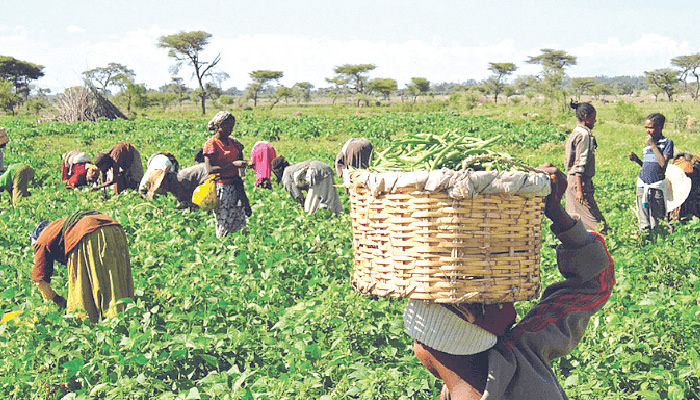
Sen. Aliyu Abdullahi, the Minister of State for Agriculture and Food Security, has shed light on a significant agricultural issue in Nigeria, revealing that around 30 million hectares of arable land are currently not being utilized. During a visit from the President of the National Tomato Growers, Processors, and Marketers Association of Nigeria (NATPAN), the minister pointed out that Nigeria possesses a total of about 73 million hectares of arable land. However, only 41 to 43 million hectares are actively being farmed, leading to an alarming underutilization of resources. This statistic underpins the pressing concern of food security in the country, particularly in a context where food prices are escalating and seasonal shortages are looming.
The underutilization of fertile land has dire implications for the Nigerian economy, especially given the challenges posed by rising food prices and unpredictable agricultural cycles. Abdullahi emphasized that neglecting the available arable land could exacerbate food insecurity, affecting millions of Nigerians who rely on agricultural output for sustenance. He urged stakeholders in the agricultural sector to take proactive measures to address land use efficiency, particularly with the anticipated onset of dry seasons that traditionally disrupt farming activities and lead to scarcity.
Highlighting the urgency of the situation, the minister implored stakeholders not to allow commodities like tomatoes to become a political tool that could undermine food security. He stressed that timely interventions are essential and that discussions regarding agricultural policies and practices need to happen without delay. The minister expressed the necessity for a strategic roundtable involving various players in the agricultural sector to ensure that proactive plans are formulated ahead of the dry season. According to him, the implications of a poor response to seasonal challenges could lead to adverse effects beyond the immediate agricultural context, impacting food access even during lean periods.
In response to the minister’s concerns, Abdullahi Ringim, the NATPAN President, acknowledged the critical issues at hand and called for the Ministry of Agriculture’s attention to the non-implementation of existing tomato industry policies. This indicates a broader problem of policy effectiveness in Nigeria’s agriculture sector, where even established frameworks might not be properly executed. By doing so, Ringim highlighted the importance of not only formulating robust policies but also ensuring their practical application on the ground to aid farmers and contribute to national food security.
The ongoing discussions about land use and agricultural policies point to Nigeria’s potential for improving its self-sufficiency in food production. The unused arable land represents a valuable asset that, if harnessed correctly, could significantly enhance agricultural output and subsequently improve food security across the nation. Addressing this underutilization requires cohesive efforts from the government, agricultural associations, and farmers to establish efficient practices and mechanisms for land management.
In conclusion, the revelations made by Sen. Aliyu Abdullahi about Nigeria’s agricultural landscape underscore an urgent need for collaboration and effective policy implementation in the agricultural sector. With a vast amount of unused arable land, there lies an opportunity to enhance productivity and mitigate food insecurity, which has far-reaching consequences for the economy and the livelihoods of the Nigerian people. As the nation prepares for the dry season, timely actions and cooperative dialogues among stakeholders will be indispensable in navigating the challenges posed by seasonal changes and ensuring sustained food availability in the country.








