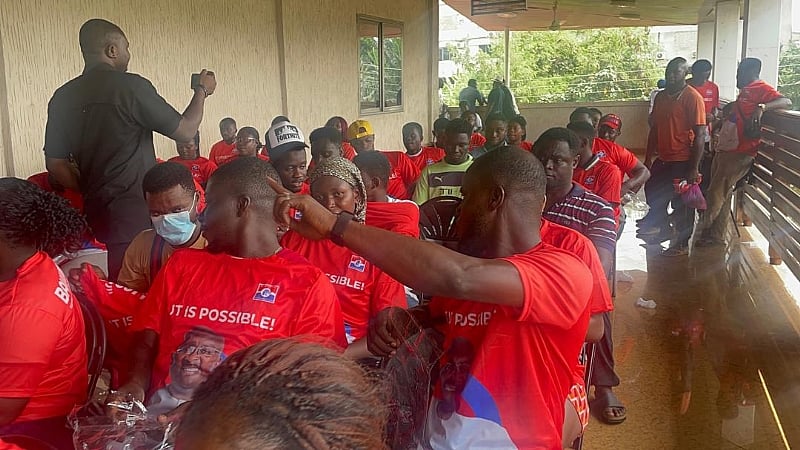
Over 5,000 members of the Movement for Change have recently switched allegiance to the governing New Patriotic Party (NPP), which has sparked significant political discussions in Ghana. The defectors expressed their grievances towards their former leader, Alan Kyerematen, stating that they perceived a lack of commitment and seriousness in his leadership. Disenchanted with Kyerematen’s direction, these members from various parts of the country concluded that they could not envision a successful future under his guidance. Their resignation from the Movement for Change indicates a pivotal shift in Ghana’s political landscape, especially with the approaching 2024 elections.
During a press conference held in Kumasi, the defectors announced their transition to support the NPP, underlining their endorsement of Dr. Mahamudu Bawumia as the party’s flagbearer. The spokesperson for the group and Constituency Representative for Ashanti Akyem Agogo, Anthony Ashmond Cobina, highlighted the vision that Dr. Bawumia presents to Ghanaians. This vision has evidently resonated with the defectors, who now feel compelled to join the NPP’s campaign efforts. Their support aims to emphasize their belief in a more promising political future for Ghana, urging fellow citizens to consider their stance as an opportunity for change.
The defectors have taken a proactive approach in urging voters to reconsider their support for Alan Kyerematen in the upcoming elections, warning that a vote for him would be futile. They painted a picture of a pivotal decision for the electorate—one that rests on the perceived effectiveness and reliability of leadership. By advocating for Dr. Bawumia and the NPP, the defectors argue that their choice represents a strategic investment in Ghana’s future, portraying it as essential for national advancement. Their call to action reflects a broader trend of political re-evaluation among voters in Ghana.
The decision by such a large number of members to defect emphasizes a critical moment for Kyerematen and the Movement for Change. It raises questions about the group’s cohesion and future viability in the face of such a significant loss of membership. Kyerematen now faces the task of either rallying his remaining supporters or redefining his strategy to regain public trust ahead of the elections. The movement’s diminished support could jeopardize its influence in the political arena, compelling Kyerematen to reevaluate not just his leadership style but also his overall political strategy.
Moreover, the implications of this mass defection extend beyond just individual political ambitions; they signal shifting dynamics within Ghana’s political landscape as well. The alignment with the NPP could solidify the party’s base, potentially affecting voter turnout and preferences in the upcoming elections. With the NPP gaining momentum from this influx of support, the party may strategize around new campaign messages that resonate with both defectors and undecided voters. As the political rivalry heats up ahead of the polls, the NPP is now poised to capitalize on the narrative of unity and leadership efficacy provided by Dr. Bawumia.
In summary, the departure of over 5,000 members from the Movement for Change to the New Patriotic Party represents a significant shift that could influence the political trajectory in Ghana leading up to the 2024 elections. By rallying behind Dr. Mahamudu Bawumia’s vision, these defectors are not only advocating for a change in leadership but also expressing their dissatisfaction with Kyerematen. Their actions underscore a critical juncture in Ghanaian politics, as the NPP seeks to leverage this momentum while Kyerematen must confront challenges to his leadership and approach in order to retain relevance and support in an evolving political climate.