









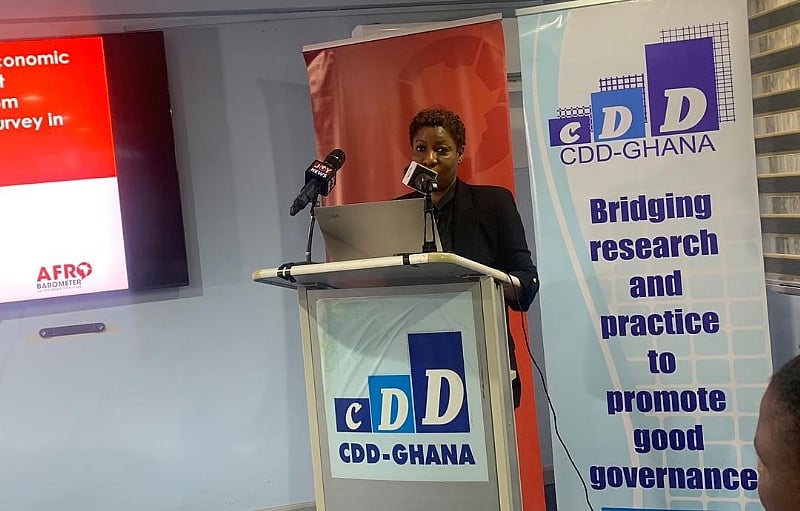
The Afrobarometer Round 10 survey, recently released by the Center for Democratic Development Ghana (CDD-Ghana), presents a stark picture of the economic discontent increasingly felt among Ghanaians. An overwhelming majority, 85% of respondents, perceive that the country is on the wrong path, with only 15% expressing optimism about Ghana’s future direction. This pessimism is fueled not only by a general dissatisfaction with national economic performance but also by concerning evaluations of personal living conditions. In a climate thick with uncertainty, just 45% of the respondents anticipate an economic improvement in the coming year, raising serious doubts about the potential for recovery amid disheartened public sentiment.
A closer examination of specific economic metrics reveals key areas where public dissatisfaction is deeply rooted. For instance, only a mere 8% believe that the government effectively manages price stability, while a staggering 91% rate its performance as “fairly badly” or “very badly.” Such results reflect the reality of ongoing inflation, drastically affecting the cost of living for citizens and eroding their purchasing power. Furthermore, the government’s efforts to address income inequality received a mere 11% approval rating, as 88% of participants characterized its actions as ineffective. This broad discontent signifies a public increasingly aware of the growing rift between the wealthy and the impoverished and highlights a failure to combat the worsening economic divide.
Job creation remains a pressing issue, as well, with 81% of respondents indicating that the government’s performance in this area is lacking. Only 19% believe that the government is effectively managing the economy overall, while an alarming 80% express dissatisfaction. These measurements of public opinion underscore the urgency behind the economic struggles faced by many households across Ghana. Over the last year, a substantial 82% of Ghanaians reported experiencing varying degrees of poverty, showcasing the intensity of the socioeconomic challenges confronting the nation.
The survey further elucidates the real-life implications of these daunting economic challenges. A significant number of respondents indicated difficulty in accessing essential resources such as food, medical care, and fuel, illustrating the strain that economic hardship has placed on millions. Among the startling findings is the fact that seven in ten Ghanaians reported lacking cash income at least once in the past year, pointing to unstable financial security and broader systemic issues that contribute to difficulty in meeting basic needs. This pervasive financial insecurity resonates melancholically with public sentiment and underscores the desperate demand for urgent economic reform.
Given the context of the upcoming elections, the results from the Afrobarometer survey serve as a powerful call to action for Ghana’s future leadership. As public faith in the current administration’s economic strategy dwindles, there exists a palpable desire for a fresh approach towards governance and economic management. The data underscores the necessity of meaningful changes that could address the issues raised, reversing the ongoing economic decline and enhancing the overall quality of life for Ghanaians.
Overall, the findings from the Afrobarometer Round 10 survey encapsulate a critical juncture for Ghana, driven by frayed public trust, pressing economic challenges, and a collective yearning for reform. With a significant majority of citizens feeling unfulfilled by the government’s current performance, there lies a crucial opportunity for the next administration to listen to these sentiments and implement effective strategies that can revitalize the economy and restore optimism among the populace. The data serves not only as a reflection of current dissatisfaction but also as an impetus for proactive change in shaping Ghana’s economic future.









