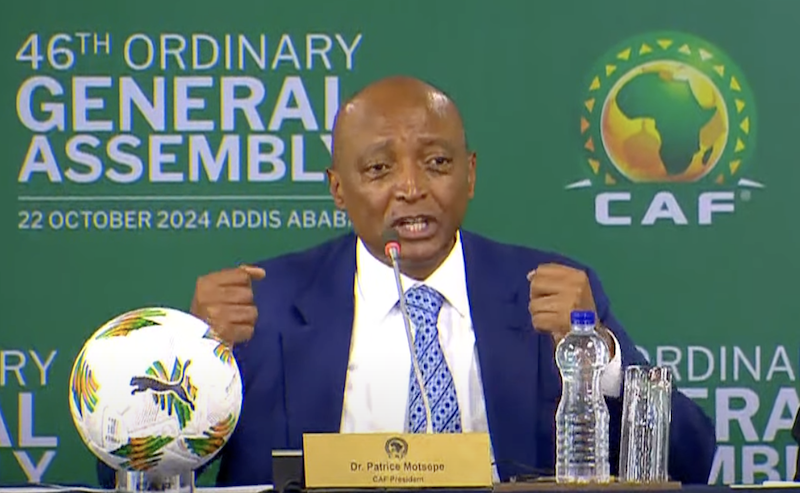
Patrice Motsepe, the current President of the Confederation of African Football (CAF), has announced his intention to seek re-election in March 2025, following widespread endorsements from numerous CAF Member Association Presidents and Zonal Union Presidents. This decision comes after months of speculation regarding his future leadership role. Motsepe first took office on March 12, 2021, in Rabat, Morocco, and his tenure has been characterized by significant strides in improving the financial operations of CAF, as emphasized during the 46th CAF Ordinary Assembly in Addis Ababa, Ethiopia.
Under Motsepe’s leadership, CAF has experienced notable financial advancements, a development that has been well-received by stakeholders in African football. His presidency aimed to streamline operations and enhance revenue generation for the federation, fostering a more sustainable and profitable future for African football. The improvements have created optimism about the stability and growth of football in Africa, garnering positive feedback from various quarters within the continent’s sporting community.
However, the path to re-election may not be entirely smooth, as Motsepe could face a challenge from Hany Abo Rida, the candidate backed by the Egyptian Football Association. Abo Rida, who also serves as a FIFA counsel member, has been described as a formidable opponent with strong support from his federation. Ehab El-Komy, an EFA member, has publicly praised Abo Rida’s capabilities, suggesting that he possesses the required leadership qualities to steer CAF effectively in the coming years.
Motsepe’s ascendancy to the CAF presidency in 2021 was notable as he took office without facing any opposition, largely due to FIFA President Gianni Infantino’s intervention, which resulted in the withdrawal of other notable candidates from the election process. This backdrop sets a unique context for the upcoming election, as Motsepe’s initial unopposed election reflected a significant shift in CAF’s leadership dynamics, moving away from the governance style associated with his predecessor, Ahmad Ahmad, who faced a ban due to corruption allegations.
As Motsepe prepares for the potential electoral battle ahead, key issues will undoubtedly come to the forefront in CAF discussions leading up to the election. The focus will likely include the future of financial management in African football, governance reforms, and the integration of new technological advancements into the tournaments and leagues across the continent. Additionally, the willingness of member associations to back him will play a critical role in defining his re-election campaign’s landscape and ultimate success.
In this context, Motsepe’s achievements during his current tenure seem to bolster his case for re-election, but the support behind Abo Rida could introduce a competitive and possibly contentious dynamic to the election process. The outcome will depend on various factors, including the strategic alliances formed among the CAF member associations and the candidates’ ability to articulate a compelling vision for the future of African football, which has the potential to shape the sport for years to come.