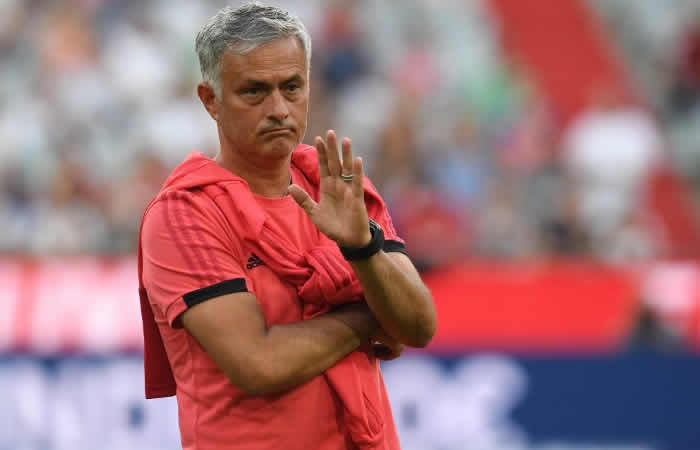
Jose Mourinho, the former manager of Manchester United and Fenerbahce, has expressed his willingness to coach any club at the bottom of the English football league for a duration of two years. Following a recent Europa League match where his team, Fenerbahce, drew with Manchester United, Mourinho was candid in his post-match comments. He stated to Sky Sports, “The best thing I have to do is when I leave Fenerbahce, I go to a club that doesn’t play in the UEFA competition.” This indicates not only his openness to new opportunities but also his preference for engaging with clubs that are currently struggling. His potential move highlights his desire to bring tactical acumen to teams that might not be performing at optimal levels.
Mourinho’s disclosures come in the wake of a heated match, during which he received a red card from the referee. In a moment of frustration, he later mocked the officiating decision by questioning how the referee could have simultaneously monitored both an on-field incident and his actions on the sidelines. He humorously acknowledged the referee’s apparent “incredible” peripheral vision, suggesting that such abilities are what establish a referee as one of the elite in the sport. Mourinho’s critical and often theatrical style of addressing refereeing decisions has been a hallmark throughout his career, showcasing both his passion for the game and his unwillingness to accept decisions he deems unjust.
In light of his controversial ban following the Europa League final loss while managing Roma in May 2023, Mourinho commented on his prospects of appealing the latest red card. He noted that pursuing an appeal would likely result in a harsher penalty, insinuating a connection between his prior suspension and the referee’s perception at the recent match. This highlights the precarious nature of Mourinho’s relationship with officiating, raising questions about how this dynamic affects his leadership style and the morale of his teams.
During the match with Manchester United, Fenerbahce managed to secure a draw despite falling behind early due to Christian Eriksen’s opening goal. Youssef En-Nesyri’s equalizer just after half-time demonstrated the resilience of Mourinho’s squad. Despite the outcome, Mourinho expressed disappointment, indicating that Fenerbahce had played exceptionally well and deserved a better result. This sentiment speaks to his desire for continuous improvement and winning mentality, traits he has instilled in his teams throughout his career.
Mourinho further praised his players for their extraordinary efforts in what he characterized as a challenging match against a more experienced team. He mentioned tactical adjustments forced by personnel changes, tokening a sense of ingenuity and adaptability in the face of adversity. His acknowledgment of the players’ performance despite unfavorable conditions demonstrates his commitment to fostering a positive environment where players feel valued for their contributions, especially in tough circumstances. Mourinho’s emphasis on teamwork and resilience reflects his long-standing coaching philosophy, which values hard work and collective success.
Having managed a variety of clubs and achieved numerous accolades—including a Europa League title with Manchester United in 2017—Mourinho’s current tenure at Fenerbahce represents another chapter in his illustrious career. By expressing his willingness to take on a challenging role in English football, he reaffirms his passion for the sport and his tenacity in pursuing coaching opportunities that allow him to reshape struggling teams. This readiness to engage with lower-tier clubs signals a shift in focus, as Mourinho seems eager to demonstrate his coaching prowess, regardless of the stage or circumstances.