









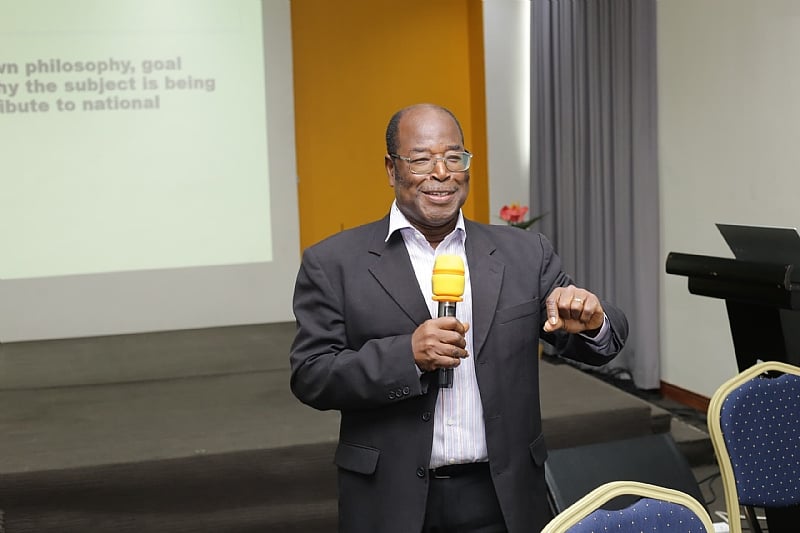
The National Council for Curriculum and Assessment (NaCCA) is preparing to launch a new curriculum for secondary education, beginning with the 2024/2025 academic year. This innovative standard-based curriculum aims to be inclusive and centered around the learners, with a particular focus on instilling core Ghanaian values, culture, and morals in students attending Senior High Schools (SHS), Senior High Technical Schools (SHTS), and those specializing in Science, Technology, Engineering, and Mathematics (STEM). During a recent workshop in Accra, Curriculum Expert Prof. Jonathan Fletcher emphasized the importance of the new curriculum in enhancing educational engagement and familiarizing Information Services Department (ISD) officers with its core components so that they can effectively inform and educate the public regarding this pivotal shift in educational strategy.
Prof. Fletcher highlighted that this curriculum transcends traditional teaching methodologies by placing the learner at the heart of the educational experience. This learner-centric approach builds on students’ existing life experiences and prior knowledge, encouraging active participation in knowledge creation. Teachers will assume a role as facilitators rather than merely dispensers of information, cultivating an environment where students actively construct their understanding. This methodology reflects a significant shift from rote learning to a more dynamic form of education, which fosters critical thinking and application of knowledge in real-world contexts.
In addition to its learner-centered focus, the curriculum underscores the importance of integrating Ghanaian history, culture, and geography, prioritizing local understanding before broadening students’ perspectives to include global contexts. Prof. Fletcher asserted that every subject included in the curriculum has been designed with specific philosophies, goals, and visions that articulate the rationale behind each subject area and its contributions to national development. These frameworks aim to cultivate a generation of students who are not only well-informed but also deeply rooted in their culture and heritage, allowing them to engage with the world from an informed and contextually relevant standpoint.
To foster responsible citizenship, the curriculum encompasses shared Ghanaian values that students must understand and internalize. Key values such as truth, integrity, diversity, equity, self-directed learning, self-confidence, adaptability, resourcefulness, leadership, and responsible citizenship are embedded into the curriculum framework. By integrating these values, the curriculum aspires to nurture a generation of citizens who are socially conscious and committed to contributing positively to society. This integration of values ensures that education serves a purpose beyond academics, aiming to shape character and ethical perspectives in young learners.
The new curriculum is also designed to be inclusive, addressing the diverse needs of all learners, including those with special needs. Prof. Fletcher remarked that adaptive pedagogies and differentiation strategies will be incorporated to ensure equitable access to resources, opportunities, and support for every student. The curriculum seeks to dismantle traditional gender, cultural, or social stereotypes, empowering all learners—especially those who are gifted or talented—to realize their full potential. This approach ensures that educational practices are reflective of and responsive to the diverse realities present in Ghanaian society.
Moreover, the integration of social and emotional learning skills into the curriculum underscores the holistic development of students. These skills are critical for helping learners acquire the knowledge, attitudes, and abilities needed to understand and manage their emotions effectively, build healthy relationships, and make informed, responsible decisions. By fostering social and emotional competencies alongside academic growth, the updated curriculum aims to produce well-rounded individuals capable of navigating the complexities of modern society while contributing to the collective well-being of the nation. Thus, the roll-out of this new curriculum marks a transformative step towards enhancing educational experiences and outcomes in Ghana’s secondary schools.









