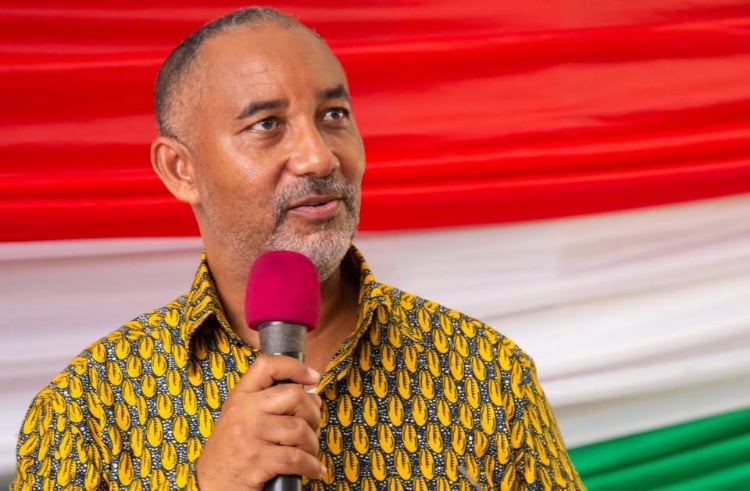
The 2024 Ghanaian presidential election witnessed a significant shift in the political landscape, with the National Democratic Congress (NDC) reclaiming power after their defeat in 2016. Alexander Kofi-Mensah Mould, a prominent NDC figure, offered a perspective on the election outcome and its implications for both the NDC and the New Patriotic Party (NPP). He acknowledged the magnitude of the NDC’s victory, attributing it to the NPP’s perceived failure to address the hardships faced by Ghanaians during their tenure. He emphasized that the NDC’s victory was not merely a result of their own efforts but also a consequence of the NPP’s shortcomings. This perspective underscores the importance of accountability and responsiveness in maintaining public trust and electoral success. Mould’s comments also reflect a broader understanding of the dynamics of Ghanaian politics and the cyclical nature of power.
While celebrating the NDC’s resounding victory, Mould expressed a desire for a strengthened NPP in future elections, highlighting the importance of a robust opposition for a healthy democracy. He drew parallels between the NPP’s current situation and the NDC’s experience after their 2016 loss, noting the challenges involved in rebuilding party support and regaining public confidence. This comparison serves to emphasize the cyclical nature of political fortunes and the importance of resilience and introspection in the face of electoral setbacks. Mould’s call for a stronger NPP suggests a nuanced understanding of democratic principles, recognizing that a vibrant democracy requires not only a strong ruling party but also a robust and capable opposition.
Mould emphasized that a strong democracy requires strong institutions, including well-managed political parties. He argued that healthy political competition is essential for institutional development, fostering accountability and driving improvements in governance. This perspective emphasizes the interconnectedness of political parties and the broader institutional framework of a democracy. He suggested that the NPP’s rebuilding process is crucial not only for the party itself but also for the overall strengthening of Ghana’s democratic institutions. This view highlights the importance of viewing political parties not just as entities vying for power but as integral components of a functioning democratic system.
The NDC’s victory, according to Mould, was largely attributed to the perceived “rot and pain” inflicted upon Ghanaians during the NPP’s administration. This suggests a public dissatisfaction with the NPP’s governance and their handling of key issues affecting the populace. The magnitude of the NDC’s win, described as a landslide, further underscores the depth of this sentiment. This interpretation of the election outcome highlights the importance of public perception in electoral politics and the need for governments to effectively address the concerns and needs of their citizens.
Recalling the NDC’s own experience after the 2016 defeat, Mould acknowledged the arduous task of rebuilding party support. He pointed out the significant effort required to regain the lost ground, emphasizing the challenges of reconnecting with voters and rebuilding trust. His reference to the NDC’s struggle to recover from their previous loss serves to highlight the magnitude of the task facing the NPP. This acknowledgement of the challenges involved underscores the importance of strategic planning, internal reform, and effective communication in rebuilding a political party after a major electoral setback.
The 2024 election resulted in a significant parliamentary setback for the NPP, further compounding their challenges. Their reduced representation in the legislature weakens their ability to influence policy and effectively serve as an opposition force. This loss of parliamentary seats, coupled with the presidential defeat, presents a significant hurdle for the NPP’s rebuilding efforts. The diminished parliamentary presence restricts their capacity to scrutinize government actions, advocate for alternative policies, and effectively represent their constituents’ interests. This situation underscores the interconnectedness of presidential and parliamentary elections and the importance of maintaining a strong presence in both spheres for effective political participation.