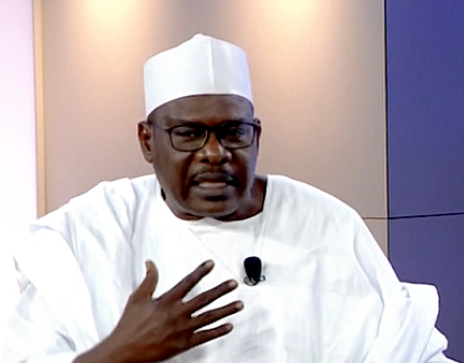
Lawmaker Ali Ndume, representing the Borno South senatorial district, has publicly advocated for the dismissal of underperforming ministers within the Nigerian government. In a recent statement made in Abuja, Ndume acknowledged the efforts of President Bola Tinubu in restructuring the cabinet, particularly the establishment of the Ministry of Regional Development to oversee regional commissions. Despite this restructuring, he expressed concerns about the presence of ministers who appear to be disengaged from their duties, referring to them as “missing in action.” Ndume also commended Tinubu’s cost-cutting initiatives, urging other branches of the government to adopt similar measures to address ongoing economic challenges.
Further elaborating on his viewpoints, Ndume expressed his support for the Tinubu administration’s recent de-dollarisation policy, which aims to reduce Nigeria’s reliance on the U.S. dollar in international trade. He described this policy as a significant step in the right direction, with the potential to strengthen the naira and enhance trade with countries that do not base their economies on the dollar. Emphasizing the advantages of this initiative, Ndume pointed out that reducing dependence on the dollar would greatly benefit Nigerian businesses, particularly those engaged with Chinese markets. He expressed optimism that if the policy is fully implemented, it would alleviate some pressures on the naira, thus promoting a more stable economic environment.
In addition to praising the de-dollarisation policy, Ndume called for a National Economic Conference, aimed at devising local solutions for Nigeria’s economic issues. He proposed that the conference be organized by the Ministry of Budget and Economic Planning, alongside the National Economic Adviser and prominent Nigerian economists. He suggested that experts like Okonjo Iweala, Oby Ezekwesili, and Akinwumi Adesina could spearhead discussions, providing insights that are independent of the often stringent policies dictated by international financial institutions such as the IMF and World Bank. Ndume believes that thoughtful and localized economic recommendations could be pivotal for Nigeria’s development under President Tinubu’s leadership.
On matters of national security, Ndume commended the President for strengthening the Nigerian Air Force through the procurement of new military aircraft. He stressed that these purchases are crucial for providing aerial support to ground troops engaged in the fight against insurgency and terrorism. Recognizing the persistent threats posed by groups like Boko Haram, Ndume urged the government to further invest in military capabilities by acquiring additional attack helicopters and increasing troop recruitment, training, and morale within the Armed Forces and other security agencies. His statements underline a continuing concern for the security landscape in Nigeria, which remains a pressing challenge for the current administration.
Ndume’s call for ministerial accountability, popular economic policies, and enhanced military preparedness reflects a broader discourse on governance strategies within Nigeria. He emphasizes that while significant steps have been taken under President Tinubu, continued vigilance and proactive measures are necessary to ensure that the government effectively addresses the multifaceted challenges facing the country. The senator’s advocacy for high-profile economic and security summits is indicative of a growing desire for informed and united approaches to tackling Nigeria’s issues, rather than relying solely on external guidance from financial institutions or foreign governments.
In summary, Ali Ndume’s recent comments encapsulate critical areas of focus for the Nigerian government. His calls for ministerial accountability highlight the importance of effective governance in fulfilling the administration’s objectives. Concurrently, his praise for policies aimed at economic independence and securing military strength reflects a vision for a more resilient Nigeria that can navigate internal challenges while fostering economic growth and stability. Ndume’s outlook suggests that engaging experts and local leaders in economic discourse, along with strategic military enhancements, could substantially contribute to building a stronger foundation for the nation’s future.