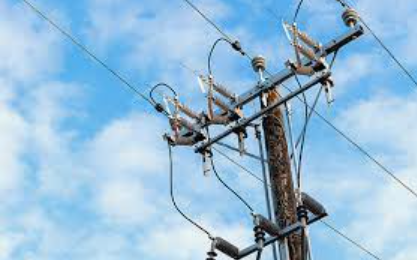
The Nigerian Electricity Regulatory Commission (NERC) has recently released a factsheet detailing the operational performance of the nation’s power sector for September 2024. This follows a worrying pattern in the country’s energy landscape, with the national grid experiencing three collapses in just one week, the latest occurring due to a current transformer explosion. Analyzing the data reveals that despite significant investments in improving Nigeria’s energy infrastructure, the national grid has collapsed approximately 105 times under the administrations of President Bola Tinubu and his predecessor, Muhammadu Buhari. These incidents highlight the deep-rooted challenges Nigeria faces in establishing a stable and reliable power supply.
Despite these setbacks, the September factsheet offers some positive indicators regarding power generation. The report indicates that 28 grid-connected power plants achieved a 41% plant availability factor, representing a 5% increase from August. The average available capacity climbed to 5,533 MW, marking a 14% improvement. Nonetheless, the total energy generated by these plants averaged only 4,492 MWh/h, which, despite being an 8% increase from the previous month, remains insufficient to meet the burgeoning energy demands of Nigeria’s growing population. The performance of individual plants varied significantly, with the Egbin ST plant achieving a 45% availability factor and the high-performing Azura IPP demonstrating an impressive 98% availability.
The performance of specific plants showcased both strong outputs and glaring inefficiencies. Azura IPP, Odukpani, and Afam VI were noted as top performers, consistently generating substantial energy, with Azura IPP producing 387 MWh/h. However, plants such as Sapele ST, Geregu NIPP, and Olorunsogo NIPP underperformed drastically, with the former recording a worrying 17% availability factor and Alaoji NIPP shockingly posting 0% availability and generating no power whatsoever. This inconsistency underlines a significant concern; high levels of investment in capacity are not translating into reliable energy outputs, revealing a need for strategic improvements to avoid dependence on less effective fossil fuel-based plants.
The grid performance analysis provided by NERC reveals a mixed outcome. While grid frequency maintained a relatively stable average of 50.80 Hz—slightly above the target of 50.25 Hz—voltage levels fluctuated alarmingly. The recorded voltage of 349.87 kV was 1% above the upper threshold and 3% below the lower limit. Such voltage instabilities are one of the primary contributors to outages in Nigeria, potentially damaging electrical equipment across various sectors. Additionally, several power plants like Afam IV–V, which possesses an installed capacity of 726 MW, operated at a disappointing 9% availability factor, generating only 63 MW, revealing a troubling gap between installed capacity and actual generation effectiveness.
The load factor, a metric indicating how effectively plants use their available capacity, offers insight into operational efficiency. Some plants, like Rivers IPP and Azura IPP, achieved near-perfect load factors of 100%, indicating optimal output utilization. Contrarily, plants like Sapele ST and Olorunsogo NIPP struggled to maintain consistent generation, with low load factors of 38% and 37%, respectively. This underutilization signifies potential risks to grid stability, raising concerns about the overall effectiveness of Nigeria’s energy sector. The inconsistencies in energy generation and the underperformance of certain installations underscore the significant operational inefficiencies plaguing the system.
The September performance data highlights that, despite meaningful advancements in average generation, serious obstacles remain that hinder overall improvement within Nigeria’s electricity market. The challenges of persistent grid collapses, voltage fluctuations, and inefficiencies of numerous power plants emphasize the critical need for robust reforms. Advancing towards a more stable energy grid will necessitate strategic investments, ongoing maintenance, and an exploration of renewable energy sources to reduce reliance on fossil fuels. Without addressing these key areas, the risk of future grid failures will persist, impacting not just the energy sector but the overall economic growth trajectory of Nigeria.
In conclusion, while the NERC’s factsheet for September 2024 presents some encouraging signs regarding power generation, it is evident that the Nigerian electricity sector remains fraught with significant challenges. The potential for improvement exists, illustrated by enhanced output from specific plants and swelling average generation figures. However, without comprehensive reforms, investment in maintenance and technology, and a shift towards a more diverse energy mix, the recurring theme of grid collapses will continue to shadow Nigeria’s efforts in achieving a reliable power supply. As stakeholders work towards enhancing grid performance, consumers and businesses alike anticipate a future where power outages are no longer a part of their daily lives—where the term “grid collapse” becomes a relic of the past.