









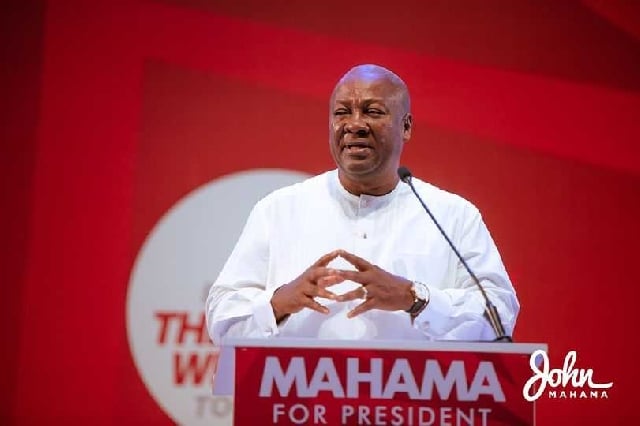
John Dramani Mahama, the presidential candidate of Ghana’s main opposition party, the National Democratic Congress (NDC), has presented a comprehensive anti-corruption strategy aimed at enhancing government transparency and addressing misconduct among public officials. Delivering his speech at a Governance Forum in Accra on October 31, 2024, Mahama expressed his strong commitment to eradicating corruption, a significant issue in Ghanaian governance. He unveiled his plan, which includes leveraging both local and international investigative resources to thoroughly investigate and prosecute allegations of corruption while focusing on the recovery of embezzled public funds. By declaring a firm approach to defeating this societal malaise, Mahama seeks to assure Ghanaians of his dedication to good governance.
Central to Mahama’s anti-corruption agenda is the launch of a new initiative titled Operation Recover All the Loot (ORAL), designed to clamp down on corrupt practices. This operation signifies a paradigm shift in the fight against corruption as it emphasizes accountability for those who exploit their positions for personal gain. Mahama’s strategy includes assembling a specialized task force made up of experienced investigators from both local and international arenas, thereby ensuring that corruption cases are investigated rigorously and that those found culpable are prosecuted to the fullest extent of the law. By prioritizing collaboration among investigators, Mahama aims to create a robust mechanism for addressing corruption in Ghana.
In addition to ORAL, Mahama highlighted legislative reforms aimed at curbing the misappropriation of state assets. He proposed a new law to explicitly prohibit political appointees and public officials from purchasing state assets, a measure intended to reduce conflicts of interest and the risk of asset mismanagement. By restricting the ability of public officials to acquire state property, Mahama hopes to prevent those in power from engaging in unethical practices that benefit them personally while undermining public trust. This proposed legislation aligns with his overarching goal of fostering integrity and accountability within Ghana’s governance framework.
Mahama also emphasized the need to combat the issue of state capture, which refers to the manipulation of public institutions to favor private interests. As part of his strategy, he plans to implement the establishment of a dedicated state asset registrar. This registrar would serve as an authoritative body responsible for managing and monitoring state assets, thus providing oversight to prevent illicit acquisitions by individuals in power. The introduction of such an institution is seen as a pivotal step toward ensuring that state resources are utilized for the public good rather than being subject to the whims of politically connected figures.
As he laid out his vision, Mahama reiterated the importance of ensuring that all Ghanaians are part of the reform process. He encourages public participation and transparency, insisting that the fight against corruption is not solely a government initiative but a collective effort that requires input and vigilance from the citizenry. Mahama’s approach acknowledges that enduring change can only be achieved through collaborative efforts, thereby mobilizing public support for anti-corruption measures and reinforcing the idea that integrity is a shared responsibility.
In conclusion, John Dramani Mahama’s ambitious anti-corruption plan represents a critical response to one of Ghana’s most pressing challenges. By instituting measures such as Operation Recover All the Loot, the prohibition of state asset purchases by officials, and the creation of a state asset registrar, Mahama seeks to create a more accountable government that prioritizes the welfare of its citizens. His commitment to employing both local and international expertise in investigating corruption exemplifies a proactive stance against these issues, positioning him as a candidate determined to restore integrity and trust in Ghanaian governance. As the upcoming elections approach, the efficacy of these proposals will be closely monitored, reflecting the public’s appetite for reform and the demand for transparency in government operations.









