





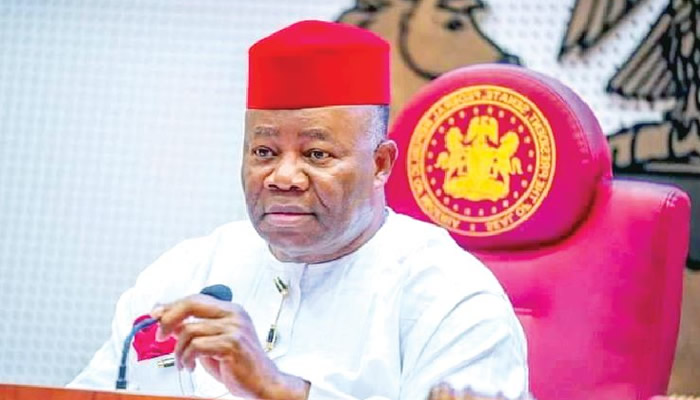
Nigeria and Switzerland Explore Enhanced Economic Partnership
Nigeria’s Senate President, Godswill Akpabio, recently welcomed a delegation from the Swiss European Free Trade Association (EFTA) to the National Assembly, expressing Nigeria’s keen interest in strengthening economic ties with Switzerland and the EFTA member states. Akpabio emphasized Nigeria’s position as Africa’s largest economy and a key member of the African Continental Free Trade Area (AfCFTA), highlighting the nation’s readiness to move beyond traditional trade relationships and forge innovative partnerships that drive economic diversification and job creation. He commended Switzerland and EFTA’s longstanding commitment to free trade and economic cooperation, viewing them as exemplary models for international collaboration.
The Senate President recalled a significant moment in the two nations’ history: the 2017 repatriation of $321 million in recovered funds by Switzerland to Nigeria. This act, Akpabio noted, not only solidified mutual trust but also set a global precedent for accountability and respect between nations. Building on this foundation, he expressed optimism about the potential for a deeper, more comprehensive partnership. Nigeria, he stated, is actively pursuing economic reforms under President Bola Tinubu’s administration, including the removal of fuel subsidies and the unification of exchange rates, aimed at creating a more stable and attractive environment for foreign investment and sustainable economic growth. These reforms, according to Akpabio, are projected to contribute to a promising GDP growth rate of 4.17% by 2025.
Thomas Aeschi, Chairman of the EFTA delegation and a member of the Swiss House of Representatives, reciprocated the sentiment, recognizing Nigeria’s immense potential and its importance as a partner for Switzerland in West Africa. He described EFTA as an intergovernmental organization comprising Switzerland, Iceland, Norway, and Liechtenstein, dedicated to promoting free trade and economic cooperation with countries outside the European Union. The delegation’s visit, Aeschi explained, aimed to explore avenues for deepening economic ties with Nigeria and identify new areas for collaboration. He underscored Nigeria’s vast potential, particularly given its large population, and expressed confidence in the role of parliamentary diplomacy in strengthening bilateral relations and facilitating future governmental processes. While acknowledging the absence of a formal trade negotiation framework between EFTA and Nigeria, Aeschi emphasized the delegation’s intention to lay the groundwork for future engagement.
The meeting between Nigerian and Swiss representatives signifies a shared desire to explore and expand economic cooperation. Nigeria’s focus on economic diversification and job creation aligns with Switzerland’s expertise in innovation and sustainable development. The existing foundation of trust, exemplified by the 2017 repatriation of funds, provides a solid base for future collaborations. While formal trade negotiations have not yet commenced, the expressed interest in exploring such possibilities suggests a positive trajectory for the relationship.
The potential areas of collaboration between Nigeria and EFTA are numerous. Nigeria’s vast natural resources, coupled with its growing market, present attractive opportunities for Swiss and EFTA businesses. Switzerland’s expertise in areas such as technology, finance, and sustainable development could contribute significantly to Nigeria’s economic diversification efforts. Furthermore, collaboration on issues such as renewable energy, climate change mitigation, and vocational training could further strengthen the partnership.
The emphasis on parliamentary diplomacy underscores the importance of fostering strong intergovernmental relationships. These relationships can pave the way for smoother negotiations and more effective implementation of agreements. By engaging in open dialogue and building trust, both sides can work towards a mutually beneficial partnership that contributes to economic growth and development in both regions.
In conclusion, the meeting between the Nigerian Senate President and the EFTA delegation marks a significant step towards enhanced economic cooperation. The shared commitment to exploring new avenues for collaboration, coupled with the existing foundation of trust, holds promise for a fruitful partnership that can unlock significant economic potential for both Nigeria and the EFTA member states. The focus on diversification, job creation, and sustainable development aligns with the broader goals of promoting economic prosperity and stability in both regions. The coming years will likely witness further discussions and explorations of specific areas of cooperation, potentially leading to the establishment of a formal trade framework that facilitates deeper economic integration.








