









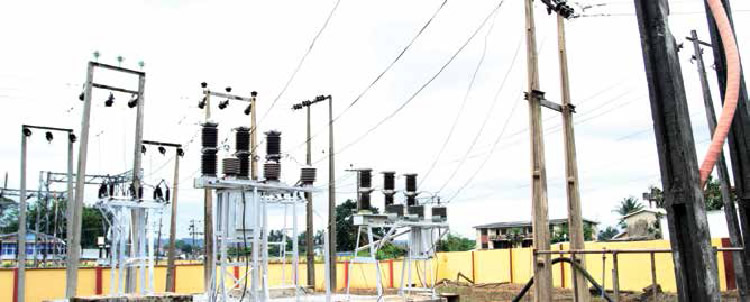
Nigeria’s persistent power crisis has become a significant economic burden, with the Africa Trade Barometer report by Standard Bank estimating an annual loss of $26 billion due to electricity shortages. This economic hit is compounded by the staggering $22 billion businesses spend annually on off-grid fuel to mitigate the consequences of unreliable electricity. The report underscores that the national grid frequently collapses, failing to meet daily peak demand that outstrips its generation capacity by nearly four times. This untenable situation showcases the severe strain on businesses, forcing them to rely heavily on alternative power sources, which further inflates operational costs and impacts overall productivity.
The report identifies electricity supply as a critical barrier to business operations not only in Nigeria but also across several other African nations. It highlights that power supply infrastructure is viewed as the most significant impediment to business operations, reflecting widespread dissatisfaction with its current state. Frequent blackouts lead to production downtimes, compromise the quality of goods requiring regulated environments, and disrupt essential services such as water supply and telecommunications. These disruptions culminate in reduced sales and income, exacerbating the economic challenges that businesses face daily. The interplay between unreliable power supply and operational efficiency illustrates the pressing need for reform in Nigeria’s energy sector.
To address these challenges, the report advocates for diversification in energy sources as a means of reducing dependence on the overwhelmed national grid. By investing in alternative energy solutions, Nigeria could mitigate the risks associated with an unstable power supply while enhancing the reliability of energy access for businesses and households alike. The report emphasizes that diversifying energy sources would not only stabilize supply but also lower operational costs, thereby fostering a more conducive environment for entrepreneurship and business growth.
Furthermore, the report calls for comprehensive policies aimed at stabilizing electricity generation and attracting investment into the renewable energy sector. It notes that despite significant investments made in the power sector, including substantial loans from the World Bank, the national grid has been exceptionally unreliable. Under the leadership of President Bola Tinubu and his predecessor, Muhammadu Buhari, the grid experienced about 105 collapses, highlighting a systemic failure to address underlying issues despite financial support. The need for effective policy intervention is critical to ensure that funds are utilized effectively and that the power sector can undergo necessary reforms.
To date, Nigeria has procured approximately 10 loans totaling $4.36 billion from the World Bank within the last decade, aimed at resolving key challenges affecting its power infrastructure. However, the full potential of these loans has not yet been realized, as not all funds have been completely disbursed. While the Federal Government and various multilateral agencies continue to provide financial backing to the power sector, the ongoing issues of grid collapses and widespread blackouts reflect an urgent need for more targeted and efficient use of these resources.
In conclusion, Nigeria’s power sector is at a critical juncture, facing enormous economic losses attributed to unreliable electricity infrastructure. The Africa Trade Barometer report by Standard Bank serves as a clarion call for action, underscoring the necessity of diversifying energy sources, stabilizing electricity generation, and implementing robust policies to attract investment in renewable energy. Tackling these issues is essential for not only alleviating the economic strain on businesses but also ensuring sustainable growth and development for Nigeria as a whole.









