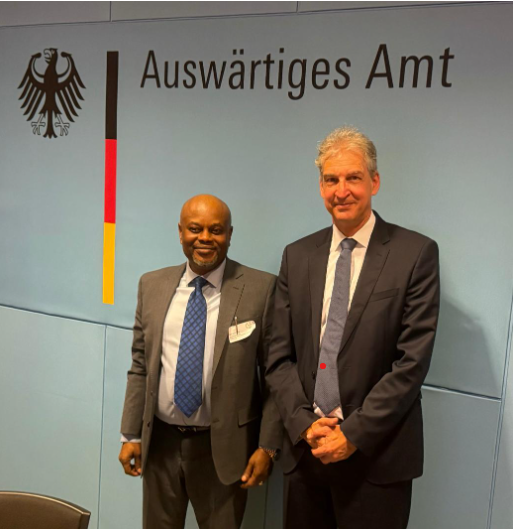
Nigeria is poised to benefit significantly from Germany’s ambitious investment plan, earmarking €4 billion for green energy projects across Africa by the year 2030. This strategic collaboration was highlighted during a recent statement by Dr. Felix Ale, the Director of Media and Corporate Communications at the National Space Research and Development Agency. The announcement follows the German Federal Foreign Office’s H2 Diplo Study Tour, where Nigeria’s Minister of Innovation, Science, and Technology, Chief Uche Nnaji, underscored the critical importance of this partnership. Nnaji stressed that Nigeria is actively working to transform its energy landscape through this collaboration, positioning itself to harness opportunities presented by Germany’s investment in green energy.
Minister Nnaji articulated that this initiative aligns closely with the Renewed Hope Agenda led by President Bola Ahmed Tinubu, which centers on economic diversification, job creation, and sustainable development. These components are crucial aspects of the president’s 8-point strategic plan aimed at revitalizing Nigeria’s economy. This partnership with Germany isn’t random; it originates from productive talks between President Tinubu and German Chancellor Olaf Scholz, resulting in a landmark deal worth €500 million focused on renewable energy and gas. This deal signifies a commitment to developing sustainable and environmentally friendly energy resources that could transform Nigeria’s energy sector.
The minister highlighted that these discussions involved essential representatives from various German ministries, such as the Federal Ministry of Research and Education, and the Federal Ministry for Economic Cooperation and Development. These stakeholders are vital in pushing forward the green hydrogen initiative, a cleaner and renewable energy source that is expected to play a crucial role in decarbonizing industries and bolstering Nigeria’s energy security. Nnaji emphasized the potential of green hydrogen as a forward-looking resource that could mirror the historical economic significance of oil and gas in shaping Nigeria’s future energy landscape.
Furthermore, Germany’s commitment to achieving carbon neutrality by 2045 is another driving force behind this cooperation, as it plans to import green hydrogen from Nigeria. This intention underscores the partnership’s strategic relevance, empowering Nigeria to showcase its capabilities in the burgeoning global green hydrogen sector. The minister noted that this partnership not only complements President Tinubu’s objectives of fostering innovation and industrial advancement but also positions Nigeria as a key player in the green hydrogen market, amplifying its influence in the energy transition globally.
By embracing advanced technologies and fostering a favorable business environment, Nnaji pointed out that Nigeria aims to attract robust foreign direct investment, catalyze job creation, and enhance its energy export capabilities. This move would not only elevate Nigeria’s status in the continent’s green energy landscape but also fortify its role as a pivotal ally in Germany’s broader energy transition strategy. The prospect of exporting green hydrogen to Europe and other markets significantly enhances Nigeria’s potential to emerge as a leading force in renewable energy governance across Africa, notably as countries globally prioritize sustainable energy sources in their economic agendas.
In summary, Nigeria is strategically embarking on an energy transformation journey aligned with international green energy investments, particularly Germany’s ambitious plans. This involves collaboration under multifaceted agreements that aim to revitalize the country’s economy through sustainable practices while elevating Nigeria’s status within the global energy framework. The focus on green hydrogen development not only represents an opportunity for economic growth and industrial diversification but also reflects the broader global shift toward renewable energy solutions. As Nigeria positions itself for this significant transformation, it stands to realize substantial benefits, contributing to both domestic and international energy needs in a sustainable manner.