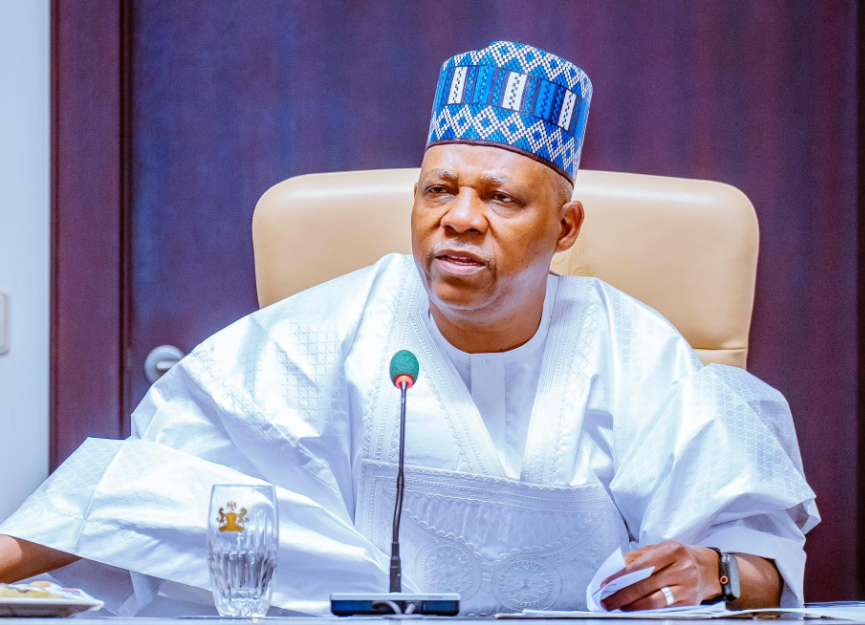
On Wednesday, Vice President Kashim Shettima emphasized the significant role Nigeria’s carnival industry can play not only in promoting the nation’s rich cultural heritage but also in fostering national unity and empowering the youth. He asserted that the government is strategically positioning the carnival industry to exploit the vast opportunities present in the global carnival market, which is estimated at an impressive $5 billion. During a meeting with a delegation from the Abuja International Carnival at the Presidential Villa, Shettima articulated how the carnival sector could become a vital contributor to Nigeria’s economic growth, promoting both cultural diversity and social cohesion within the country.
During the meeting, Shettima pointed out the various benefits that the carnival industry could yield for Nigeria, particularly in terms of economic value addition and job creation for the younger population. He highlighted the dual function of carnivals in not only serving as platforms to showcase Nigeria’s diverse ethnic cultures but also acting as vehicles for uniting various segments of society, thus fostering a sense of belonging and shared identity among citizens. Shettima’s insights underscored the need for a vibrant carnival scene as a means of nurturing patriotism and social harmony across the nation.
The Vice President noted global examples of successful carnivals, such as the famous Rio de Janeiro Carnival, which draws upwards of 200 million visitors each year, and commended the Calabar Carnival for its integral role in preserving the cultural heritage of the Efik and Ibibio people. Shettima also reminisced about the Abuja carnival’s former grandeur, urging local organizers to expedite efforts to reinvigorate the event. He highlighted how large-scale cultural celebrations can attract tourism, enhance local economies, and create a platform for showcasing talent, thereby serving as a catalyst for youth empowerment.
The Nigerian government, under President Bola Tinubu’s administration, is committed to supporting creative industries, which has led to a substantial investment targeted at advancing digital and creative projects including carnivals. Shettima mentioned a noteworthy initiative, a $618 million project aimed at bolstering the digital and creative sectors. This financial backing is seen as crucial for the development of vibrant cultural events that can stimulate economic activity and provide new employment opportunities for the youth.
Kehinde Adegbite, the CEO of the Abuja International Carnival, expressed gratitude to the Vice President for his encouragement and laid out plans to partner with the Ministry of Art, Culture, and the Creative Economy to revitalize the carnival. He shared details of prior discussions with the Minister of Art, Culture and the Creative Economy, Hannatu Musawa, emphasizing her commitment to the project and the mutual goal of using the carnival as a means to unify communities, empower young individuals, and discover new talents.
In summary, the discussion surrounding Nigeria’s carnival industry reflects a broader vision for leveraging cultural heritage as a mechanism for economic growth and societal harmony. The government’s support for this initiative underscores a commitment to harnessing cultural events for development, community engagement, and youth empowerment. With global examples illustrating the potential of carnivals to drive tourism and economic activity, Vice President Shettima’s advocacy for revitalizing Nigeria’s carnival scene could pave the way for greater national cohesion and a flourishing creative sector that appeals to both domestic and international audiences.