









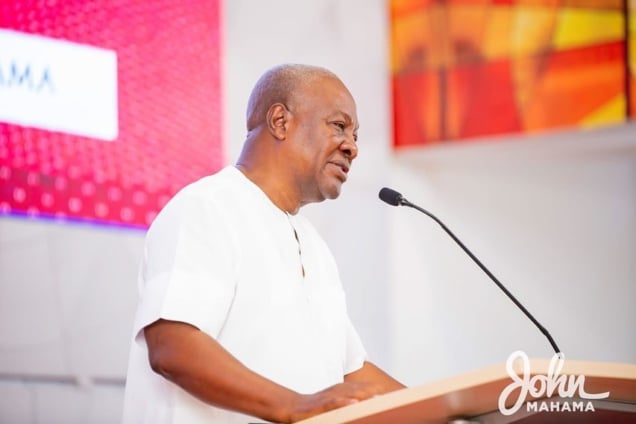
In the lead-up to the 2024 general elections in Ghana, John Mahama, the flagbearer of the National Democratic Congress (NDC), has made serious accusations against the ruling New Patriotic Party (NPP), alleging that they are resorting to vote-buying tactics to secure electoral support. During an event in Chereponi in the North-East Region, Mahama claimed that the NPP is distributing one-litre bottles of cooking oil to market women as a bait to sway their votes. He emphasized that such actions are indicative of the NPP’s inability to run an effective campaign and their desperate attempts to manipulate the electoral process. By utilizing these tactics, Mahama argues that the NPP is undermining the democratic process in Ghana.
Mahama’s comments are framed within a broader critique of the NPP’s governance, which he claims has significantly impoverished the Ghanaian populace. He stated that the NPP’s actions expose their failures in office, suggesting a direct correlation between their governance and the economic hardships faced by millions of Ghanaians. Notably, he pointed out that around 870,000 people have been pushed below the poverty line during the NPP’s tenure. By distributing items like cooking oil, Mahama contends that the ruling party is attempting to capitalize on the struggles of the poor rather than addressing underlying economic issues.
In his speech, Mahama appealed to the electorate’s sense of integrity, urging them not to be swayed by these short-term offerings. He called on voters to reject the NPP’s tactics and instead focus on sustainable, long-term solutions for the country’s economic challenges. By appealing to the rationality of voters, Mahama aims to raise awareness about the need for thoughtful decision-making rather than being seduced by temporary handouts that do not address systemic problems.
The context of Mahama’s accusations highlights a broader concern about political ethics in Ghana, especially as the country approaches crucial elections. The act of vote-buying not only jeopardizes the integrity of the electoral process but also perpetuates a cycle of poverty and dependency among the electorate. Mahama’s statements serve as a reminder that political leaders should prioritize the welfare of their citizens through substantive policies rather than exploitative tactics that rely on their current vulnerabilities.
Moreover, Mahama’s remarks reflect a growing disillusionment among the electorate regarding political promises and accountability. As citizens face economic hardships exacerbated by inadequate governance, the call for transparency and responsible leadership becomes more pressing. The use of basic commodities like cooking oil as political tools highlights a troubling trend where the immediate needs of the populace are exploited for electoral gain, raising questions about the moral responsibilities of those in power.
In conclusion, the electoral landscape in Ghana is fraught with challenges as political parties navigate accusations and counter-accusations of unethical practices. Mahama’s denunciation of the NPP’s alleged vote-buying efforts not only seeks to galvanize support for the NDC but also aims to elevate the discourse on the need for genuine governance. As the 2024 general elections approach, the electorate’s decisions will hinge on their collective memory of past leadership, their current struggles, and the promise of a future where economic policies align with the actual needs of the people.









