









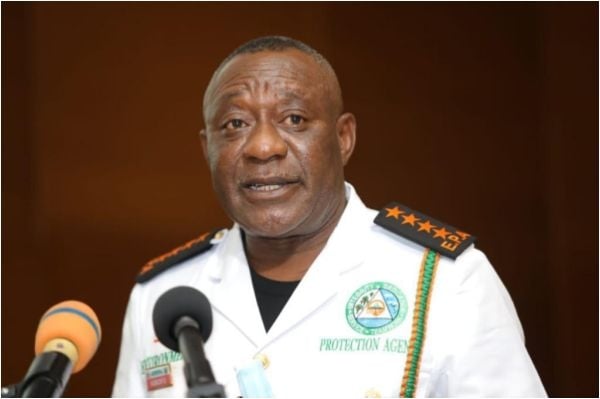
Dr. Henry Kwabena Kokofu, a prominent political figure and former Executive Director of the Environmental Protection Agency, has voiced strong criticisms regarding the conduct of the Minority Caucus in Ghana’s 8th Parliament. His primary plea to the government is to eliminate ex-gratia payments for parliamentarians, particularly focusing on the Minority members from the National Democratic Congress (NDC). Dr. Kokofu links this call to recent tensions between the Majority and Minority, attributing these issues to what he perceives as obstructive tactics and deliberate sabotage by the Minority. He argues that their actions have stalled crucial government initiatives, ultimately hampering national development.
The essence of Dr. Kokofu’s concerns revolves around the idea that the NDC MPs are leveraging their numerical strength to undermine the executive branch, with the ulterior motive of destabilizing the government’s standing and popularity with the public. He emphasizes that those who do not actively contribute to the governing process should not benefit financially from it, insisting that ex-gratia payments for parliament members should be abolished. His sentiments reflect a broader frustration within the ruling party regarding the Minority’s ability to influence parliamentary proceedings and their apparent prioritization of political self-interest over the welfare of the nation.
Moreover, Dr. Kokofu expresses disappointment over the Majority’s inability to assert its authority, which he argues has resulted in a misalignment of priorities where party interests overshadow national concerns. He illustrates this issue through the lens of the separation of powers doctrine, advocating for a system where checks and balances function efficiently without being exploited for partisan advantage. His assertions highlight a fundamental challenge in Ghana’s political landscape, where the division between political factions often creates an environment that is detrimental to effective governance.
Dr. Kokofu does not shy away from underscoring the real casualties of the ongoing political disagreements, placing the blame squarely on the shoulders of ordinary Ghanaians. He posits that the constituents whom the Minority claims to represent are ultimately suffering the consequences of the political impasse. By favoring partisan tactics over collaborative governance, he argues that the Minority is failing the very people it aims to support, leading to wider societal stress and unrest.
As the tensions within Parliament continue to escalate, Dr. Kokofu’s remarks have sparked significant discourse regarding the implications for governance and national stability in Ghana. His comments come at a crucial time, coinciding with the campaign activities of the ruling New Patriotic Party (NPP) in the Western North Region, revealing an urgent need for dialogue and reconciliation between the competing factions. The friction highlighted by Dr. Kokofu represents not only a challenge for current lawmaking but also poses questions about the future of political engagement and public trust in elected officials.
Ultimately, his appeal to scrap the ex-gratia payments serves as both a critique of the current parliamentary dynamics and a call to action for a more effective and accountable governance model. Dr. Kokofu’s insights reflect a growing concern among citizens and leaders alike about the imperative for collaboration in overcoming the multiple challenges Ghana faces. It remains to be seen how these discussions will evolve and what measures will be undertaken to bridge the divides that threaten the nation’s progress.









