





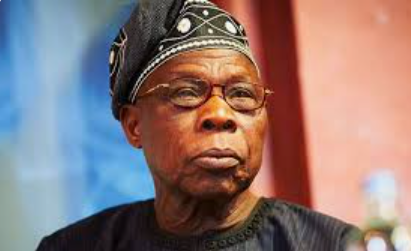
Former President Olusegun Obasanjo recently emphasized the wealth of technocratic talent available in Nigeria, calling for a shift away from leadership that he believes has resulted in a stagnant and harsh economic climate for the nation. Speaking at a valedictory event for Chrisland University’s outgoing Vice-Chancellor, Prof. Chinedum Babalola, Obasanjo lamented the reliance on individuals who he considers mediocre and encouraged a collective effort to harness the capabilities of the country’s competent individuals. He asserted the responsibility for the nation’s progress lies with its citizens, urging a proactive approach to governance and development.
During his address, Obasanjo highlighted the achievements of Nigerians on international platforms as proof of the country’s potential. He pointed out that two major African development banks are led by Nigerians, and acknowledged the former Finance Minister, Ngozi Okonjo-Iweala, as the head of the World Trade Organization, alongside Amina Mohammed, the Deputy Secretary-General of the United Nations. These accomplishments, he argued, showcase that capable and qualified individuals exist in Nigeria who can be tapped for leadership roles rather than relying on the underperforming leaders who have contributed to the nation’s economic struggles.
Advocating for economic diversification, Obasanjo urged stakeholders in Nigeria to look inward and cultivate industries beyond oil, suggesting agriculture, tourism, manufacturing, and education as viable sectors for development. He reflected on his own leadership experiences, recalling how under his administration the country’s shipping line had ambitious plans for expansion that ultimately failed. He painted a vivid picture of mismanagement, detailing the decline of the Nigeria Airways and the misappropriation that led to substantial losses for the country. For Obasanjo, these historical oversights reflect a deeper systemic issue where accountability and integrity in various sectors have been sorely lacking.
His remarks also touched on the alarming issue of corruption, exemplified by a case involving a former police pension scheme head who was sentenced to a mere two years in prison after stealing significant public funds but subsequently managed to avoid any serious repercussions. Obasanjo expressed dismay that such leniency could perpetuate a culture of theft and impunity, concluding that without consequences for wrongdoing, the cycle of corruption will continue unabated. This notion resonated throughout his address, reinforcing the need for reform in how leadership and governance are approached in Nigeria.
In a more positive light, Obasanjo commended Dr. Winfred Awosika, the founder of Chrisland University, for her dedication to advancing education in the country. He praised her investments and efforts in establishing the institution as a beacon of quality education, which has contributed significantly to the community and nation at large. He also recognized the outgoing vice-chancellor for his role in transforming the university over a period of seven years, underscoring the importance of visionary leadership in effecting positive change within educational institutions.
Conclusively, Obasanjo’s address serves as a clarion call for Nigeria to recognize and deploy its wealth of expertise and talent in the face of persistent economic challenges. His insistence on accountability, proactive governance, and investment in diverse sectors aims to inspire a renewed national ethos where hard work and integrity can trump mediocrity. As he looks to the future, his faith in the capacity of Nigerians to rise to the occasion points to a hopeful vision for the nation’s economic and governance landscape, one wherein students and technocrats are empowered to take charge of their country’s destiny.








